











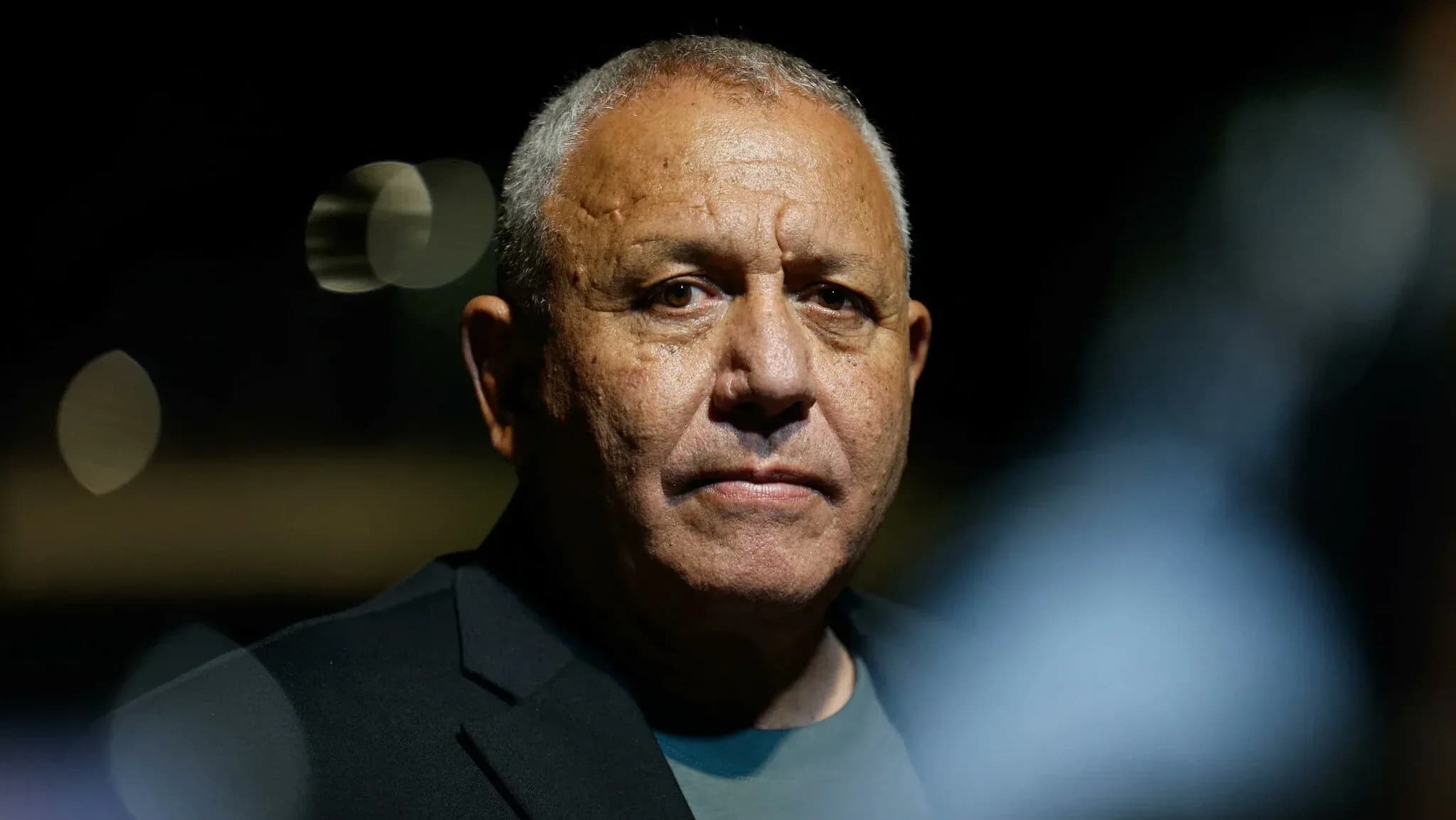


Israel is facing a fresh political turning point after Prime Minister Benjamin Netanyahu suffered another setback in his attempt to retain power.
His longtime ally, the ultra-Orthodox United Torah Judaism (UTJ) party, has refused to recommend him for another term. At the same time, opposition leader Gadi Eisenkot has secured the backing of 67 lawmakers in the 120-member Knesset.
The development puts Eisenkot ahead in the race to receive the mandate to form Israel’s next government. Nevertheless, it does not mean that he has already secured the numbers needed to govern.
"President Herzog has met with all of the parties… it looks like 67 of the 120-seat Knesset members have chosen Gadi Eisenkot, 46 Benjamin Netanyahu." Chris Mitchell with @cbnnews shares the latest from Israel. Eisenkot could have "the first opportunity to form a coalition." https://t.co/nvKOZGqjFB
— Tony Perkins (@tperkins) November 5, 2026
Also Read | Democrats have beaten Trump at the ballot box. Now comes the harder test
Plenty of seats, but short of a majority
The deadlock follows Israel’s October 27 parliamentary election. The results did not give either major political camp a clear majority. Netanyahu’s Likud emerged as the largest single party, winning 27 seats.
But the wider religious-nationalist bloc supporting him secured only 53 seats. Eisenkot’s anti-Netanyahu alliance, made up of four Jewish-led parties, won 48 seats.
Two Arab-led parties secured another 19 seats, giving them an important role in the post-election negotiations.
A parliamentary majority in the 120-member Knesset requires 61 seats.
Eisenkot emerges ahead
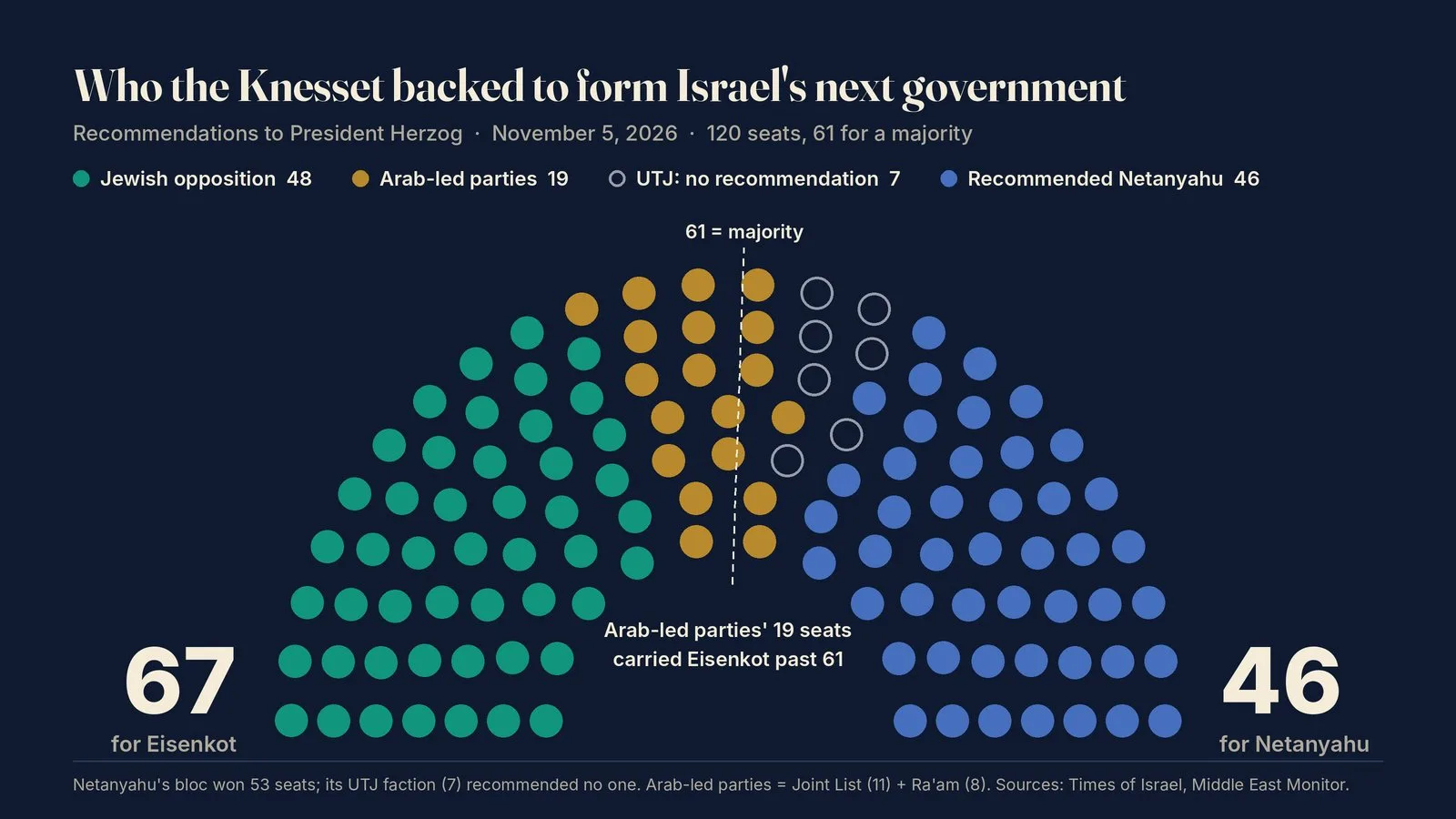
Israel’s political parties met President Isaac Herzog to announce which candidate they wanted him to ask to form the government. All four parties in Eisenkot’s political camp backed him.
The two Arab-led factions also recommended him. Their combined strength brought his total to 67, against 46 recommendations for Netanyahu.
UTJ, with its seven lawmakers, declined to support either candidate.
Why endorsements do not guarantee a government
There is an important distinction between recommending a candidate and agreeing to join that candidate’s government.
The 67 recommendations do not represent a ready-made coalition. Eisenkot’s camp is divided over cooperation with Arab-led parties. Three of the four Jewish-led parties in his alliance have so far resisted partnering with them.
Eisenkot has ruled out forming a government with the two Arab-led factions. Their support, therefore, may help him secure the mandate without necessarily translating into seats in his cabinet.
Joint List lawmaker Ahmad Tibi has indicated that his party could support a minority government from outside, but said it would not act as a temporary support system for a government likely to collapse.
UTJ’s decision is another significant part of this political puzzle. The party has been a longstanding ally of Netanyahu and was part of his outgoing coalition. Its refusal to recommend him is a setback because it weakens the political support he can demonstrate during the government formation process.
The party’s position is linked to a long-running dispute over military service exemptions for ultra-Orthodox Jewish students studying in religious seminaries, known as yeshivas.
UTJ has been seeking legislation to protect these exemptions. It is frustrated that Netanyahu has not secured the law it wants. Its representatives have also made clear that any future support would depend on legislation addressing the issue.
This could make negotiations with Eisenkot difficult too, as his political camp has pushed for greater ultra-Orthodox military service.
Also Read | Poland steps up security on Kaliningrad border over fears of armed incursions
Herzog faces a consequential decision
Herzog now has the responsibility of deciding who has the best chance of forming a government. His role is not simply to select the candidate with the highest number of recommendations. He must consider whether that candidate can build a coalition capable of winning the confidence of the Knesset.
After the consultations, Herzog acknowledged the uncertainty, pointing to “mutual vetoes between the blocs and within the blocs themselves”. He said he would hold further discussions with party leaders before making his decision.
Herzog has said he intends to assign the task to a lawmaker on Sunday, November 8.
The person selected will have 28 days to form a government, with a possible extension of up to 14 days. Until a new government is formed, Netanyahu will remain in office as caretaker prime minister.
The coming days will therefore be crucial. Eisenkot has a clear lead in recommendations, but turning that support into a functioning parliamentary majority remains the real challenge.