





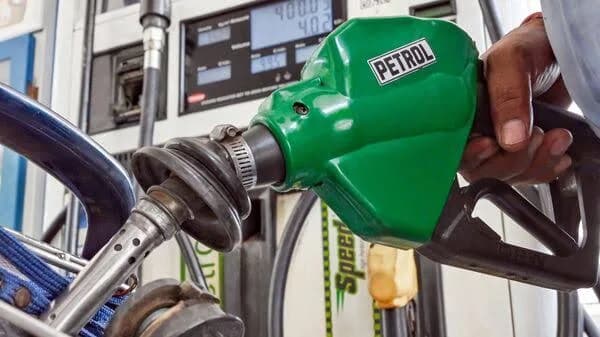




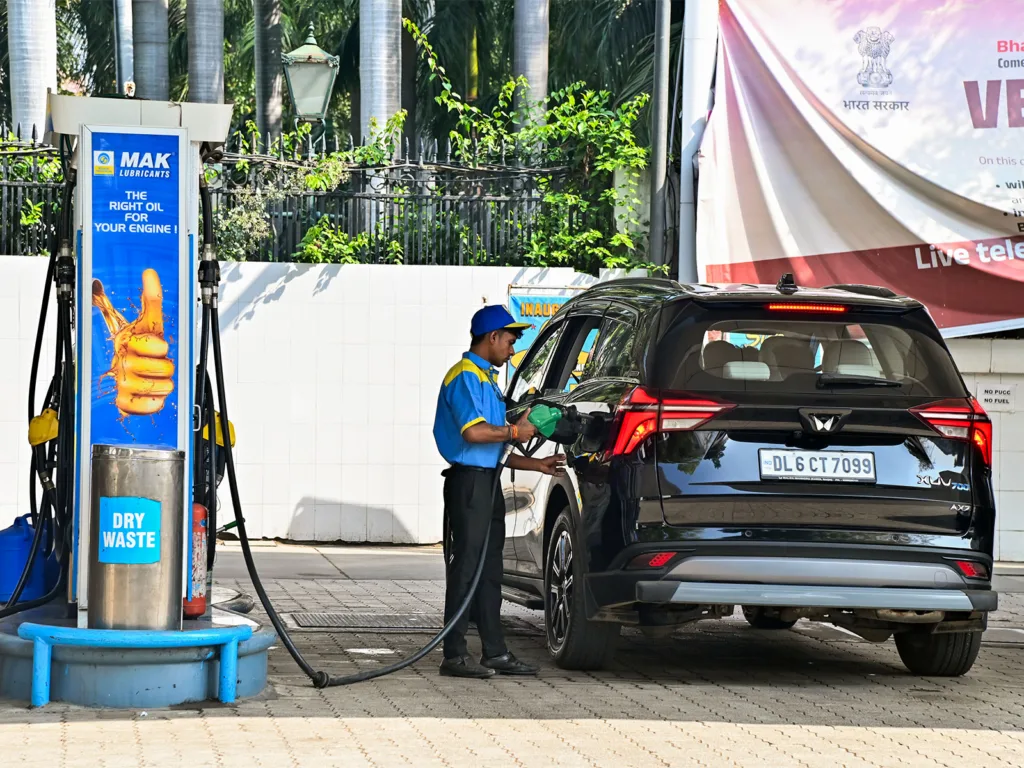
Indian Oil Corporation Limited (IOCL), Bharat Petroleum Corporation Limited (BPCL) and Hindustan Petroleum Corporation Limited (HPCL) have challenged Karnataka’s findings that petrol sold at certain retail outlets in the state contained between 26% and 31% ethanol, substantially above the prescribed E20 blend.
In a statement on Thursday, November 6, the three public sector oil marketing companies (OMCs) said the reported figures were not supported by testing conducted in accordance with the prescribed statutory and technical procedures. They maintained that E20 petrol supplied by them across the country, including Karnataka, complies with the Bureau of Indian Standards (BIS) specification IS 17021.
The dispute follows a press release issued by Karnataka’s Department of Food, Civil Supplies, Consumer Affairs and Legal Metrology, which cited the results of tests conducted on petrol samples collected in October 2026. The E20 petrol controversy has now centred on the validity of those tests, the sampling process and whether the reported figures can be independently verified.
Oil companies question Karnataka’s E20 sampling process
The three OMCs argued that the October sampling exercise did not follow the procedure laid down under the Motor Spirit and High Speed Diesel (Regulation of Supply, Distribution and Prevention of Malpractices) Order, 2005, read with the Marketing Discipline Guidelines (MDG) 2024.
Under the prescribed process, six one-litre samples must be collected. Two are handed over to the dealer against acknowledgement, two are retained by the oil company or the department, and the remaining two are sent to a laboratory specified under Schedule III of the Control Order or notified in the Official Gazette.
The companies also said sample labels must carry joint signatures and test results must be communicated to the dealer and oil company within the stipulated timeframe.
According to the OMCs, samples collected during the September 2026 exercise were routed through the State Level Coordinator to designated oil company laboratories and tested for the quality parameters specified under the guidelines. However, they alleged that the October exercise was conducted without the participation of their representatives.
The companies further claimed they had not received the corresponding retention samples, complete outlet-wise details or laboratory reports, despite requesting these through the State Level Coordinator.
Also Read | Yamuna pollution: Swedish firm explores sewage treatment partnership with Delhi government
Dispute over laboratory methods and ethanol measurement
The OMCs have also questioned the technical details provided in the certificates cited by the Karnataka government. They said the reported findings relied on third-party laboratory certificates rather than tests conducted at a laboratory specified under the relevant Control Order.
The companies pointed out that the certificates did not contain sufficient technical information to independently verify the reported ethanol content.
Under IS 17021:2018, including Amendment No. 3 issued in August 2025, ethanol content in E20 petrol can be determined through prescribed methods. These include Fourier Transform Infrared Spectroscopy (FTIR) under ASTM D5845, water extraction under Annex C, and Gas Chromatography under ASTM D4815 or ASTM D6839.
The OMCs said that when Gas Chromatography is used, the sample must first be diluted in a 1:1 ratio with oxygenate-free petrol. The result must then be corrected against an E10 certified reference material.
However, they alleged that the certificates referred to in Karnataka’s press release merely mentioned ethanol percentage measured through Gas Chromatography. They did not specify the applicable ASTM method, the prescribed dilution process or the reference material used for correction.
The companies argued that without these details, the reported ethanol levels of 26% to 31% could not be independently validated against the BIS methodology.
Also Read | BJP links Neha Bora’s temple remarks to Congress, revives ‘anti-Hindu’ row
Rs 1.01 lakh crore loss estimate rejected
The E20 petrol controversy has also raised questions about the financial impact of ethanol-blended fuel on motorists. Karnataka’s reported estimates included an annual consumer mileage loss of approximately Rs 62,000 crore and vehicle-repair expenses of around Rs 39,000 crore, taking the combined figure to nearly Rs 1.01 lakh crore.
The three OMCs rejected these estimates, arguing that they required careful examination against established technical evidence.
They questioned the assumption of a uniform 10% mileage loss across the entire vehicle population, saying that extrapolating such a figure into a nationwide consumer-loss estimate was not a scientifically established assessment.
The companies also said the projected repair costs needed to be supported by actual vehicle-performance data, material compatibility studies and documented repair expenses.
To support their position, the OMCs cited the widespread use of E20 fuel. They said more than 30 crore two-wheelers and four crore four-wheelers had been running on the fuel for over three years, while more than six crore people visited petrol pumps daily. They argued that a widespread fuel-quality problem would be expected to produce a corresponding pattern of vehicle breakdowns, which they said had not been reported.
The companies added that the performance and mileage implications of E20 had been examined by an Inter-Ministerial Committee and through studies involving IOCL, the Automotive Research Association of India (ARAI) and the Society of Indian Automobile Manufacturers (SIAM).
The OMCs have asked the Karnataka government to share complete sampling records, outlet-wise laboratory reports and details of the testing methods used. They have also sought access to counterpart samples for independent testing at an authorised laboratory using the prescribed referee method, in the presence of state government and company representatives.
The dispute is now likely to depend on whether the sampling records and laboratory results can be independently examined. Until the competing claims are verified through the prescribed procedures, the reported ethanol levels and the financial-loss estimates remain contested.