














7 European structures including, some bridges, mountains, caves and rock formations have inspired stories of giants, devils, dragons and other supernatural beings. Their unusual shapes or difficult terrain once seemed so extraordinary that folklore offered explanations beyond human ability.
Even after geology and engineering provided more practical answers, many of these legends survived. According to folklorist and archaeologist Ceri Houlbrook, unusual features of the landscape often become magnets for stories because they stand out and spark people’s imagination.
From a volcanic rock formation in Northern Ireland to a Roman aqueduct in Spain, these seven European landmarks continue to carry stories that are almost as fascinating as the places themselves.
Devil’s Bridge in Wales
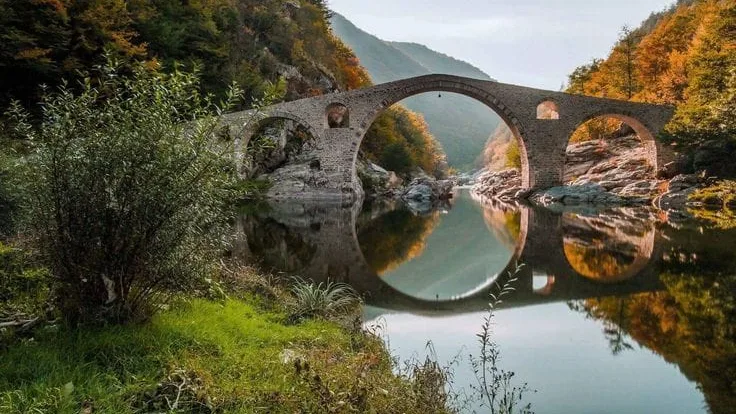
Near Aberystwyth, the Devil’s Bridge consists of three bridges built one above another across the Mynach Gorge. The oldest is believed to date to the medieval period, while another was added in 1753 and an iron bridge followed in 1901.
The local legend says the devil offered to build the bridge in exchange for the soul of the first living creature to cross it. An old woman supposedly outsmarted him by throwing bread across the bridge and sending her dog after it.
Also Read | How Muslims became part of South India’s Hindu traditions
The historical story is more complicated. The bridge was known in Welsh as Pontarfynach, or Monk’s Bridge, and its connection with the devil appears to have developed later. According to researchers cited by Smithsonian, the legend became popular in the 18th and 19th centuries.
Giant’s Causeway in Northern Ireland
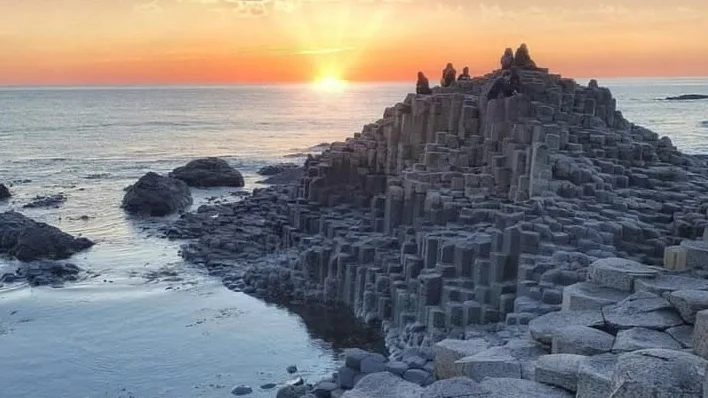
Northern Ireland’s Giant’s Causeway is made up of as many as 40,000 interlocking basalt columns. Scientists explain the remarkable formations through volcanic activity around 50 million to 60 million years ago.
Irish folklore has another explanation. According to legend, the giant Finn McCool built a causeway across the sea to confront his Scottish rival, Benandonner.
When Finn realised that Benandonner was much larger than him, he disguised himself as a baby. After seeing the enormous “infant”, Benandonner fled, destroying part of the causeway behind him. The story also connects the formation to Fingal’s Cave in Scotland.
Fingal’s Cave in Scotland
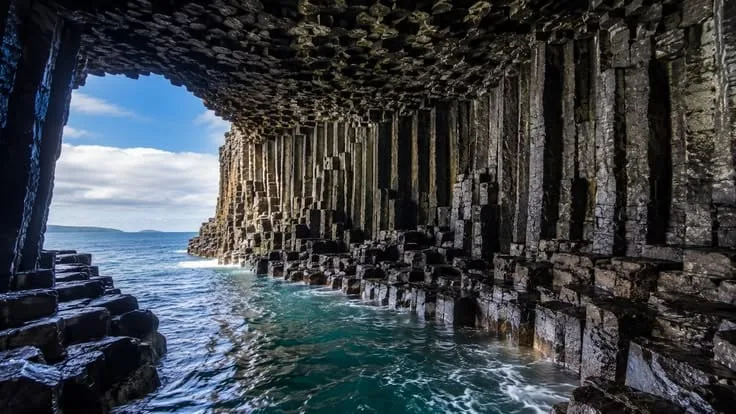
On the uninhabited island of Staffa, Fingal’s Cave was formed from tall basalt columns created by ancient volcanic activity. Waves later carved the cavern into the rock.
Its unusual geometry and acoustics made the cave a source of fascination. Its Gaelic name, An Uamh Binn, means “Musical Cave”, while its dramatic appearance helped strengthen its connection with the Giant’s Causeway and the Finn McCool legend.
The cave also inspired composer Felix Mendelssohn’s “Hebrides Overture” after its fame spread following naturalist Sir Joseph Banks’ visit in 1772.
Mount Pilatus in Switzerland
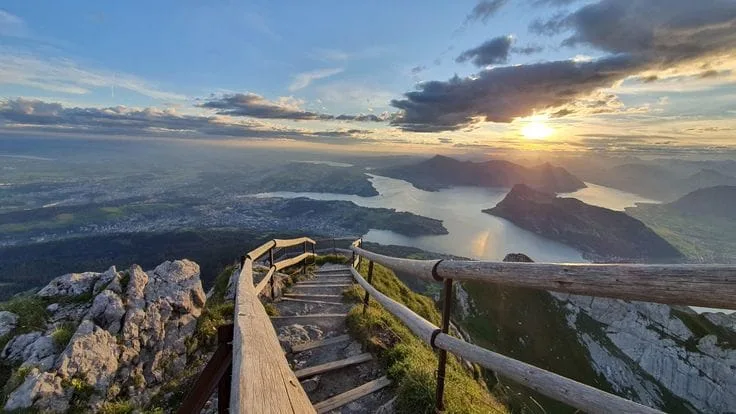
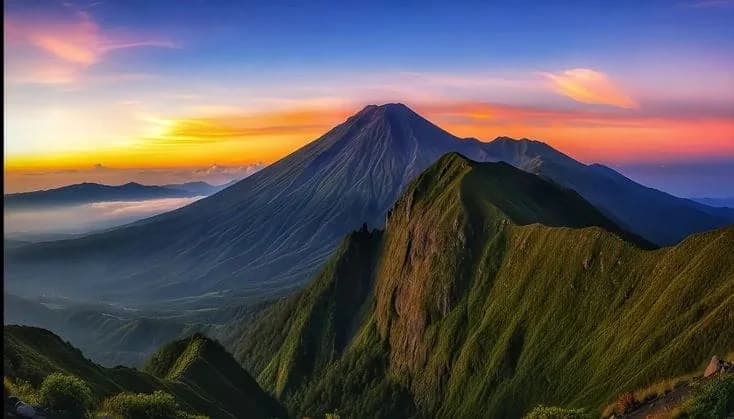
Rising above Lake Lucerne, Mount Pilatus has long been associated with stories of dragons. Medieval accounts and later folklore described the mountain as a possible home for creatures believed to possess healing powers.
The landscape itself may have helped create the mythology. Its rugged cliffs, caves and gorges made the mountain seem like a natural habitat for dragons, while the surrounding region was considered dangerous in the Middle Ages.
Also Read | Sharad Navratri Day 7: Why Maa Kalaratri is worshipped as the destroyer of fear
One legend involves the Luzerner Drachenstein, or Lucerne dragonstone, which was supposedly dropped by a dragon flying from Mount Rigi to Mount Pilatus in 1421. Another story tells of a man who fell into a cave and spent the winter with two peaceful dragons.
Lorelei Rock in Germany
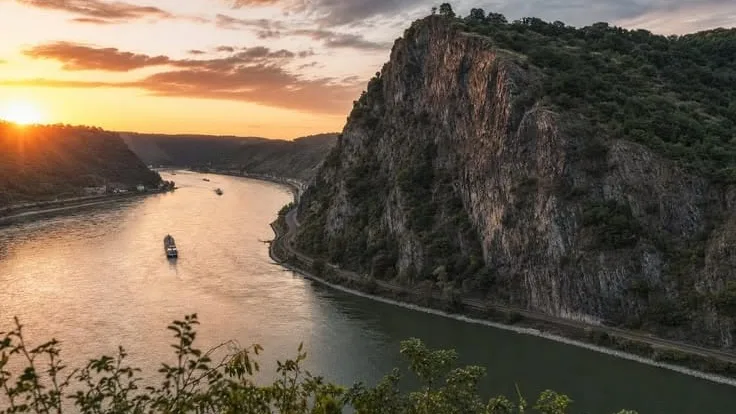
Lorelei Rock rises dramatically above one of the narrowest stretches of the Rhine. Strong currents, sharp turns and the confined channel historically made the waterway dangerous for boats.
The famous story of Lorelei developed during the Romantic period. Writer Clemens Brentano introduced the character in an 1801 ballad, while Heinrich Heine’s 1824 poem turned her into a beautiful woman whose singing distracted sailors and caused their boats to crash.
The story has similarities with the Sirens in Homer’s Odyssey, who also lured sailors towards danger with their songs.
Pont del Diable in Spain
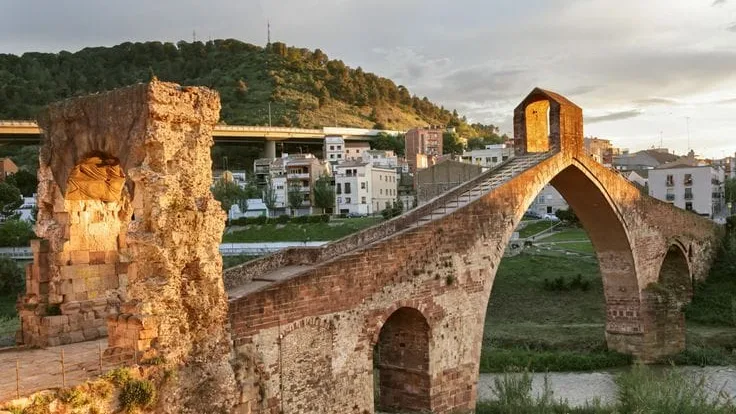
The Pont del Diable near Tarragona is not actually a medieval bridge. It is a Roman aqueduct, believed to have been built in the first century C.E. to carry water to the ancient city of Tarraco.
The structure stretches for about 712 feet and reaches almost 90 feet at its highest point. Its impressive construction later became associated with a familiar European folklore theme.
According to local legend, the devil built the aqueduct after making a bargain with its architect. He demanded the soul of the first person to drink from it, but the architect outsmarted him by sending a donkey to drink first.
The aqueduct is ancient, but the surviving written record of the legend dates to modern times.
St. Michael’s Mount in Cornwall
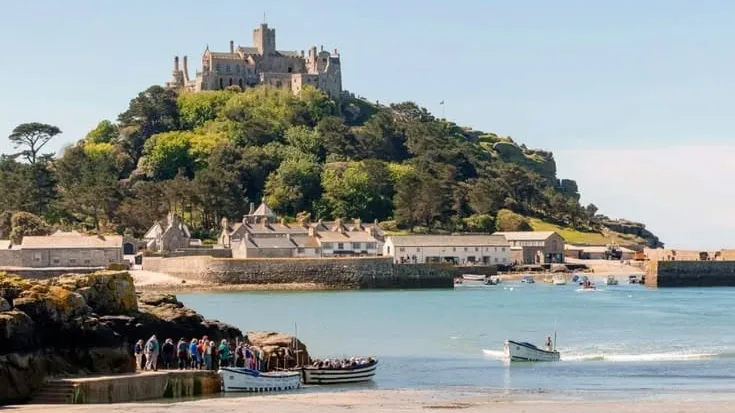
St. Michael’s Mount is a tidal island in Cornwall connected to the mainland by a cobbled causeway that disappears beneath the water when the tide rises.
Christian tradition says the archangel Michael appeared at the site in 495 C.E. The island later became a pilgrimage destination, and by the Norman period it was associated with the Benedictine abbey of Mont-Saint-Michel.
But another legend gives the island a more mythical history. A giant named Cormoran was said to have lived there and terrorised villagers by stealing livestock. According to the story, a young Jack the Giant Killer eventually defeated him.
Cornish tradition also portrays Cormoran as a giant who helped create the mount, providing another supernatural explanation for the landscape.
Why these legends survived
The stories surrounding these places may differ, but they share a common idea. When landscapes or structures appeared too unusual, dangerous or technically difficult to explain, people turned to supernatural figures to make sense of them.
Modern geology and engineering have provided evidence-based explanations for their origins, but the legends have not disappeared. Instead, they have become part of the identity of the places themselves, adding another layer of history and storytelling to landscapes that were already extraordinary.