


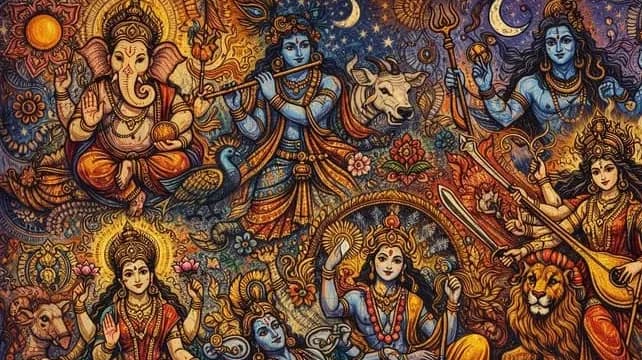
The religious history of medieval South India does not always fit neatly into the Hindu-Muslim divisions that are often used to describe the past. Across the Deccan and southern parts of the subcontinent, stories, rituals and local traditions developed through interactions between communities, with Muslim figures sometimes becoming part of the worship surrounding Hindu gods.
One of the clearest examples is found at Sabarimala in Kerala. Before beginning their pilgrimage to the Ayyappa temple, devotees traditionally visit the mosque of Vavar Swami at Erumely. Vavar is believed to have been a Muslim companion or devotee of Ayyappa. Pilgrims offer coconuts, pepper and rice at the mosque before continuing their journey to Sabarimala. A shrine dedicated to Vavar also stands near the Ayyappa temple.
The tradition is not simply an isolated example. Similar stories involving Muslim companions, wives and protectors appear in the worship of several important South Indian deities.
Muslim figures in the stories of major Hindu gods
At the temples of Srirangam and Tirumala, Muslim women have been incorporated into the mythology and ritual traditions surrounding the presiding deities.
Ranganatha of Srirangam is associated with Thulukka Nachiyar, described in temple tradition as a Muslim princess devoted to the deity. At Tirumala, Venkateswara is similarly associated with Bibi Nancharamma. The worship of both figures continues as part of the respective temple traditions.
The Deccan god Khandoba provides an even more striking example of this cultural mixing. Worshipped in different regions under names including Mallanna in Telangana and Mailar in Karnataka, Khandoba is identified by elite devotees with Shiva. His worship, however, has historically extended across caste and community boundaries.
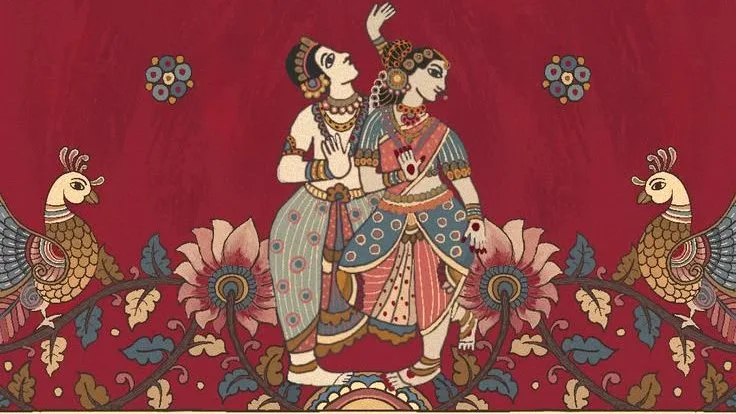
At Jejuri in Maharashtra, Khandoba is traditionally said to have five wives from different social backgrounds. One of them, Candai Bhagvani, is identified as a Muslim woman. The stories surrounding these wives reflect the diverse communities that became connected to the deity’s worship.
Muslims have also traditionally taken part in Khandoba’s rituals. During certain processions, a Muslim participant attends to the god’s horse, while Muslims themselves have referred to the deity by names such as Mallu Khan and Ajmat Khan. An inscription dating to 1703 even uses several traditional epithets of Shiva alongside the name Maluskhan.
When religious boundaries were not so rigid
The examples do not stop with Hindu deities incorporating Muslim figures. There are also traditions in which communities regarded today as Hindu participate in the veneration of Muslim saints.
In Telangana, Peerla Panduga is a Muharram tradition in which members of different local communities take part in processions and visit dargahs. Another example is Muttal Ravuttan, a Muslim figure who appears in traditions surrounding Draupadi, a major goddess in parts of rural Tamil Nadu.
Also Read | Sharad Navratri Day 7: Why Maa Kalaratri is worshipped as the destroyer of fear
Historian Dominique-Sila Khan has described such traditions as evidence of religious boundaries that were more porous than modern categories might suggest. These practices could also reflect social and occupational relationships within local communities, rather than simply representing an abstract idea of religious tolerance.
The stories attached to these deities often allowed different groups to establish a place within a shared religious landscape. Muslim communities could participate through legends involving a companion, protector or devotee, while members of different castes could find their own place within a deity’s mythology and rituals.
Why modern ideas can complicate the medieval past
The author argues that modern attempts to view medieval Indian history entirely through religious conflict can obscure these everyday interactions.
Accounts of temple attacks by Muslim rulers are often used to construct a broad narrative of Hindu-Muslim hostility. But such episodes existed alongside local traditions in which Muslim communities participated in Hindu religious practices and economies.
Political and military conflict certainly existed in medieval India. Yet rulers and ordinary communities did not necessarily behave according to the same religious boundaries. Local relationships could continue across political conflicts, while traditions evolved through trade, occupation, marriage, patronage and shared cultural spaces.
Also Read | How Kolkata’s Durga Puja became a celebration of public history
This is why figures such as Vavar, Thulukka Nachiyar, Bibi Nancharamma and Candai Bhagvani are significant. Their presence in South Indian religious traditions points to a past in which identities and relationships could overlap in ways that are difficult to fit into today’s rigid categories.
The history of South Indian worship, therefore, is not only a story of separate religious communities. It is also a history of communities borrowing from, participating in and reshaping one another’s traditions over centuries.