






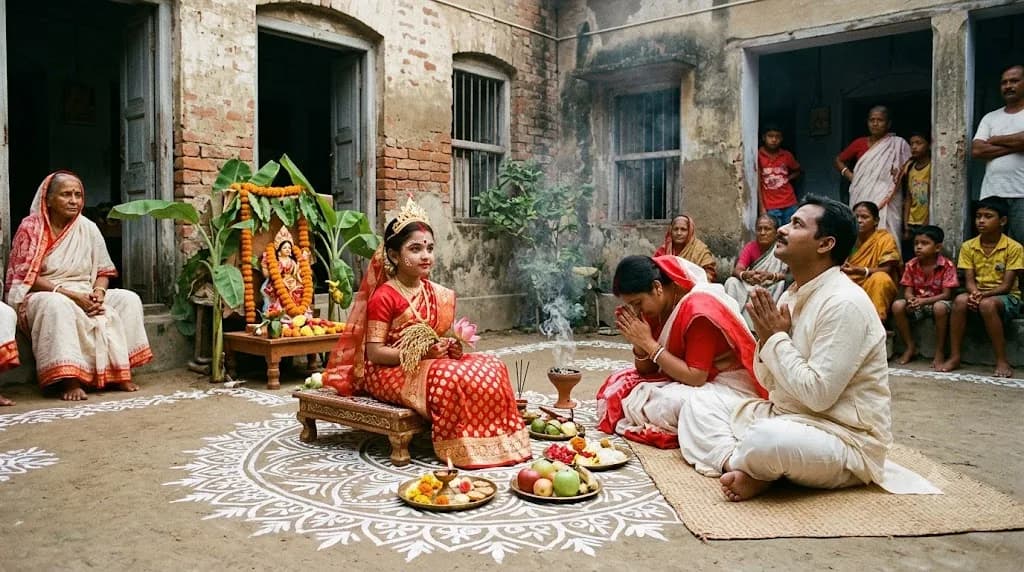









A couple in West Bengal’s Nadia district used the occasion of Kojagari Lakshmi Purnima to deliver a powerful message against violence against women and discrimination against girl children. Instead of worshipping a traditional earthen idol of Goddess Lakshmi, Debashis Biswas and his wife, Lakshmi, placed their eight-year-old daughter, Shruti, at the centre of their household puja in Shivnibas village near the India-Bangladesh border.
The child was dressed as Goddess Lakshmi and seated on a chair while a priest performed the traditional rituals. The family’s gesture drew the attention of neighbours and turned a religious celebration into an appeal for a society where girls are valued, protected and treated with dignity.
The couple said their decision was intended to challenge attitudes that often place girls at a disadvantage and to remind people that respect for women must extend beyond religious observances.
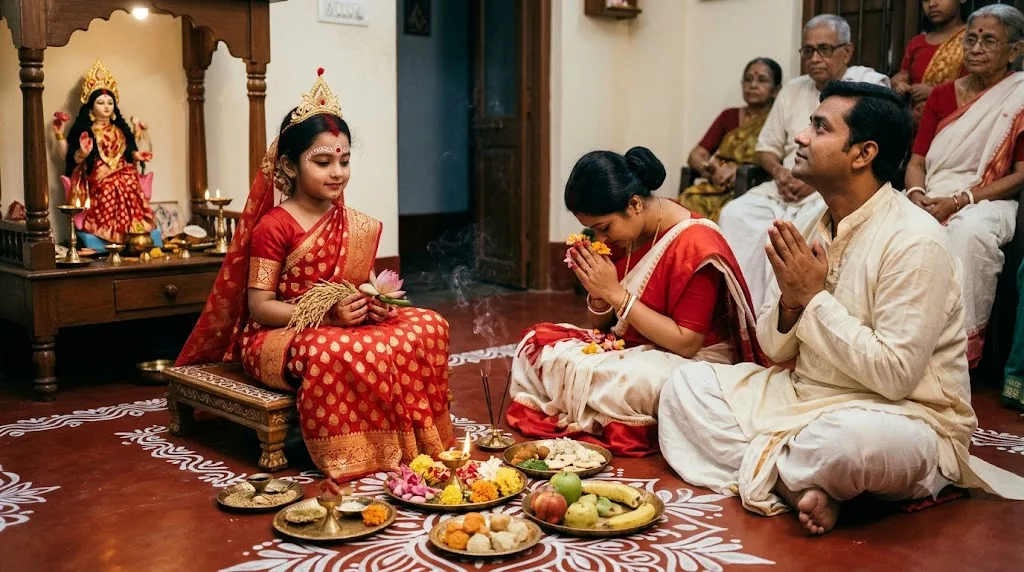
Violence against women inspires a powerful Lakshmi Puja message
The family’s initiative comes against the backdrop of several disturbing cases of violence against women in West Bengal, including the rape and murder of a trainee doctor at RG Kar Medical College and Hospital, the rape and murder of a girl in Kultali, and the killing of a young woman in Krishnagar on Lakshmi Puja two years ago.
These incidents have intensified public concern about women’s safety and the need to challenge the social attitudes that enable discrimination and abuse. By worshipping their daughter as Lakshmi, the Biswas couple sought to draw a connection between the reverence shown to goddesses and the treatment of girls in everyday life.
“Every family considers its daughter to be Lakshmi. Women are also regarded as the embodiment of maternal power. That is why we decided to worship our own daughter instead of an earthen idol of Goddess Lakshmi,” Lakshmi Biswas said to The Statesman.
Their message was simple: the dignity and safety of girls should be protected in homes and communities, not merely celebrated through religious rituals.
Also Read | West Bengal weather: Cyclone Arnab to bring rain, thunderstorms from October 27
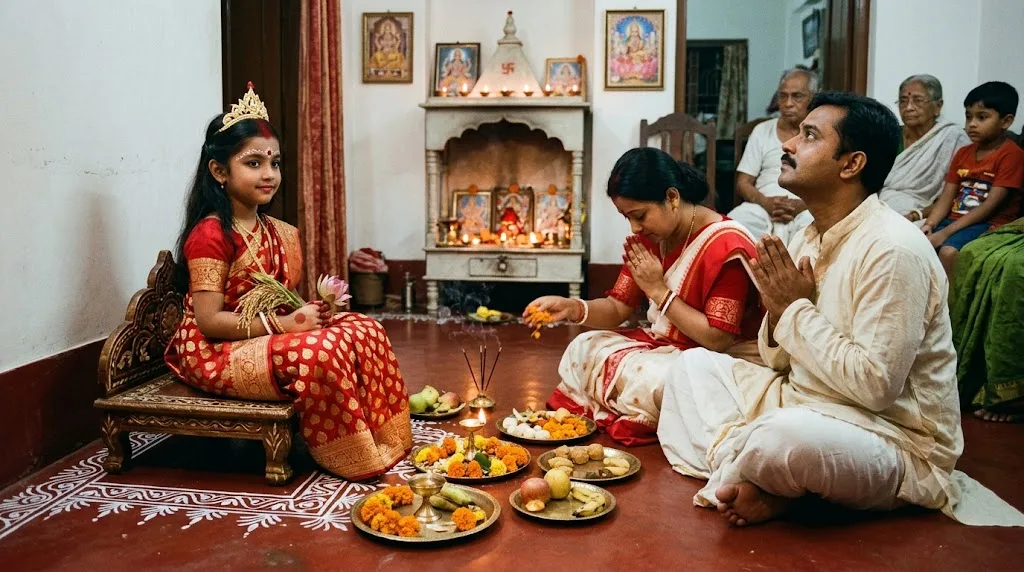
Couple challenges gender discrimination through religious tradition
According to The Statesman, Debashis Biswas said the family had experienced happiness and prosperity since Shruti was born, but discrimination between sons and daughters continued to trouble him. He wanted the puja to challenge the belief that girls deserve less attention or respect than boys.
The ritual also received support from priest Tarun Banerjee, who conducted the worship. He said daughters deserved the same reverence accorded to mothers and described the practice as consistent with religious traditions that honour feminine divinity.
Although the worship of young girls as Kumaris is associated with Durga Puja, the family’s decision to worship Shruti as Lakshmi on Kojagari Purnima gave the observance a distinct message about equality and women’s dignity.
The couple’s gesture highlighted the contrast between worshipping female deities and the continuing problem of violence against women. Their appeal was that respect for the divine feminine should be reflected in how girls are raised, protected and treated throughout their lives.
Also Read | Rampurhat: 9-year-old girl allegedly molested, man booked under POCSO
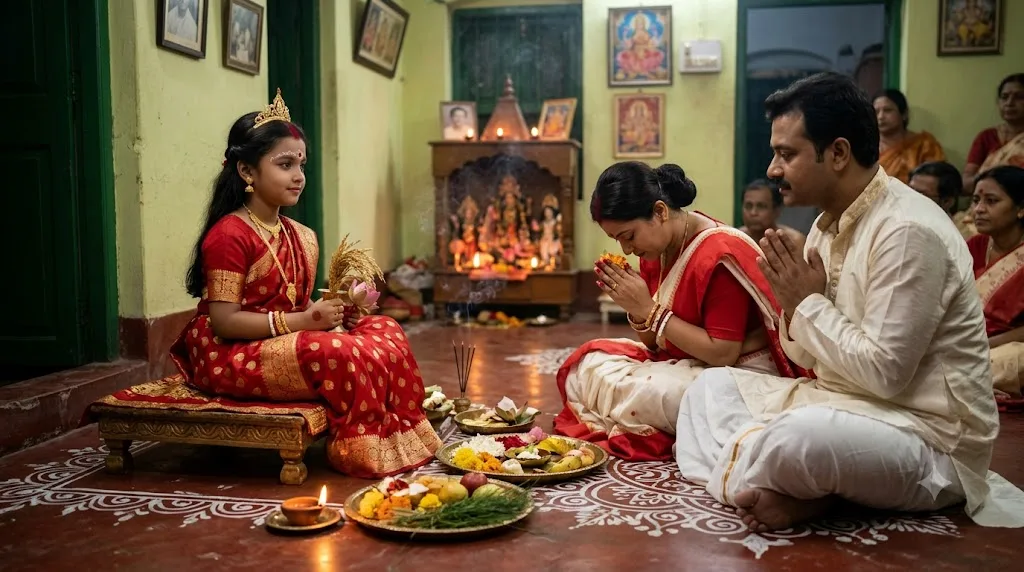
Prayers extend to people seeking justice and equal rights
Beyond the message of gender equality, the family’s prayers also extended to people struggling to secure their rights. Debashis expressed concern for teachers who, he said, had lost their jobs despite being eligible, and prayed that those deprived of justice and employment would regain their rights and celebrate festivals with their families.
The unusual puja attracted neighbours, several of whom appreciated the couple’s attempt to use a familiar religious occasion to raise awareness about the rights of girl children.
The family’s initiative served as a reminder that challenging violence against women requires more than public outrage after individual crimes. It also calls for everyday efforts to confront prejudice, promote equal treatment and ensure that girls grow up in safe and supportive environments.
By placing Shruti at the centre of their Lakshmi Puja, the Biswas couple turned a household ritual into a public appeal: girls should be celebrated not only as symbols of prosperity, but also as individuals entitled to equality, security and respect.