











A Ukrainian soldier who spent 491 days on the frontline has been rescued by a heavy-lift drone after months of being trapped in a damaged school building.
Kostiantyn Vlasenko, 49, had lost both feet after a Russian drone attack left him severely injured. Unable to move safely through the battlefield, he survived on supplies delivered by drones until Ukrainian forces devised an aerial evacuation plan. The rescue took place on October 4.
The operation called attention to a growing challenge in the Russia-Ukraine war. Drones have made it increasingly dangerous for soldiers to move across exposed ground. They can monitor positions, track movement and attack troops attempting to escape.
Areas where surveillance and attack drones operate in large numbers have become known as “kill zones”. In such conditions, even rescuing a wounded soldier can put an entire team at risk.
An absolutely incredible rescue story! For the first time in history, a wounded Ukrainian soldier has been evacuated from the frontline by an aerial drone. Enemy drones overhead. Mined terrain. No safe way out. Warriors of Ukraine’s 92nd Assault Brigade modified a heavy hexacopter to rescue their comrade. When a ground evacuation was impossible, Ukrainian ingenuity made the impossible possible. Glory to Ukraine’s Defenders!
— UAVoyager🇺🇦 (@CrimeanVoyager) October 19, 2026
Also Read | What are heat storms? Why global heatwaves are becoming bigger and longer
The soldier’s ordeal and months in hiding
Vlasenko served with Ukraine’s 30th Mechanised Brigade in the Kharkiv region. He was deployed to a frontline position in May 2025, where he joined another soldier identified by the call sign Basky. The two men remained at their position for months.
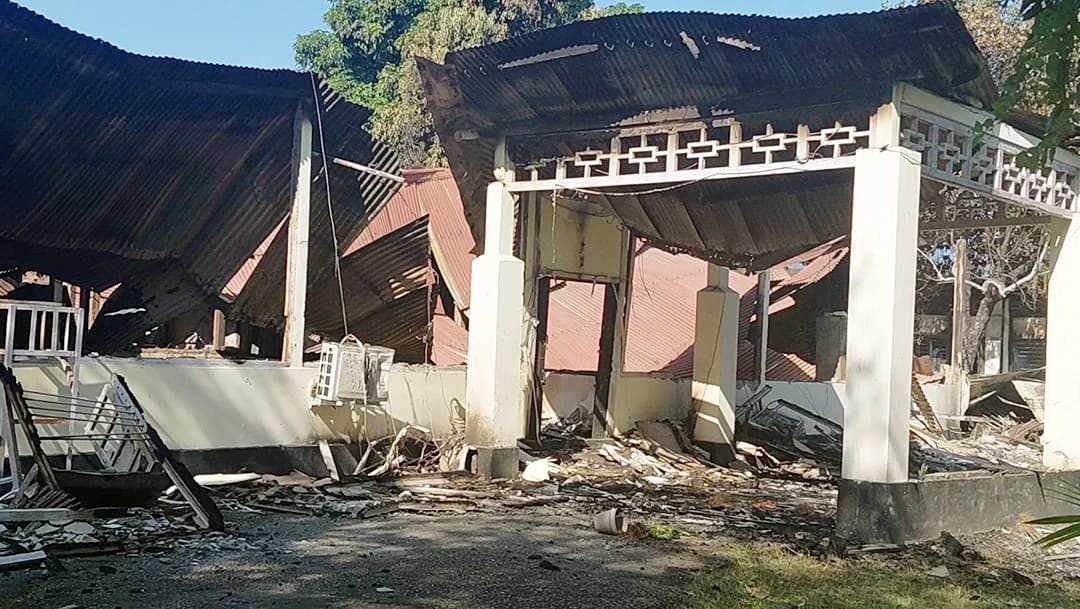
Their situation deteriorated in February 2026. After their original shelter flooded, they moved into a damaged school building. A Russian drone then attacked them, killing Basky and severely injuring Vlasenko’s legs.
Vlasenko took refuge in a small pit beneath the school’s former boiler. His injuries left him unable to move without assistance. His left foot was badly damaged in the attack, while his other leg was also severely injured.
With the injury worsening, he eventually amputated his right foot himself using a knife.
For months, he remained dependent on supplies dropped by Ukrainian drones. These deliveries brought food and other essentials. But delivering supplies was different from extracting a wounded man. Earlier attempts to reach his position failed, and unmanned ground vehicles sent to help were destroyed by Russian drones.
❤️🩹 “These people, they are angels.” After holding his position alone against heavy odds, Ukrainian soldier Kostiantyn was saved by a drone in a historic first-of-its-kind evacuation. https://t.co/C1p4XT0C3u
— UNITED24 Media (@United24media) October 20, 2026
A rather ingenious exit strategy
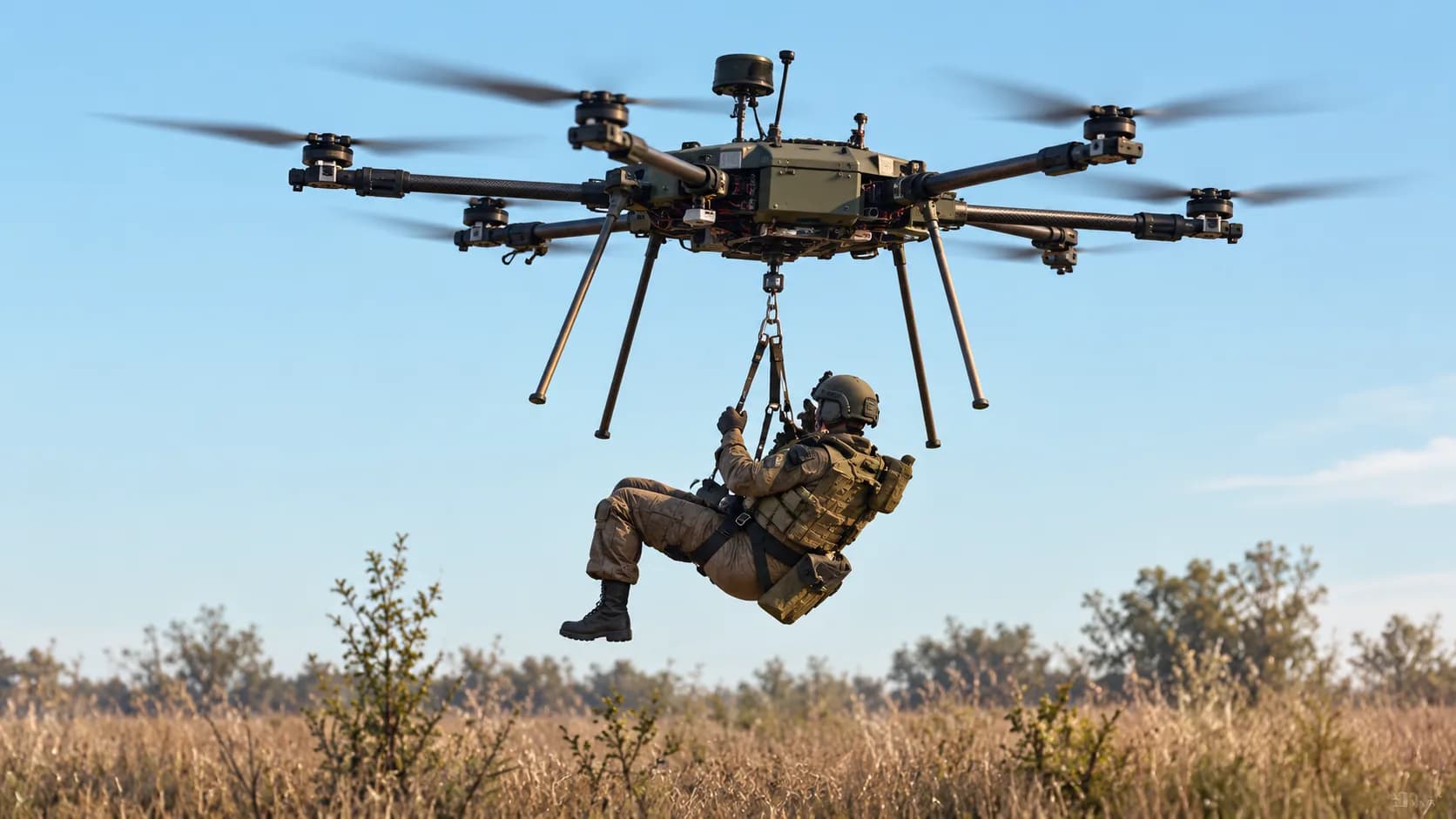
The solution was to use a heavy-lift aerial drone, the Ayudag-6, adapted for human evacuation.
Developed by Ukrainian manufacturer Gurzuf Defence, the six-rotor aircraft was designed to carry heavy loads. For this mission, it was equipped with an electric winch and a special harness.
The rescue required careful preparation. A day before the operation, another drone delivered the harness and a phone containing video instructions.
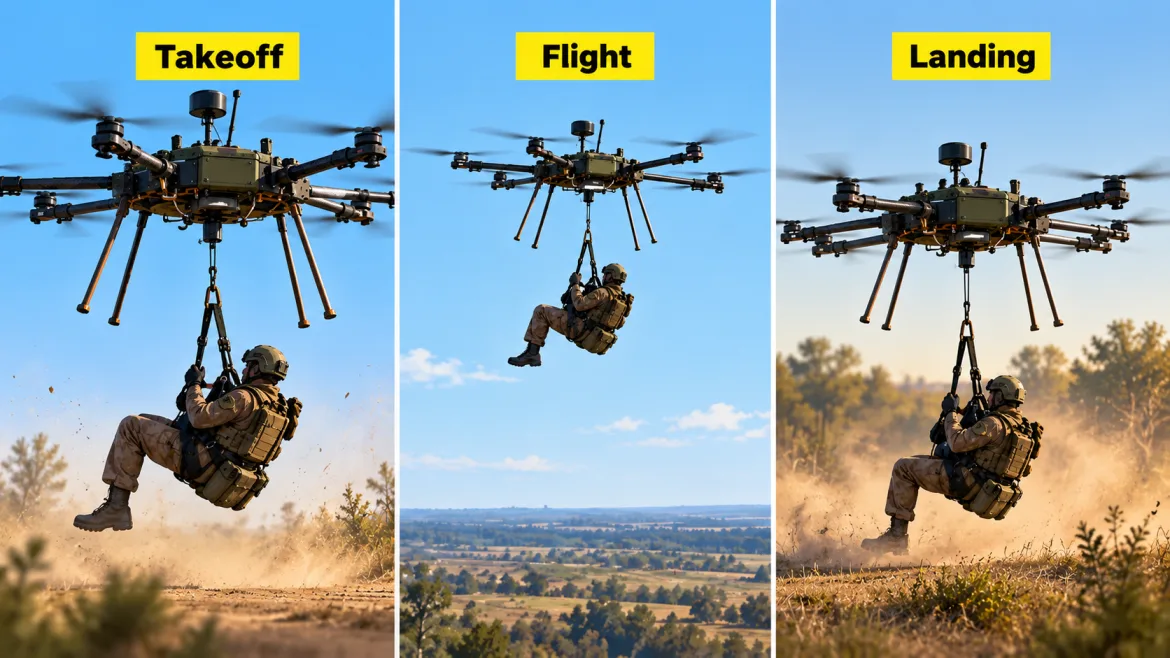
Vlasenko had to secure himself in the harness and attach it to a cable beneath the aircraft. The drone would then lift him into the air and carry him to a safer location.
On October 4, the plan was put into action. The aircraft lifted Vlasenko to a height of around 70 metres and flew approximately 15 kilometres away from the frontline. The journey took about 15 minutes.
The rescue team also used a diversion strategy. Three Ukrainian vampire drones accompanied the evacuation aircraft to distract Russian drones.
Other Ukrainian drone crews and artillery units targeted known Russian drone positions to reduce the threat during the operation. The rescue drone eventually reached its destination, where Vlasenko could receive medical care.
AFU reports first-ever battlefield evacuation by flying drone Ukrainian military announced the first use of a flying drone to evacuate a wounded soldier from the front line. AFU also released footage of the operation, claiming it is a world-first in military practice. Slavyangrad
— Beate Landefeld (@BeateLandefeld) October 19, 2026
No easy road out, so the rescue takes flight
The operation shows how drones are being used for purposes beyond surveillance, reconnaissance and combat. They can also deliver supplies to isolated troops and, when suitably equipped, evacuate people from places that conventional vehicles cannot safely reach.
A ground evacuation usually requires personnel or vehicles to approach the wounded soldier. In a heavily monitored battlefield, that movement can expose rescuers to enemy fire.
A drone can potentially bypass some of these threats by travelling directly through the air. Nonetheless, aerial evacuation also carries risks. The aircraft can be intercepted, and transporting a person securely requires careful planning, sufficient lifting capacity and suitable equipment.
Also Read | Brazil election: Can Lula stop Flávio Bolsonaro’s march towards power?
An impressive manoeuvre, not a universal fix
Ukrainian commanders described Vlasenko’s extraction as the first known aerial drone rescue of a soldier. His account was corroborated by the Ukrainian military and footage recorded by a camera mounted on the rescue drone, although not every element of the rescue could be independently verified.
The claim of a first-of-its-kind operation should therefore be understood with that qualification.
For Vlasenko, the mission meant escaping a position where survival had become increasingly uncertain. For the military, it demonstrated a possible way to retrieve wounded personnel when traditional rescue routes are too dangerous.
Whether such methods can be used more widely will depend on the aircraft, battlefield conditions and the ability to protect the evacuation route.