











Judges appointed by the Supreme Court to hear appeals linked to the Special Intensive Revision (SIR) of electoral rolls in West Bengal have repeatedly raised concerns over an Aadhaar authentication requirement on the Election Commission’s digital portal. According to official records accessed by The Indian Express, the additional verification step has prevented appellate tribunals from uploading final orders, affecting the disposal process for voters challenging decisions taken during the revision of electoral rolls.
The issue was first formally flagged on September 24, just three days after the Election Commission introduced the Aadhaar authentication screen on September 21. The judges raised the matter again in October, with the tribunals’ venue-in-charge requesting the Chief Electoral Officer (CEO) of West Bengal to resolve the technical problem on October 13.
The portal-related difficulties have emerged alongside concerns about inadequate infrastructure, poor working conditions and the honorarium paid to retired judges serving on the appellate tribunals.
Judges seek removal of Aadhaar authentication
The Election Commission’s IT division developed a dedicated online portal for the appellate tribunals established to hear challenges arising from the West Bengal SIR process. However, the introduction of Aadhaar authentication created another hurdle for judges attempting to upload their final decisions.
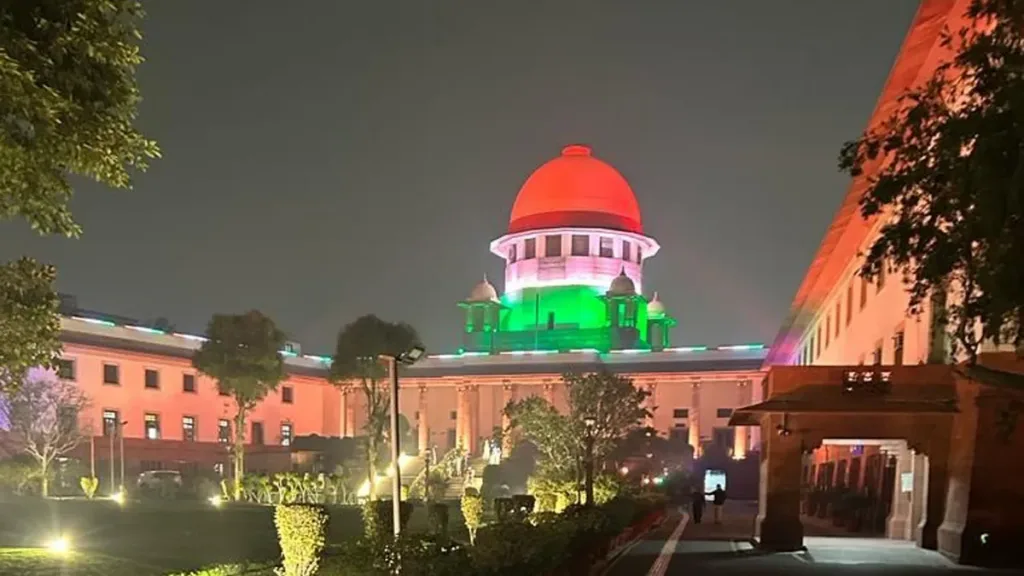
During a virtual meeting on September 21, conducted by Election Commission Director General of IT Seema Khanna, judges were familiarised with the updated portal. However, they were not informed that the revised system required them to authenticate using their personal Aadhaar numbers before uploading final orders.
In a letter dated September 24 to the Additional Chief Electoral Officer and the nodal officer for the tribunals, the venue-in-charge conveyed the judges’ demand for the authentication requirement to be removed.
“The Honourable Judges at the Appellate Tribunal require the Aadhaar authentication screen removed from the AT portal for the purpose of disposal of appeals.”
Although the tribunals have been disposing of appeals through physical proceedings, the inability to upload final decisions on the portal has created a gap between the judicial process and the digital record of those decisions.
The problem remained unresolved in October. On October 12, the CEO’s office forwarded a request from an appellant seeking disposal of his appeal. The tribunal’s in-charge responded the following day, pointing out that the technical issue had already been reported.
“Since the system at present does not allow the tribunals to upload the final order and in this regard, CEO has already been apprised of vide letter dt. 24.09.2026. CEO, WB be once again requested to fix the issue to ensure proper functioning of the Tribunals.”
EC portal gaps affect SIR appeal proceedings
The Aadhaar authentication issue is not the first technical problem reported by the judges. At a meeting on August 11, members of more than a dozen tribunals highlighted several shortcomings in the portal, according to the minutes shared with the Election Commission and the Chief Justice of the Calcutta High Court.
The judges said the system did not allow them to serve notices to parties, upload additional documents submitted by appellants or conduct virtual hearings. They also flagged the inability to restore a deleted voter and the lack of an option for appellants to download tribunal orders.
Although the Election Commission subsequently updated the portal, restrictions remained on the types of documents that could be accepted from appellants. The system limited submissions to the 13 documents specified by the commission during the SIR exercise.
These limitations have added to the difficulties faced by tribunals dealing with appeals from voters whose names were deleted from the electoral rolls, as well as challenges against the inclusion of names.
Retired judges flag poor working conditions at Joka
Apart from the digital problems, 10 retired judges serving on the appellate tribunals wrote to the authorities on October 1, raising concerns about their working environment at Joka, on the outskirts of Kolkata.
They called for the tribunals to be shifted to a more centrally located area and sought better facilities for judges and staff. Their letter described the existing premises as a temporary arrangement created in haste following the deletion of around 27 lakh voters after the adjudication process.
The judges wrote that the tribunals had been established to address public dissatisfaction after the electoral roll revision, with the facilities initially intended to serve as a short-term arrangement.
“…in order to assuage the public discontents, venue and court rooms were selected and constructed in a jiffy. In such emergent situation, taking it as a stop gap measure for a short period and in fact, it was given to understand as such that is was a matter of few months, 19 Appellate Tribunals, along with court rooms, were given shape in a vacant building of the Central government in Joka purely as a make-shift arrangement,” they wrote.
The letter also highlighted the distance from Kolkata and New Town, the condition of the roads and the long journeys required to reach the workplace. According to the judges, the commute could take between two and three hours.
“Judges are to work in a melee within a room of about 12×10 sq. ft. along with 7/8 members of staff working on computers whole day long in inconceivable conditions having no scope for recess. Judges have no separate chambers or washroom,” they wrote.
The judges also pointed to the lack of stationery and access to washrooms, describing the facilities as inadequate for the work expected of the tribunals.
Judges demand higher honorarium and better facilities
The retired judges questioned whether the compensation offered for their work reflected the responsibilities involved. They said a request to increase the honorarium had already been pending with the Chief Justice since June.
“Last, not the least, the honorarium provided to the Retired Judges does not appear either to be hon’ble or befitting to the dignity of the judges…”
The judges sought an increase from Rs 25,000 to Rs 50,000 per week. They also recommended relocating the tribunals to a more accessible part of the city, improving workplace facilities and providing additional compensation to staff members handling the appeals.
Some of these concerns had been raised as early as the second week of August, indicating that the problems were not limited to the portal’s latest update.
Background to the appellate tribunals
The tribunals were established following the Election Commission’s SIR exercise and subsequent Supreme Court directions. While the revision was underway in nine states and three Union Territories from October of the previous year, West Bengal followed a distinct process after the Supreme Court intervened in the matter.
On February 20, the Supreme Court invoked its extraordinary powers under Article 142 and directed judicial officers to adjudicate the eligibility of electors. The intervention came amid a trust deficit between the Election Commission and the then Trinamool Congress-led state government.
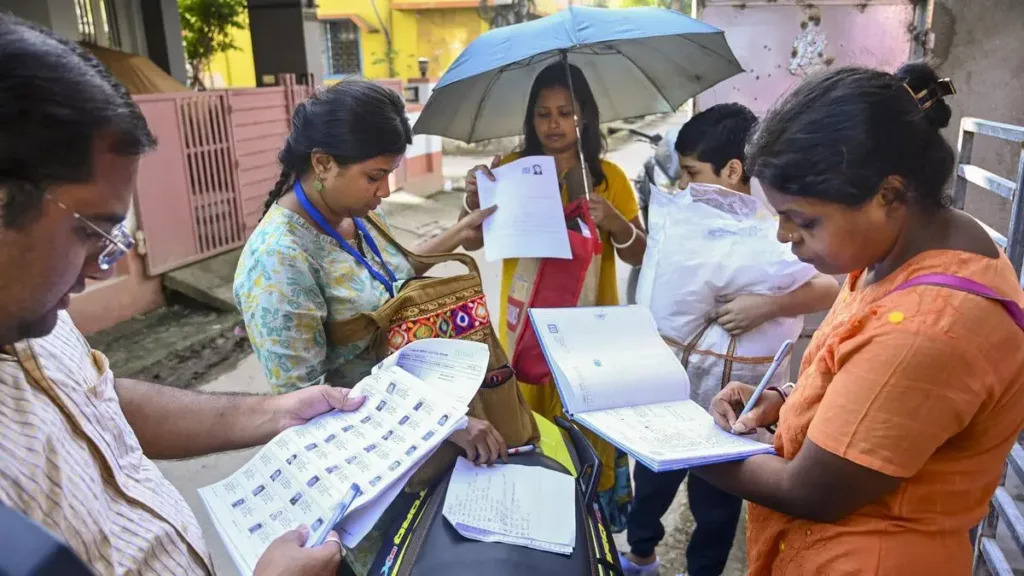
Hundreds of judicial officers subsequently examined 60.06 lakh electors flagged by the commission’s centralised software for what it described as “logical discrepancies”. Following the adjudication, 27.16 lakh electors were ordered to be deleted from the rolls.
On March 20, the Supreme Court directed the establishment of appellate tribunals comprising retired High Court judges to provide those affected with an opportunity to challenge the decisions. The Election Commission appointed 19 former judges to serve on the tribunals.
Also Read | RSF raises alarm over press freedom concerns in West Bengal
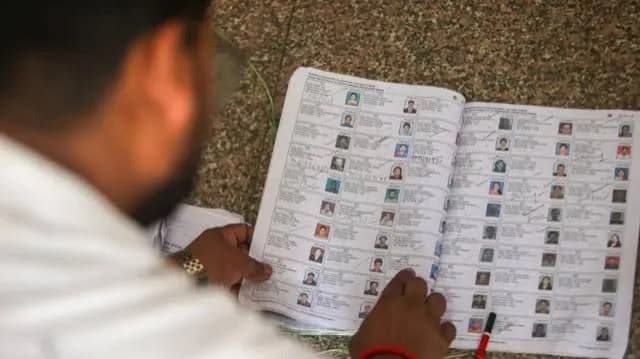
The scale of the appeals has been substantial. According to figures submitted by the Election Commission to the Supreme Court, 38.31 lakh appeals had been filed as of September 18. Of these, 22.21 lakh came from voters whose names had been deleted, while 16.10 lakh challenged inclusions in the electoral rolls.
The commission told the court that only 1.26 lakh appeals had been disposed of by September 10.
Portal issues raise questions over disposal of SIR appeals
The repeated complaints from the tribunals have brought the Election Commission’s digital infrastructure and the working arrangements for retired judges into focus. The judges have sought a resolution to the Aadhaar authentication problem so that final orders can be uploaded, while also asking for improved facilities and a more suitable location.
Also Read | ECINET audit flags possible restriction on voter roll tools in Bengal
With millions of appeals filed in connection with the West Bengal SIR, the tribunals have a substantial workload. Resolving the technical difficulties and addressing the judges’ concerns remain important issues for the effective functioning of the appellate mechanism.