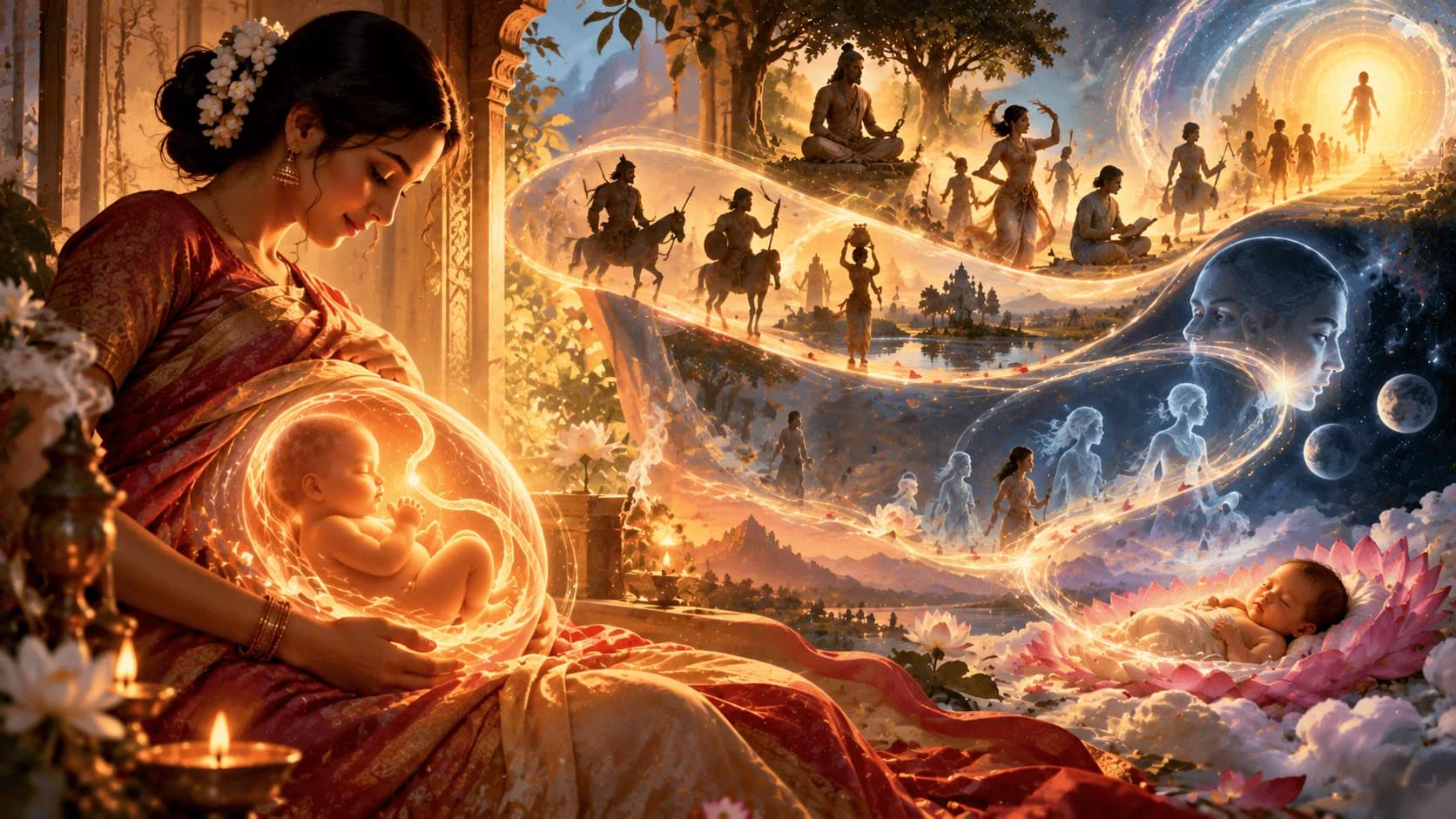












Why are humans born after nine months? While science explains pregnancy through fetal development, religious and spiritual traditions offer another perspective, linking the journey from conception to birth with the soul, karma and the cycle of life. In several Indian scriptures, the womb is described as more than a place where the body develops. It is also seen as a spiritual passage through which the soul prepares for a new life.
These beliefs explore why birth takes time and what the nine-month journey represents in spiritual thought.
The womb as a spiritual passage
The Garbha Upanishad discusses the development of the unborn child and the soul’s relationship with the human body. Within Indian spiritual traditions, the womb is often associated with the transition from a previous existence to a new human life.
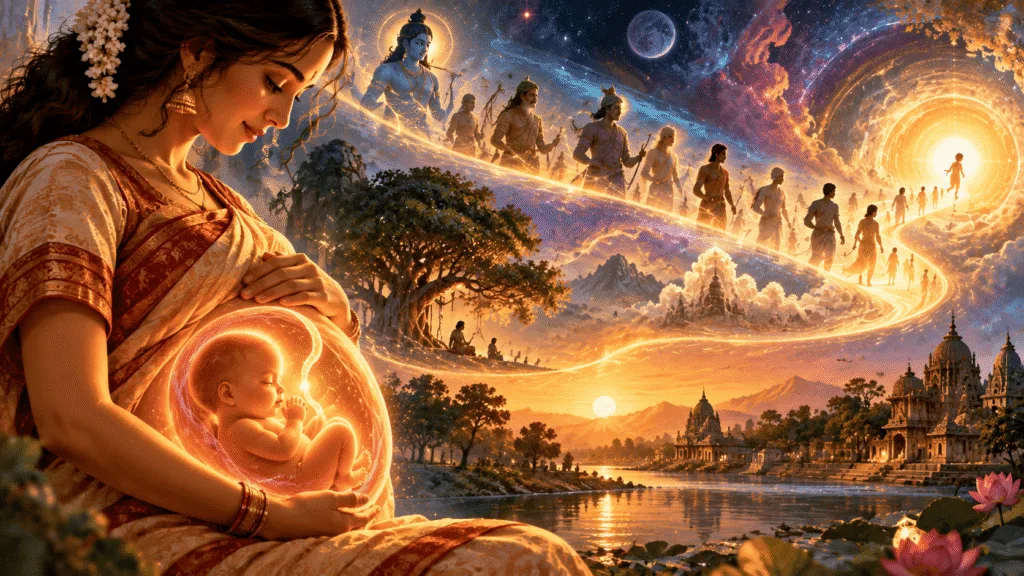
According to these interpretations, the soul carries karmic impressions from previous lives. Pregnancy represents a gradual shift from spiritual awareness towards physical existence, with the developing child preparing to experience life through a human body.
Also Read | Can Indian mythology become the next global storytelling universe?
Why does the number nine hold spiritual significance?
The number nine carries symbolic importance in several Indian religious traditions. It is associated with the Navagrahas, or nine celestial bodies in Hindu astrological tradition, and Navadurga, the nine forms of Goddess Durga worshipped during Navratri.
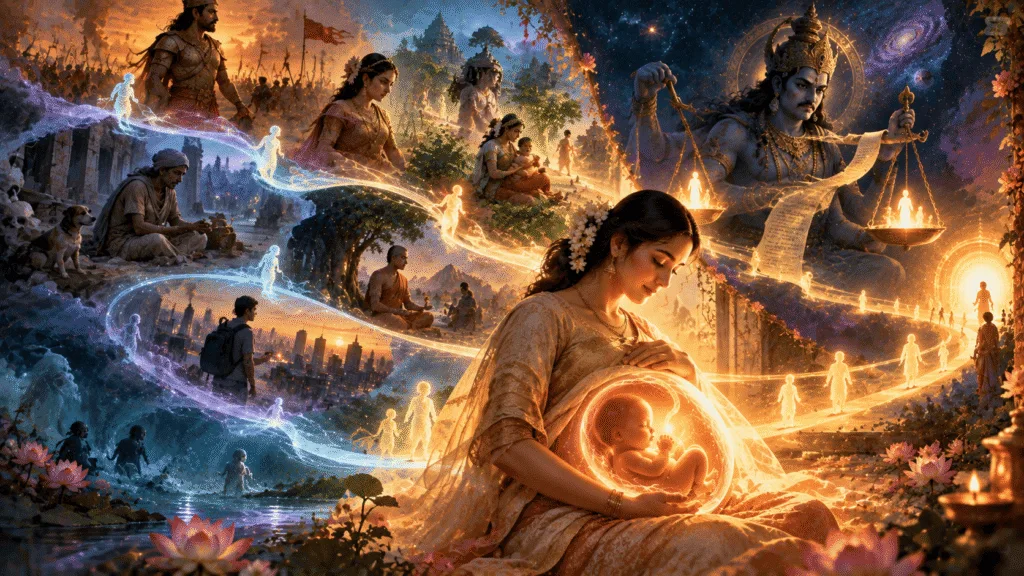
Against this cultural background, the nine-month pregnancy period is sometimes interpreted symbolically as a complete journey towards birth. However, this is a spiritual interpretation rather than a scientifically established explanation for the duration of pregnancy.
Does the unborn child remember past lives?
Some spiritual interpretations suggest that an unborn child may retain awareness of previous lives during pregnancy. Certain accounts associate the seventh month with a temporary return of such awareness, including reflection on past actions and a desire for liberation.
These beliefs are also connected with garbha sanskar, a traditional approach that emphasises the mother’s emotional well-being, positive surroundings, music and prayer during pregnancy.
How Does Karma Influence Birth?
In Hindu philosophical thought, karma is closely linked to the cycle of birth, death and rebirth. Some interpretations view the circumstances of birth as connected to actions from previous lives.
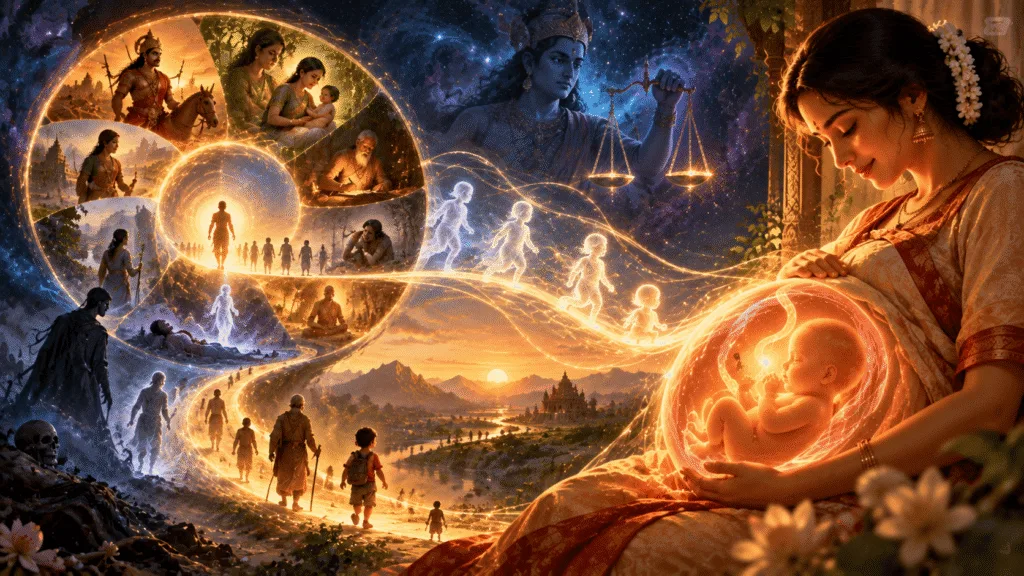
From this perspective, entering the world is part of a larger spiritual journey. The timing of birth may be understood symbolically through karma and cosmic order, although religious traditions differ in their explanations.
Also Read | Diwali lore and the legends behind the festival of lights
Why is forgetting past lives considered important?
Another spiritual idea is that forgetting previous experiences allows a person to begin life anew. According to this interpretation, the soul’s transition into a human body marks the beginning of a fresh chapter, without conscious access to memories of previous lives.
Across different religious traditions, pregnancy and birth are also associated with divine purpose and the mystery of life. These perspectives offer spiritual interpretations of the nine-month journey, while biology explains pregnancy through the development of the fetus.