










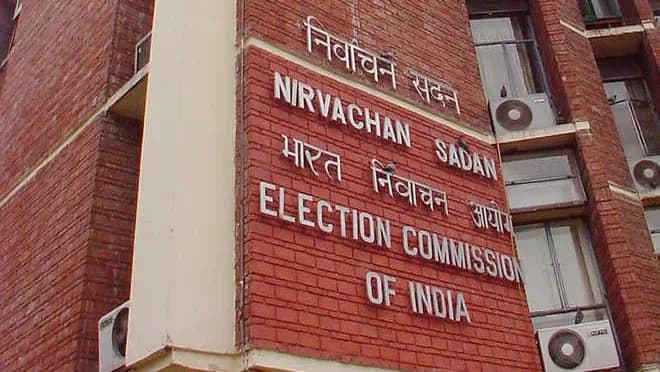
An audit by civic-tech initiative Charchagram has raised concerns about possible state-specific restrictions on the Election Commission of India’s (ECI) ECINET portal, which is used by election officials. The audit found that two tools related to electoral-roll revision could be unavailable to Electoral Registration Officers (EROs) and Assistant Electoral Registration Officers (AEROs) in West Bengal. According to the findings, no similar exclusion was identified for any other state.
The issue is significant because EROs are responsible for preparing and revising electoral rolls under Section 13B of the Representation of the People Act, 1950. Restricted access to relevant features could affect how officers carry out these statutory duties. However, the audit has not established whether the restrictions were ever activated or used.
What did the Charchagram audit find on ECINET?
Saurav Rajput, a data scientist at Charchagram, examined the ECINET portal on October 2, 6, 7 and 9. Rajput said, “West Bengal is separately hard-coded in the codebase and excluded from it.”
The two affected features are the View Enumeration Form Details tool and the notice-and-hearing dashboard.
The first tool provides information about enumeration forms, including the constituency, polling part and serial number, the elector’s voter ID and name, submission details, uploaded documents and the booth-level officer’s (BLO) recommendation. It also contains documents labelled “ERO/AERO-Document” and “Hearing-Order”, along with an option to return a form to the BLO.
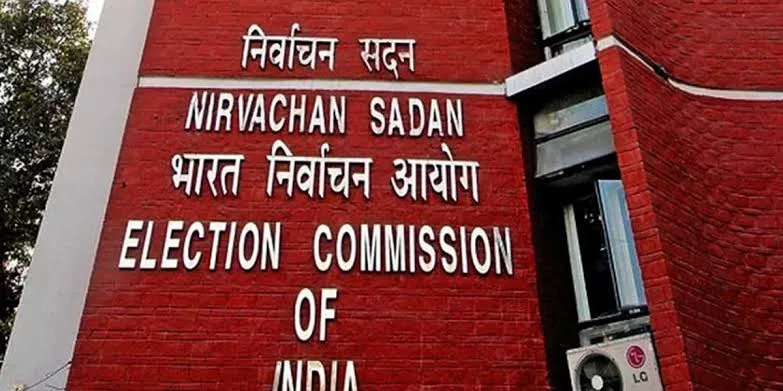
The notice-and-hearing dashboard allows officials to track and process notices and hearings connected with voter registration and electoral-roll revision.
ECINET code contains state-level access controls
The audit identified a message in the portal’s code stating, “View Enumeration Form Details is not enabled for selected state”.
According to a report by The Wire, the message suggests that access to the tool can be controlled separately for different states. Charchagram told the publication that “the tools to give or withhold access by state exist in the software”.
Also Read | Marxist books at Durga Puja pandals? Attacks on Left bookstalls draw BJP, RSS criticism
The code also contains a management section for State Nodal Officers (SNOs), including an option to disable an officer’s account. Selecting the option displays a warning that the officer will lose access to the application.
Another feature identified in the code marks certain voters as VIP with a gold symbol next to their names. Officials can reportedly download lists of these voters by assembly constituency and filter them by state, district, constituency and polling part. The criteria used to classify voters as VIPs remain unclear.
It is by now well-established how Gyanesh Kumar, at the instance and instructions of the PM and the HM, put in place ECINET to centralise all manipulations of the election process. A leading national daily reports that the ECINET code has specific restrictions on access to 2 key features for Electoral Registration Officers (EROs) and Assistant EROs in West Bengal. These features relate to voter registration and roll revision. The law establishes that EROs have statutory authority over the electoral roll. But across the country, the ECINET system and the Election Commission’s IT division have overruled and violated these safeguards. These issues around the operation of the IT division were escalated to the Cabinet Secretary by the two objecting Election Commissioners and even reached the Department of Personnel and Training (DoPT) under the Prime Minister – to no avail. We all know why. The list of legal and Constitutional violations is growing. Gyanesh Kumar must resign. The ECI and its IT division must be completely revamped.
— Jairam Ramesh (@Jairam_Ramesh) October 20, 2026
How was the ECINET audit conducted?
Charchagram examined JavaScript files that load on ECINET’s login page before an official signs in. According to an audit excerpt published by The Wire, these files contain menu labels, screen routes and application programming interface (API) paths intended for official use.
The excerpt stated, “We used no password and called no API. We only read files the site serves to everyone,”
Charchagram had previously flagged the exposure of personal information relating to officials and contractors in publicly served ECINET code. The Election Commission subsequently corrected the coding errors, The Wire reported.
However, the latest findings do not establish when the restrictions were introduced or whether they have been implemented in practice.
“At present, we cannot say whether these features have been used,” Rajput told The Wire. MediaNama has not independently verified the audit’s findings.
What has the Election Commission said?
The ECI did not respond to a questionnaire from Hindustan Times. In a September 26 press note, the Commission said a committee led by the Senior Deputy Election Commissioner would examine ECINET’s compliance with relevant Acts and Rules before submitting a report. An independent expert from an Indian Institute of Technology (IIT) or Indian Institute of Information Technology (IIIT) would also be part of the committee. The press note did not clarify whether the findings would be made public.
The Commission said the Special Intensive Revision (SIR) of electoral rolls had been completed in 20 states and union territories, including West Bengal.
Also Read | West Bengal government plans Madrasah Service Commission merger with WBSSC
The findings also come amid reported concerns within the Election Commission over access to electoral-roll databases. The Indian Express previously reported that Election Commissioners Sukhbir Singh Sandhu and Vivek Joshi had raised written objections 14 times over 10 months, including concerns about database centralisation and inadequate access to ERONET, now part of ECINET, in some states.
The central question remains whether the state-specific restriction identified in the code has affected election officials’ access to voter-roll tools. The audit has highlighted the possibility, but further clarification from the Election Commission is needed to establish whether the restriction has had any operational impact.