














Cabo Verde has spent much of 2026 attracting attention for something far removed from its usual tourism pitch. Its national football team became one of the smallest nations to qualify for the World Cup and even pushed Argentina to extra time, prompting a surge of curiosity about the Atlantic archipelago.
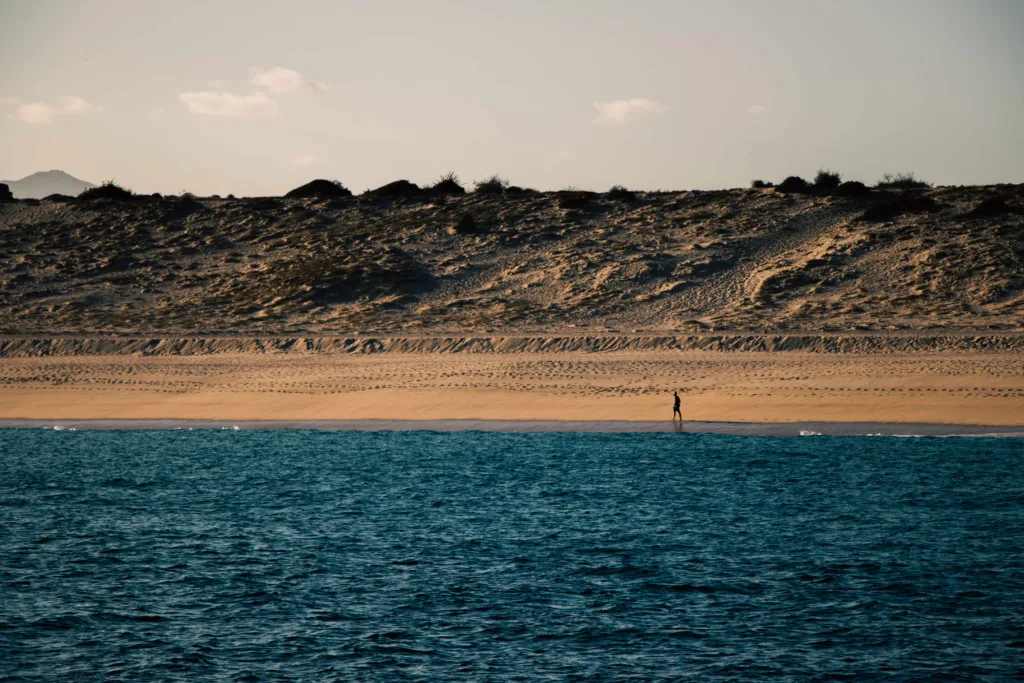
Now, Cabo Verde wants those new visitors to discover that there is more to the country than white-sand beaches.
The island nation is increasingly positioning itself as an adventure and hiking destination, backed by a five-year, $75 million tourism diversification plan supported by the World Bank.
Also Read | This remote hotel in Spain requires a handwritten letter to make a booking
The shift is significant for a country whose tourism industry remains heavily dependent on beach holidays. Nearly 80% of visitors in 2025 came for destinations such as Sal and Boa Vista.
But the new strategy is looking inland, towards volcanic craters, dramatic cliffs, green valleys, historic paths and communities that have remained largely outside the mainstream tourism circuit.
Why is Cabo Verde turning to adventure tourism?
The country’s push is being supported through a multiyear partnership between the Adventure Travel Trade Association (ATTA) and the Institute of Tourism of Cabo Verde (ITCV), financed through the World Bank-supported Resilient Tourism and Blue Economy Development Project.
In February, the ATTA held its first AdventureWeek in Africa in Cabo Verde. The 10-day programme brought 14 international tour operators and media professionals from 10 countries across several islands to experience hiking trails and community-based tourism.
The programme was deliberately longer than ATTA’s usual seven-day format.
Gustavo Timo, president of the ATTA, said Cabo Verde’s diversity made it difficult to experience the country properly within a standard week.
Post-event surveys showed strong interest among participating operators. 82% planned to create new itineraries around experiences showcased during the trip, while 64% intended to develop additional itineraries beyond the programme.
That suggests Cabo Verde’s adventure push is being treated as more than a short-lived tourism campaign.
Santo Antao is becoming Cabo Verde’s hiking star
For hikers, Santo Antao is at the heart of the country’s new tourism identity. The island has more than 20 marked trails and is accessible only by a roughly one-hour ferry journey from Mindelo on neighbouring Sao Vicente.
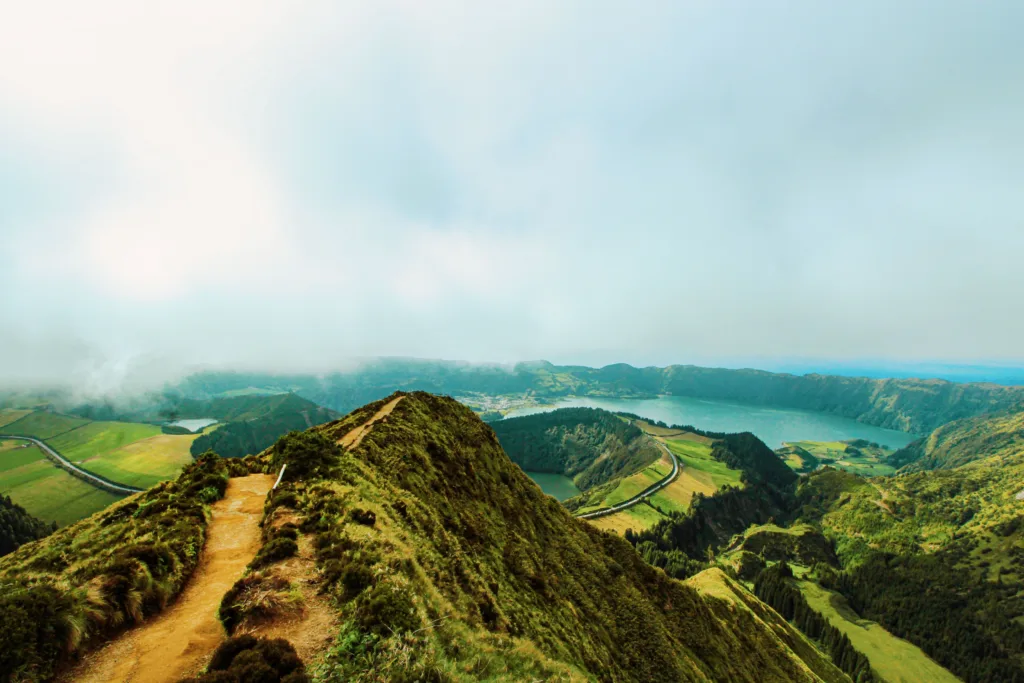
One of its signature hikes begins at the rim of the dormant Cova crater. Farmers still cultivate maize and beans in the crater’s patchwork fields before the trail descends through terraced slopes into the lush Paul Valley.
The landscape changes dramatically along the route, moving from dry, almost desert-like ridgelines to a much greener, jungle-like valley floor within the same afternoon.
Another memorable route connects Cruzinha with Ponta do Sol along a centuries-old stone-paved path. The trail was originally built more than 300 years ago to connect villages that still have no road access.
It runs along Atlantic cliffs reaching elevations of up to 1,000 metres.
Along the way is Fontainhas, a village dramatically stacked along the mountainside and known for its sweeping views.
Sao Nicolau could be the next big hiking destination
While Santo Antao already has an established hiking identity, Cabo Verde is looking towards Sao Nicolau as its next adventure frontier.
The island is less developed and receives far fewer visitors than the country’s established beach destinations.
Among its standout routes are the Faja Valley to Praia Branca trail and the route between Covoada and Ribeira Funda. Both pass through valleys filled with endemic vegetation and volcanic rock formations.
Wildlife is another attraction. The Cape Verde warbler, a bird found nowhere else in the world, can be spotted along the trails.
The experience is consequently very different from the resort-focused holidays associated with Sal and Boa Vista.
Where can travellers stay?
Accommodation on the hiking islands remains relatively small-scale, ranging from stone bungalows to family-run properties.
For travellers looking for a more conventional hotel base before heading into the mountains, Marriott International opened its first Cabo Verde property this year, the 127-room Four Points by Sheraton Sao Vicente above Laginha Beach in Mindelo.
The hotel is located in the same port town from which travellers take the ferry to Santo Antao.
It is also Marriott’s first Four Points resort in Africa and its 500th select-service hotel across Europe, the Middle East and Africa, according to the source material.
World Cup attention could bring a new audience
Cabo Verde’s football success has given its tourism ambitions an unexpected boost.
The United States accounted for only about 1% of foreign hotel guests in Cabo Verde this year, but interest from American travellers has reportedly risen sharply.
Expedia recorded an 800%-plus increase in US searches for Cabo Verde in the days after the country’s World Cup match against Argentina.
Air connectivity is also improving. Cabo Verde Airlines relaunched nonstop service between Providence, Rhode Island, and Praia via Sal in May, with the route moving to twice-weekly service in June.
The route is particularly relevant to Rhode Island’s Cabo Verdean community and friends-and-family travel, but it also creates easier access to Sal’s resorts for travellers from the US Northeast.
Cruise tourism is growing too
Mindelo is gaining importance beyond its role as the gateway to Santo Antao.
Cabo Verde’s cruise passenger arrivals increased 42.7% year over year in the first quarter of 2026, reaching roughly 36,500 visitors, according to the source material.
Also Read | This remote archipelago has 4,000 people and millions of wild neighbours
The growth has been driven in part by a new terminal at Porto Grande in Mindelo.
That gives the same destination a growing role in two very different forms of tourism: cruise travel and adventure travel.
For Cabo Verde, the broader strategy is about making those experiences coexist with its established beach tourism rather than replacing it.