

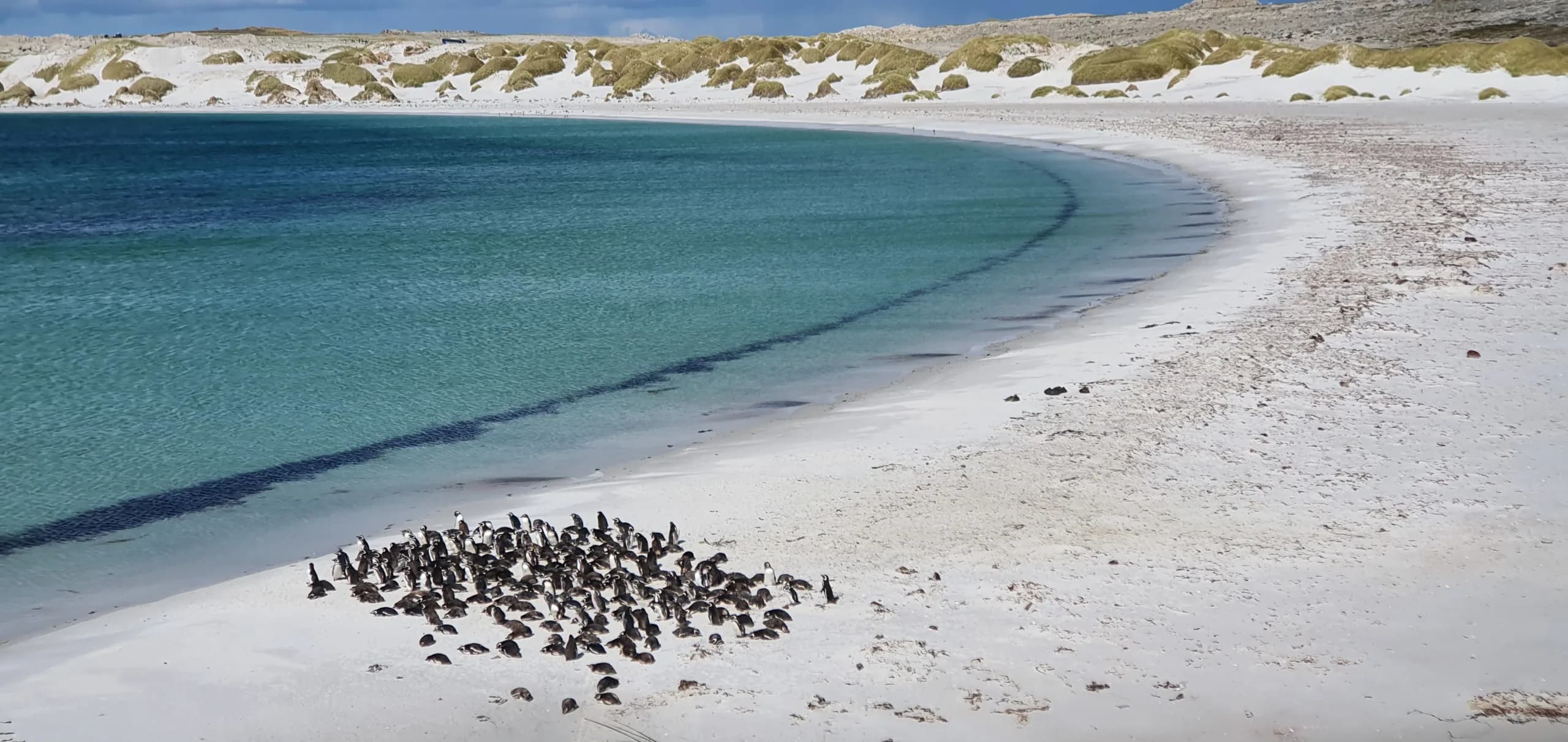














Imagine a place where fewer than 4,000 people share an archipelago with millions of penguins, seals, seabirds and marine animals.
Far out in the South Atlantic, the Falkland Islands remain one of those rare destinations where wildlife is still the main attraction and human settlements feel almost secondary.
Spread across more than 700 islands, the remote archipelago has retained much of its wild character despite becoming increasingly accessible to travellers.
Also Read | Work from forest? Keralam’s SHOLA workation brings WFH to nature
Its capital, Stanley, serves as the starting point for exploring a landscape where penguin colonies, elephant seals, albatrosses and whales are far more prominent than crowds.
Why are the Falkland Islands such a wildlife haven?
The numbers are part of the appeal.
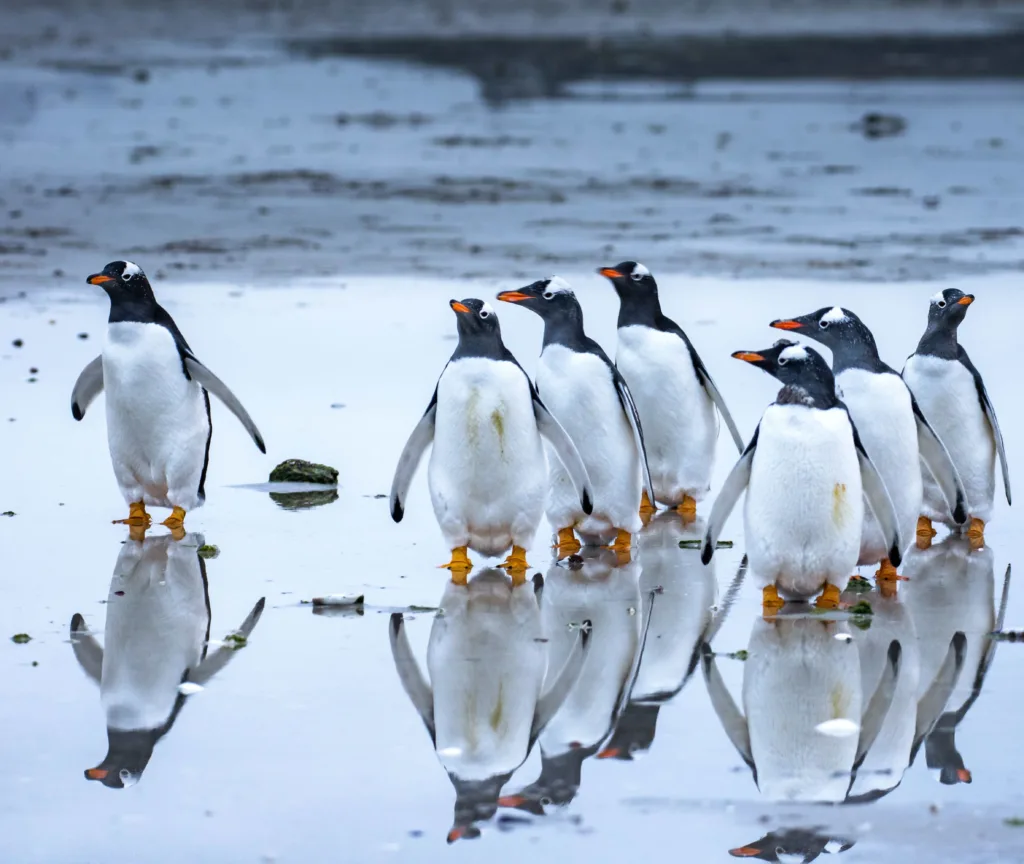
The Falkland Islands are home to enormous colonies of penguins, including king, rockhopper and gentoo penguins. They share breeding grounds with cormorants, albatrosses and southern giant petrels.
On the beaches, southern elephant seals, the world’s largest pinnipeds, can be found alongside southern sea lions and South American fur seals.
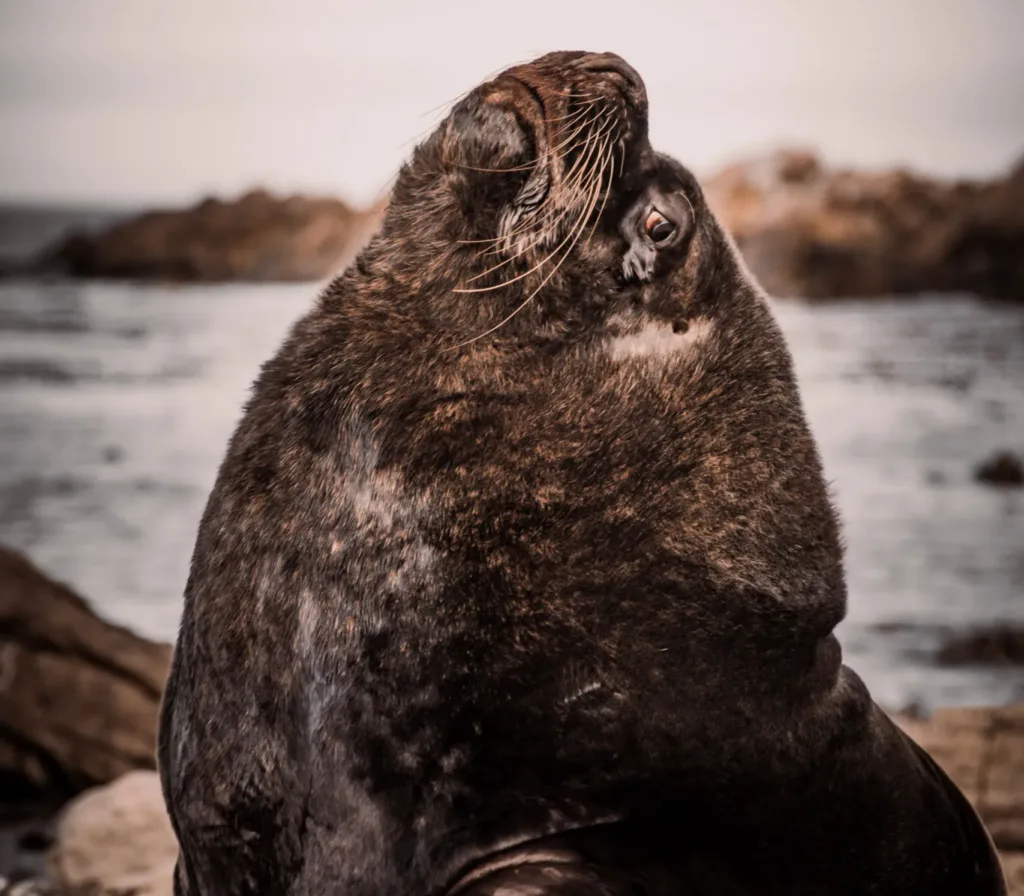
The surrounding waters are just as rich. Dolphins, porpoises and at least 15 species of whales are found around the islands, including humpback, minke, fin, sei and sperm whales.
Orcas are also spotted in the region, particularly in November and December, when they come close to the islands to hunt sea lions and elephant seal pups.
What is Stanley like?
Stanley, located on East Falkland, is the main base for travellers exploring the archipelago.
With around 3,000 residents, the capital is closer in character to a small village than a conventional city. Colourful, weathered houses, local pubs and the southernmost Anglican cathedral in the world give it a distinctly remote feel.
The cathedral is also known for the blue whale jawbones marking its entrance.
For visitors, however, Stanley is primarily a gateway to the islands’ wildlife and surrounding landscapes.
Which Falkland Islands are popular with wildlife lovers?
Two destinations stand out for travellers venturing beyond Stanley.
Sea Lion Island is known for southern elephant seals, sea lions and opportunities to spot orcas.
Saunders Island is particularly attractive for bird and penguin lovers. It is home to five species of penguins, along with several birds of prey.
Together, these islands offer a glimpse of the wildlife that makes the Falklands so distinctive.
How do you travel around the Falkland Islands?
Getting around the archipelago is part of the adventure.
Travellers can move between islands by small aircraft operated by FIGAS, the Falklands’ domestic airline, or by ferry.
International access is more limited. LATAM Airlines operates weekly connections from Santiago and Punta Arenas in Chile, while Mount Pleasant Airport is located around 33 miles southwest of Stanley.
Because of the distance and logistics involved, many travellers visit the Falklands as part of an expedition cruise, often combining the trip with Antarctica or Patagonia.
Is the Falkland Islands trip difficult to plan?
The remoteness is part of what makes the destination appealing, but it also means a trip requires more planning than a conventional holiday.
According to the source, fewer than 5,000 people visit the islands by land or air each year, with many travellers using local tour operators or travel agents to arrange their itinerary.

The limited visitor numbers also mean the experience is less about packed tourist attractions and more about getting close to wildlife in a landscape where human presence remains relatively small.
Could the Falklands become a bigger Antarctica gateway?
The islands could also become more significant for expedition travel in the coming years.
HX Expeditions is set to bring Antarctica departures back to the Falkland Islands for the first time in more than a decade during the 2028-29 season. Its MS Fram is scheduled to sail from Stanley, creating an itinerary that could give travellers more time to explore Antarctica and South Georgia.
That also offers visitors an opportunity to experience the Falklands as a destination in their own right, rather than simply treating the islands as a stop on the way to Antarctica.
Why should wildlife lovers put the Falklands on their list?
The appeal of the Falkland Islands is ultimately its scale of wildlife against its tiny human population.
Also Read | Why does Japan have a ‘Tomb of Christ’? Inside Shingo’s mystery
There are colourful houses and quiet streets in Stanley, but beyond the settlement lies a much larger world: penguin colonies stretching across beaches, elephant seals resting on sand, albatrosses circling overhead and whales moving through the surrounding waters.
For travellers looking for somewhere that still feels genuinely remote, the Falklands offer something increasingly rare, a destination where the wildlife doesn’t simply decorate the landscape. It owns it.