











Space has been part of military planning since the early years of the Space Age, but its role in warfare is changing rapidly. India could eventually need a dedicated Space Force as space-based intelligence, communication and navigation become increasingly important to military operations.
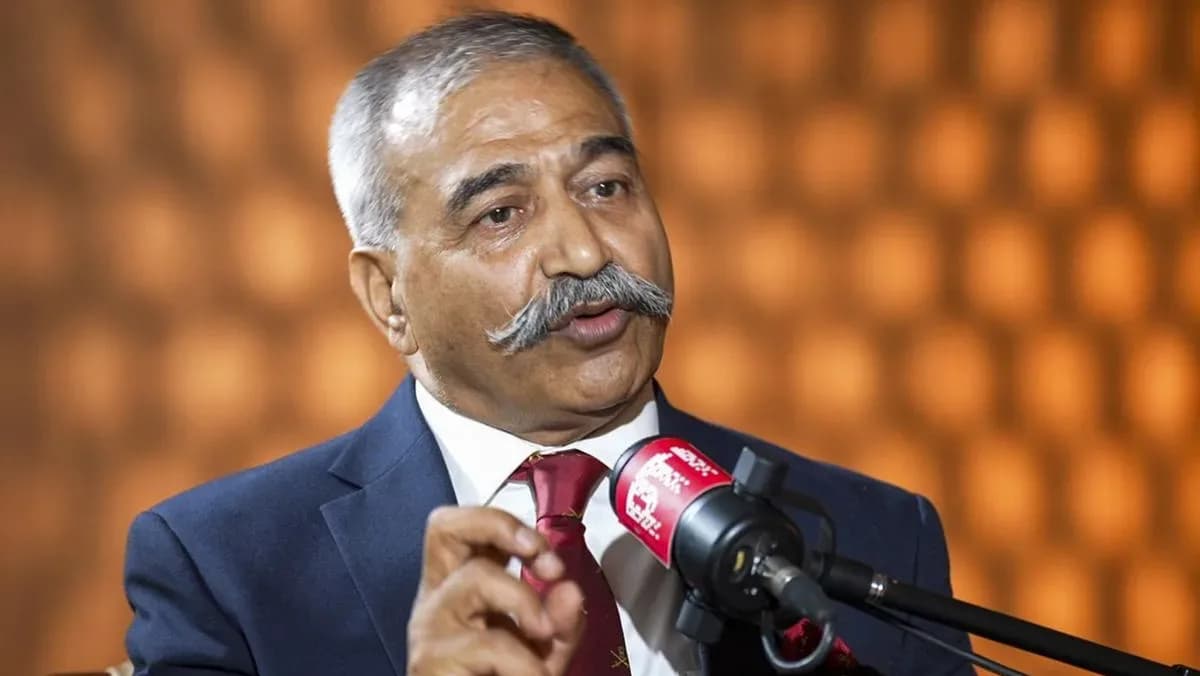
Lieutenant General (Retired) Anil Kumar Bhatt, Director General of the Indian Space Association, said the growing importance of space means India will eventually have to strengthen its military structure beyond the existing Defence Space Agency (DSA). However, Bhatt cautioned against the idea that large-scale space warfare, as often portrayed in popular culture, is already around the corner.
“Combat has slowly started creeping in, but the kind of space wars people often imagine, such as satellites attacking one another or humans fighting on the Moon or Mars, remain some distance away,” Bhatt said.
From Spy Satellites to Modern Space Warfare
The military use of space predates the launch of Sputnik. American researchers were examining the use of space for reconnaissance as early as 1946. That work eventually contributed to the Corona programme, with the US launching its first spy satellite in 1960.
The satellite generated more imagery of the Soviet Union during a single mission than previous spy-plane operations had produced collectively. Within a decade, satellites had become America’s primary surveillance tools from orbit.
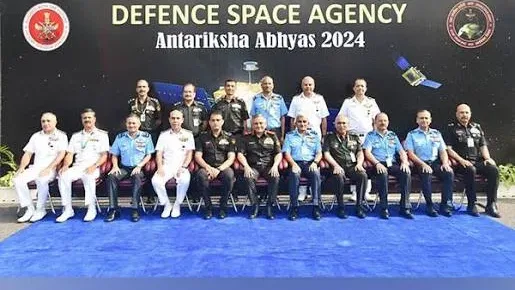
Space has since supported intelligence, surveillance and reconnaissance, communications and navigation. The emerging shift, however, is towards the weaponisation of the domain. Bhatt believes India’s DSA should eventually evolve into a Space Command and, later, a Space Force.
“Setting up the DSA was the starting point. The way things are developing, it will have to evolve into a Space Command and eventually into a Space Force. But it must remain a triservices agency. The Air Force has pushed for one ‘Aerospace Force’ that absorbs the Space Force’s or DSA’s role but it is my personal belief that things are very different on the two sides of the Karman Line, and the domain above that line must be with a separate triservices organisation,” said Bhatt.
India’s Defence Space Approach Has Changed
India’s approach to military space capabilities has undergone a significant change in recent years. The Defence Space Agency was established in 2019, marking an important step towards coordinating the country’s space-related defence capabilities. Bhatt said the relationship between India’s armed forces and the private space and defence industry has also changed.
Also Read | India asks Pakistan to back anti-terror claims with action as tensions rise
“Five years back, the armed forces would never talk to anybody —any civilian, a startup or a private company— about anything to do with space. But today? Seventy-five defence challenges have been defined for start-ups to know and build what the armed forces require for the future,” said Bhatt.
Frequent discussions between the military and industry have helped narrow the gap between what companies develop and what the armed forces require.
Minimum Orders for Defence Start-Ups
Despite closer cooperation, defence start-ups continue to face challenges when developing products specifically for military use. Without assured orders, companies can find it difficult to sustain projects after developing prototypes. The Indian Space Association has therefore pushed for a minimum-order mechanism under defence challenges.
“In defence challenges, the MoD has introduced something called a ‘minimum order quantity’. The idea is this: if a prototype is being made, money is being given by the government or the start-up is putting in the money, the exercise does not make sense if the prototype is not bought by anybody. It is a loss. So, we have pushed for a process where the government must buy at least a minimum number of units developed under a challenge, so as to keep the manufacturing feasible,” said Bhatt.
Also Read | What is ERONET? The ECI software at the centre of the SIR row
Space Could Become a Future Theatre of Conflict
Recent conflicts have highlighted how important space-based capabilities can be on the battlefield. Operation Sindoor provided India with a direct experience of the role played by space-based intelligence, while the Russia-Ukraine war demonstrated the military value of commercial space assets.
Bhatt believes future conflicts could involve attacks against space infrastructure itself, rather than space simply supporting operations on Earth.
“Conflict in space could not be just about satellites shooting each other. It could begin in the form of cyberattacks on satellites and jamming of sensors by electronic means or destruction by laser/DEW. It is a matter of time.”
Why India Needs a Triservices Space Structure?
According to Bhatt, space capabilities would have to be integrated into military planning at every level if India moves towards a more integrated theatre command structure.
A future Space Force, he said, would provide intelligence, surveillance and reconnaissance, communications and navigation support across different theatres rather than serving one individual service.
“A theatre will not only have the Army, Navy, or the Air Force, but will also have space. That means the same assets can be shared by many theatres. That would mean that DSA personnel would be critical for every theatre as they would be running the ISR, communication, navigation, etc, and advising the commanders. And that is why it must remain a triservices organisation instead of being led by any one service,” said Bhatt.
India’s Defence Space Agency is therefore likely to remain central to the country’s evolving military space strategy as the role of space expands from support for operations on Earth towards becoming a potential theatre of conflict itself.