











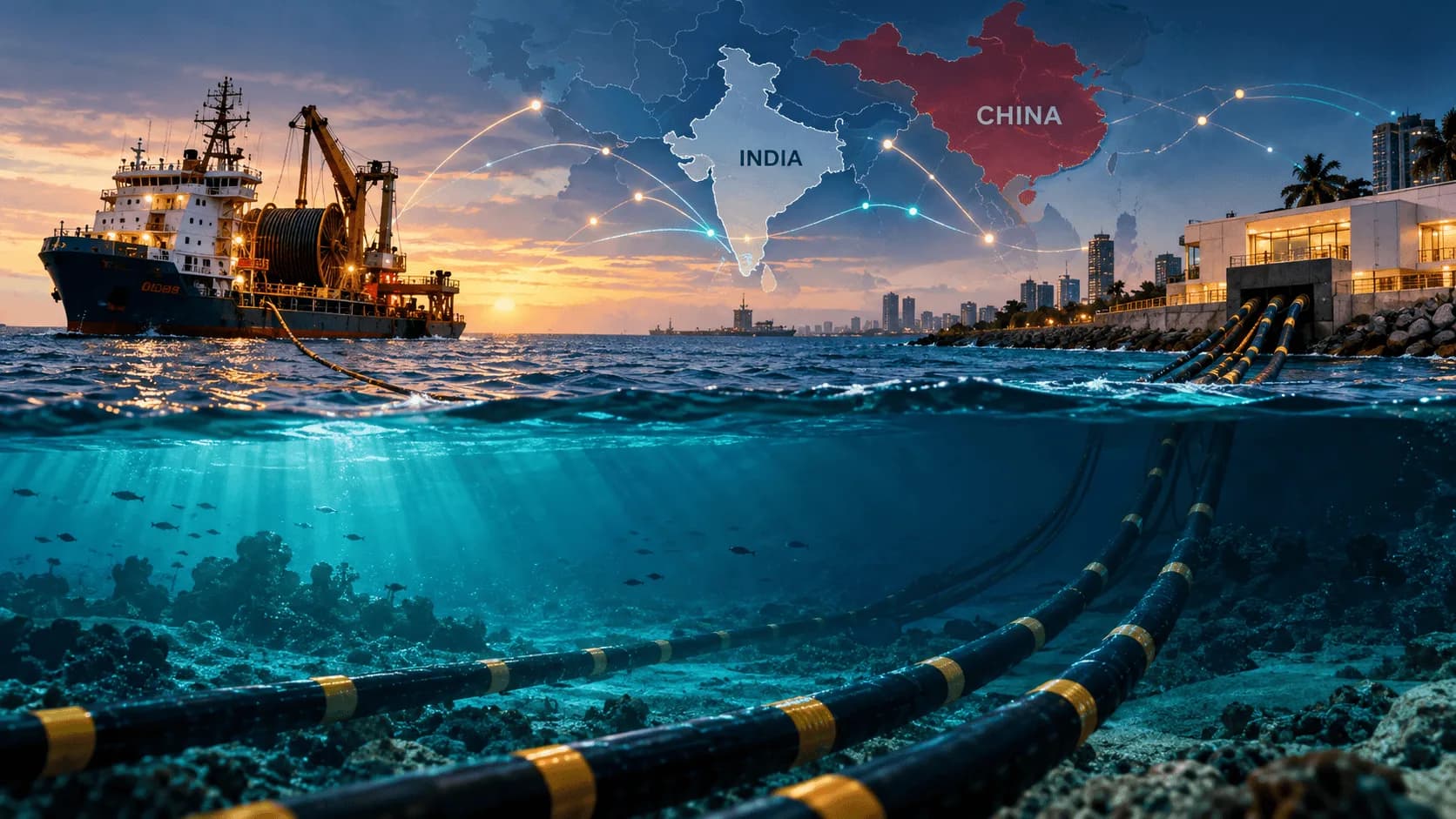
The internet may appear wireless and intangible, but its global connectivity depends heavily on physical infrastructure beneath the ocean. Undersea cables carry the vast majority of international data traffic and support financial transactions, trade and sensitive government communications.
As geopolitical tensions raise the risk of deliberate disruption, India faces questions about the resilience of its cable network.
Also Read | Dhruv Rathee to take legal action after Delhi detention, calls situation ‘Emergency-like’
In an opinion article published by Telangana Today on October 22, Dr Shreya Upadhyay argues that India needs to strengthen its domestic repair capabilities, diversify cable landing locations and consider selective cooperation with other countries, including China.
Why is India’s undersea cable network vulnerable?
India accounts for roughly 20% of global data consumption but is connected to only 3% of the world’s submarine cables, according to the article. The concentration of landing infrastructure presents another concern: 13 of India’s 18 cables land within a six-kilometre stretch at Versova beach in Mumbai.
Such concentration could create a significant vulnerability if multiple cables were disrupted at the same location. The impact could extend to India’s international connectivity with West Asia, Africa and Europe.
Undersea cables face several risks, including accidental damage from fishing, dredging and anchor dragging, as well as seabed mining and deliberate interference. The article also points to the strategic importance of maritime chokepoints, where narrow and congested waters can expose cable routes to disruption during geopolitical or military crises.
The consequences of damage can extend beyond internet access. Undersea cables support international financial transactions, commercial activity and the transmission of government information, making their protection an economic and national security concern.
How does China’s approach offer lessons for India?
A major gap in India’s preparedness is its dependence on foreign repair vessels. The article states that India has no cable repair vessel that is Indian-flagged, Indian-owned or permanently stationed within its maritime zones. When a cable breaks, repair operations may depend on foreign fleets mobilising from locations such as Singapore or the UAE.
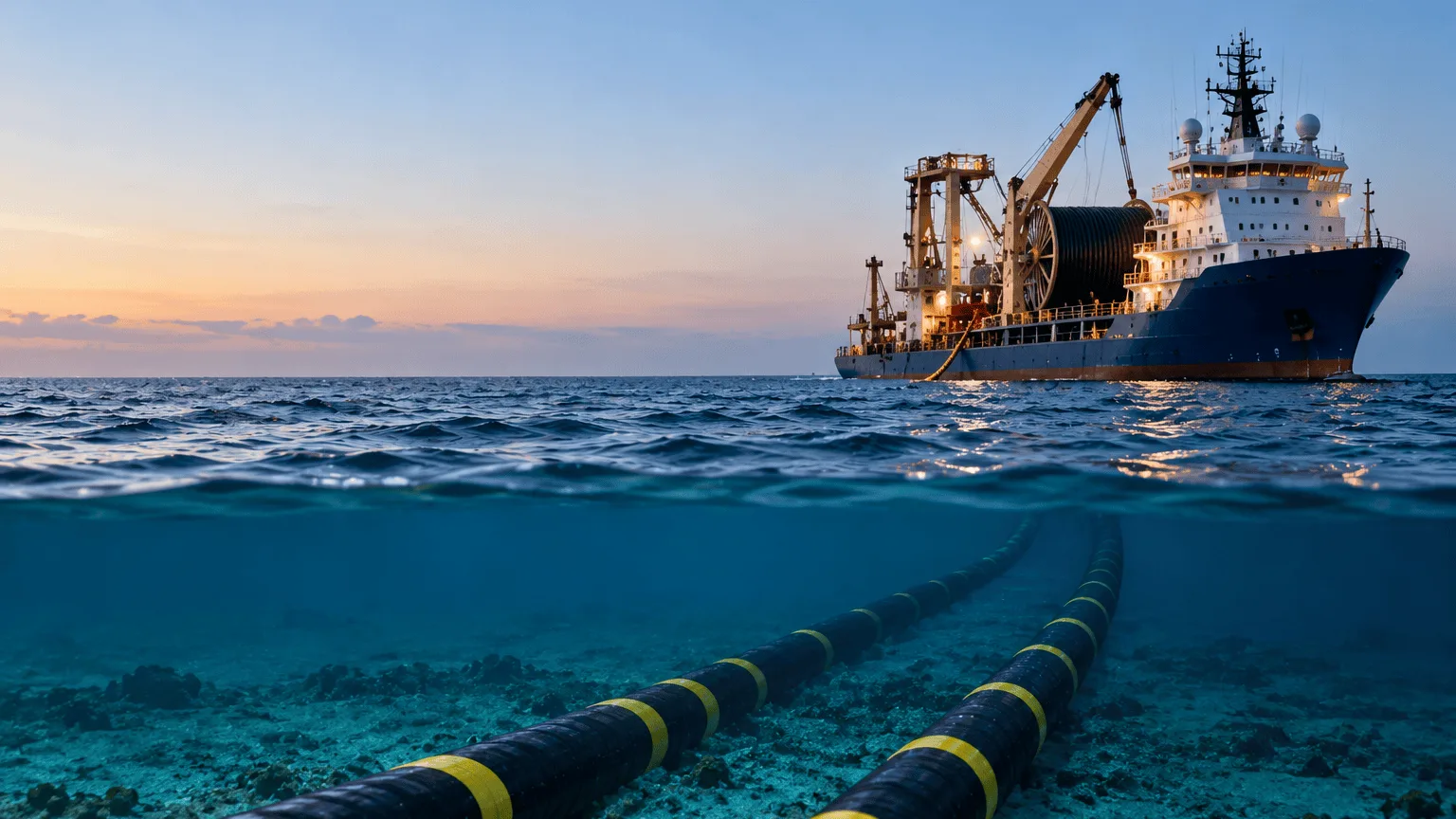
This dependence could complicate efforts to restore connectivity during a crisis. The article contrasts India’s position with China’s commissioning of its domestically designed cable-laying vessel, Tianyi Linghangzhe, in July 2026.
The comparison highlights the strategic value of developing domestic capabilities for undersea infrastructure. For India, building or securing access to repair vessels could reduce reliance on external fleets and improve its ability to respond to cable faults.
The article also argues that the cable industry is dominated by a small group of vertically integrated companies, making domestic manufacturing capability and trusted supply chains important considerations for national security.
What should India do to secure its undersea cables?
The article proposes several steps to reduce India’s exposure to disruptions.
First, it recommends deploying an Indian-flagged cable repair vessel in the Arabian Sea by 2027, with the capability to reach faults across India’s exclusive economic zone within 48 hours.
Second, it calls for diversifying cable landing infrastructure. The proposed target is to ensure that no single location handles more than 40% of intercontinental bandwidth by 2030. Visakhapatnam, Puducherry and Bhubaneswar are identified as possible locations for new or expanded landing hubs.
India designated undersea cables as critical national infrastructure in 2025, according to the article. However, the author argues that designation needs to be followed by practical measures to improve resilience and repair capacity.
Can India cooperate with China despite strategic tensions?
The article suggests that India could explore a Global South cable consortium with China and other countries, building on frameworks such as the India-Southeast Asia (I-2SEA) Submarine Cable System.
Such cooperation would take place against a backdrop of strategic tensions, including those arising from Galwan and competing visions for the Indo-Pacific. The proposed approach is selective, issue-based cooperation rather than a broader alignment.
Also Read | From anti-Hindi protests to CJP: 9 Indian protest movements that reshaped India’s political landscape
The article also highlights legal challenges surrounding undersea cable protection. The United Nations Convention on the Law of the Sea (UNCLOS) provides the main legal framework, but questions remain about the scope of protective measures and the balance between the freedom to lay cables and coastal states’ security interests.
For India, the challenge is to strengthen its own capabilities while working with international partners on infrastructure resilience, supply chains and rules governing undersea networks.