















Indian craftsmanship has long been part of the world’s luxury fashion industry, with skilled artisans contributing intricate embroidery, textile work and traditional techniques to collections by some of the biggest international brands. However, the people behind these creations have often remained out of the spotlight, even when their work reaches prestigious runways and luxury boutiques.
Mumbai-based Chanakya International is working to change that. The textile and embroidery atelier has collaborated with more than 50 international fashion houses, including Dior, Fendi, Gucci and Prada. As the company marks its 40th anniversary, it is using exhibitions in Mumbai to celebrate Indian craftsmanship and highlight the generations of artisans whose skills have helped bring its work to the global stage.
The celebrations also come at a time when the fashion industry faces growing questions about cultural appropriation, proper attribution and the recognition of traditional craft communities.
Chanakya International celebrates 40 years of Indian craftsmanship
Chanakya International’s public profile received a significant boost in 2023, when Dior and its then-creative director Maria Grazia Chiuri highlighted the atelier’s artisans during the French fashion house’s landmark runway show in Mumbai.
The recognition brought greater attention to the Indian craftspeople involved in creating intricate textile work for international luxury fashion. Three years later, Chanakya is marking its 40th anniversary with exhibitions that place its own creative work and India’s wider craft traditions at the centre of the conversation.
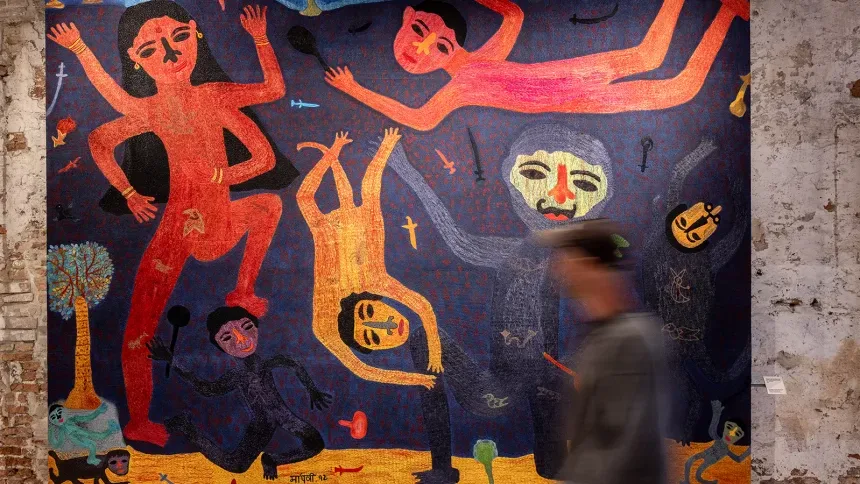
At Mumbai’s Dr. Bhau Daji Lad Museum, the exhibition En Route presents hand-embroidered maps created at Chanakya’s non-profit School of Craft. The institution trains disadvantaged women in traditional textile techniques, helping preserve skills that have been passed down through generations.
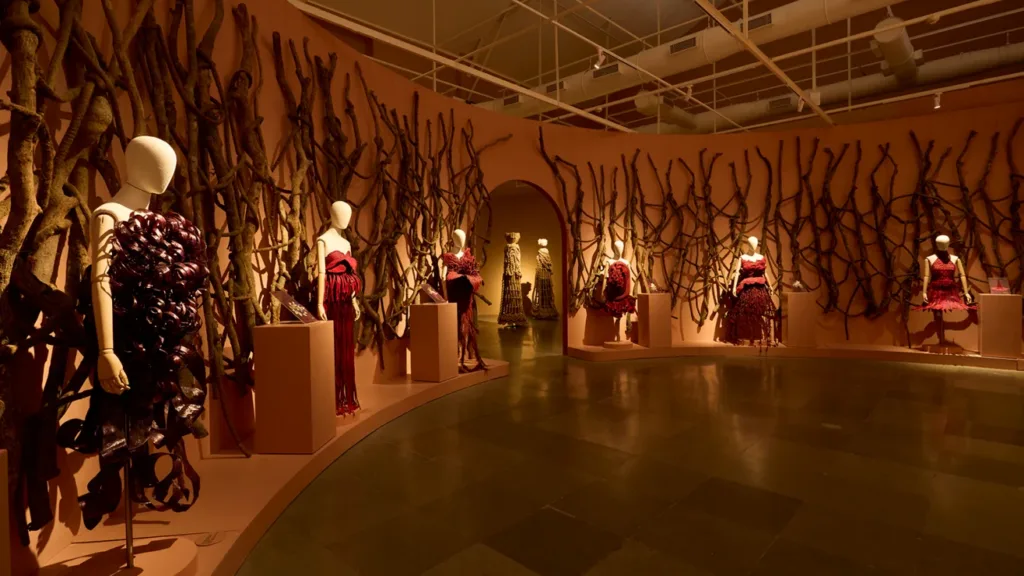
Another exhibition, Garden of Gestures, is being held at the company’s headquarters. It features large crimson sculptures inspired by the Saptamatrikas, the seven mother goddesses in Hinduism. The works are made entirely from bamboo, raffia and cotton.
Chiuri, who is now Fendi’s chief creative officer, also visited the anniversary exhibitions in support of Chanakya’s work.
“Across the many projects we have realized together, I have seen Chanakya bring greater visibility to the depth, sophistication and creative potential of Indian craftsmanship on an international stage, while remaining deeply committed to the people and knowledge that sustain it,” she said in an e-mail to CNN.
For Karishma Swali, Chanakya’s creative director, the anniversary is about more than showcasing the atelier’s achievements. She wants the exhibitions to encourage greater recognition of India’s craft traditions and the people who sustain them.
“My father started Chanakya with this very simple premise of wanting to share India’s finest craftsmanship with the world,” said Swali. He wanted to “find ways to preserve and perpetuate it,” she added.
How Chanakya International began its journey in 1986?
Chanakya’s story began in 1986, when Vinod Shah, Karishma Swali’s father and a former iron and steel entrepreneur, moved from Gujarat to Mumbai with 22 master artisans known as ustads.
His ambition was to bring India’s rich visual traditions and cultural influences to an international audience while creating opportunities for traditional craftsmanship to thrive.
Italian womenswear label Alberta Ferretti was among the first fashion brands to work with the company.
“Even though it was a novel idea back then, the Italians were always open to meeting us,” Swali recalled.
She joined the family business with her brother in the mid-1990s. Both had trained in Italy and worked with craft communities across India, experiences that helped shape their understanding of traditional techniques and international fashion.
Today, Chanakya remains headquartered in Mumbai, with an office in Bologna, Italy. Its workforce includes more than 50 designers and over 1,400 artisans. Some of these craftspeople come from families with a history of practising their skills across as many as 13 generations.
The atelier’s work extends beyond producing embroidery for luxury labels. It develops textile concepts, researches traditional techniques and works with fashion houses to translate those ideas into contemporary collections.
Inside Chanakya’s creative process and textile research
Chanakya develops around eight collections of textile ideas each year. International brands then select concepts that suit their creative direction, making the process a collaboration rather than a straightforward production arrangement.
“We make about eight collections of textile ideas every year, and all (global) conversations begin from there. Brands select the ideas that feel most resonant,” Swali explained. “Sometimes we build around a mood, or even just a word, that they share with us. It’s far more collaborative than a brand simply telling us, ‘This is what we want.’”
Research plays a central role in this process. Chanakya draws on an archive containing more than 150,000 material samples and 10,000 historical textiles and artefacts.
The archive allows the team to revisit techniques that have fallen out of regular use and adapt them for contemporary fashion without losing their traditional character.
“This is about bringing back crafts out of circulation, but with an evolved language,” Swali said of the approach.
One of her favourite techniques is chaand jaal, a 16th-century Mughal craft that uses pure silver threads to create self-supporting filigree lace without a base.
The atelier also experiments with fibres such as raffia, using techniques including lace-making, appliqué and quilting to turn the material into clothing. Its collections made entirely from waste materials have been used by fashion houses such as Maison Margiela and Dior.
“We spend a lot of time understanding material intelligence within India, and reworking their tenacity and strength for couture,” Swali said.
Rafugari and the effort to preserve traditional Indian crafts
Chanakya’s work also extends to traditional practices that have become less common. One example is rafugari, a South Asian darning technique used to repair tears and holes in textiles, allowing garments and fabrics to last longer.
An artwork made using this technique was exhibited at the Venice Biennale in 2024.
“Rafugari is an incredible act of perpetuation. It lets you create heirlooms. We wanted to patronize it and carry it forward,” Swali explained, adding: “It’s a metaphor for craft, in that way, isn’t it? If there are no patrons, disciplines are going to deteriorate.”
Her remarks point to a central challenge for traditional crafts: preserving a technique requires more than documenting its history. Artisans also need opportunities to practise their skills and earn a livelihood from them.
Chanakya’s work with international fashion houses provides one route for these techniques to reach new audiences, while its School of Craft focuses on training women in traditional textile practices.
Cultural appropriation and the question of artisan recognition
The growing visibility of Indian craftsmanship has also brought renewed scrutiny of how global fashion brands use traditional designs.
Earlier in 2026, Ralph Lauren faced accusations of appropriating India’s bandhani technique in a skirt print without adequately crediting its alleged origins. The brand had not publicly commented on the criticism and did not respond to CNN’s request for comment.
Prada also faced criticism in 2025 over leather flat sandals that observers in India said resembled Kolhapuri chappals, a traditional footwear style from Maharashtra. The Italian luxury house later acknowledged that the sandals were “indeed inspired by Indian footwear” and went on to work with craft bodies in western India on a limited-edition version.
A Fendi Baguette bag featuring mirror work by Chanakya also attracted criticism from some Indian social media users, who questioned whether the atelier had received sufficient recognition. Fendi had previously acknowledged Chanakya’s contribution on social media and was bringing its artisans to an upcoming Harrods pop-up in London to demonstrate craft techniques.
For Swali, the distinction between cultural appreciation and appropriation lies partly in how brands engage with the communities behind the work.
“Cultural appreciation and collaboration though, lends to the life and possibilities of that craft,” she said, pointing to Dior’s Pre-Fall 2023 show as a turning point.
“It was particularly important in dismantling this idea that brands come to India just because it’s cheaper to work here,” she added. “We work with couture brands of the world because we have an incredibly versatile vocabulary, and the finest artisans in the world. India is the only place left with this level of skill.”
She also stressed the importance of respecting the time and dedication involved in mastering traditional techniques.
“It’s important to be sensitive towards a community that has done the work for decades and generations. There is so much devotion and courage in an artisan’s lifetime of ‘riyaz’ (practice). You need to recognize and respectfully work with textile traditions unique to a country.”
Also Read | From anti-Hindi protests to CJP: 9 Indian protest movements that reshaped India’s political landscape
Why giving visibility to Indian artisans matters
For Chanakya, recognition on an international runway can have a personal impact on the craftspeople behind the work.
Swali recalled the experience of artisans attending Dior’s 2023 Mumbai show and seeing their creations presented before a global audience.
“When Chanakya’s artisans attended the Dior show in 2023, to see their work on the runway, you cannot imagine what that did for their families and their villages,” she said. “They understood their contribution on a global stage.”
Swali believes such recognition can help encourage younger generations to continue practising traditional crafts. She is concerned that many young artisans are considering leaving the profession, putting the continuity of these skills at risk.
Her future plans include collaborating with global universities to establish craft education more firmly within academic institutions. She also hopes to bring India’s design traditions to international shoppers through Chorus, her ready-to-wear and lifestyle brand.
Four decades after Vinod Shah began Chanakya with a group of master artisans, the company’s central aim remains the same: to take Indian craftsmanship to the world while preserving the knowledge behind it.
Also Read | Petrol and diesel cheaper in India than Dubai? Here’s what city prices show
The artisans may continue to work in India, but through their textiles, embroidery and traditional techniques, their work reaches audiences far beyond the country. For Swali, ensuring that these crafts receive recognition and continue to find new applications is essential to keeping them alive for future generations.