





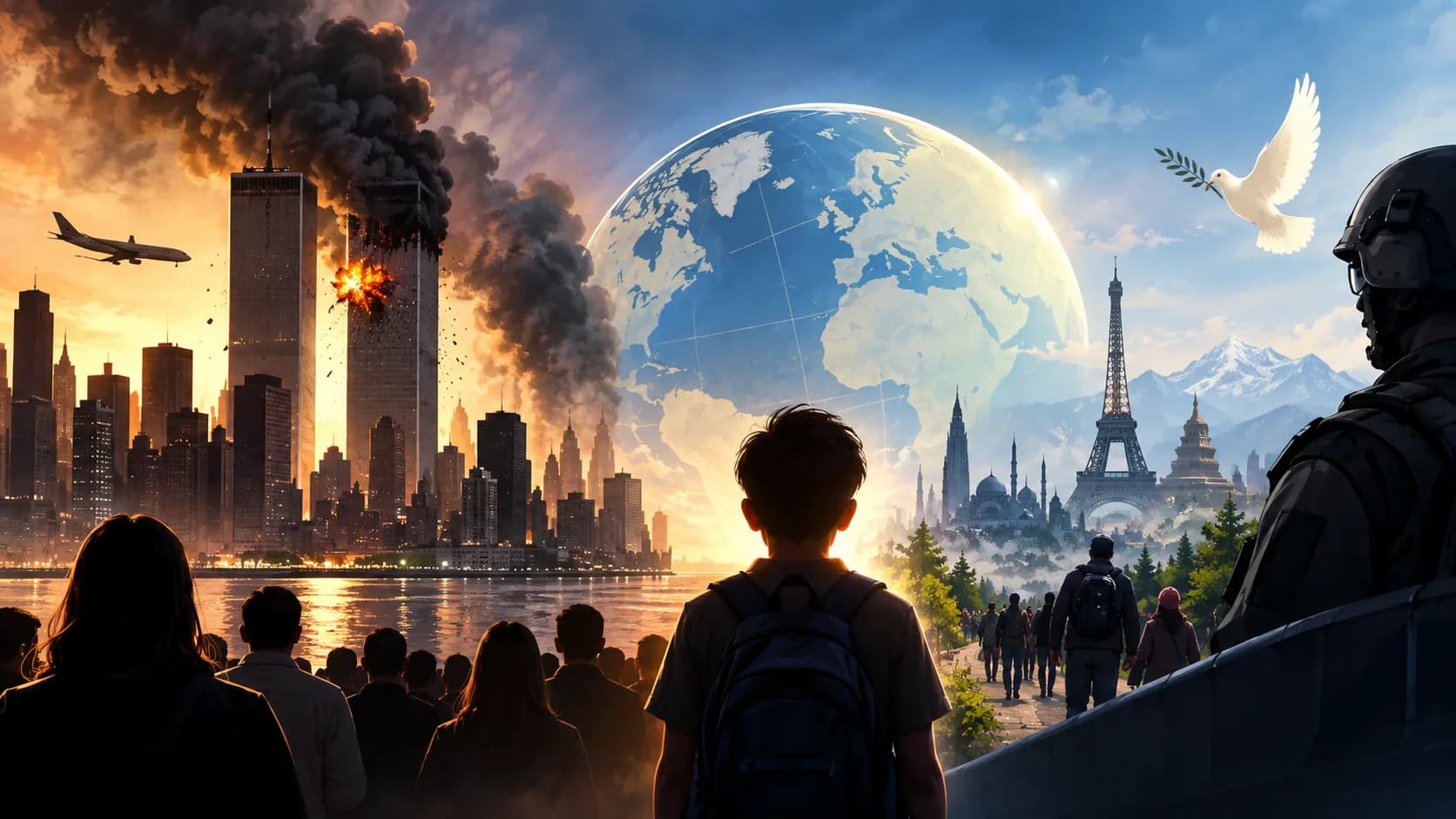








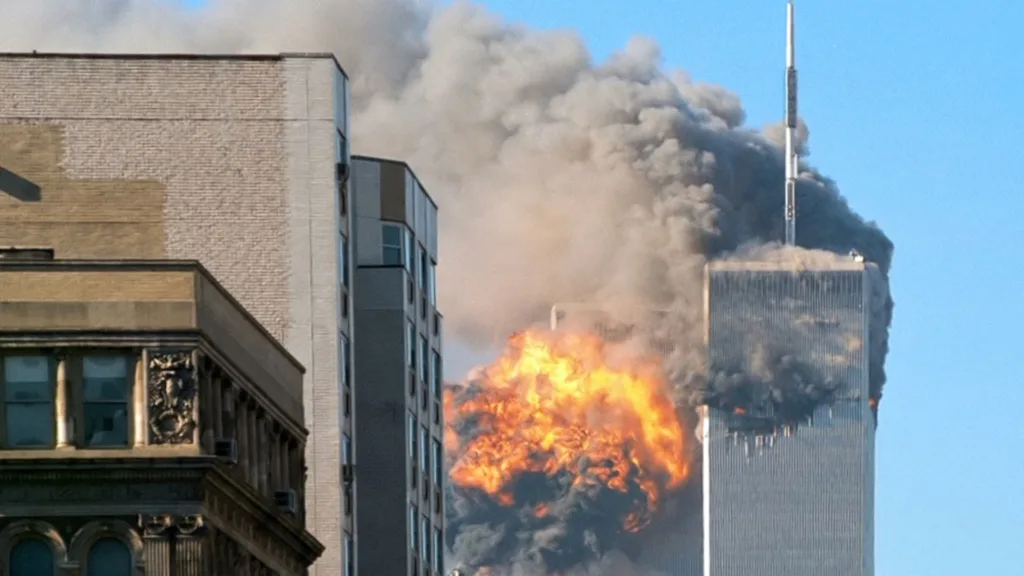
25 years have elapsed since the world has seen a terrorist attack so destructive that it reconfigured geopolitics, national security, and the consciousness of people. On September 11, 2001, 19 terrorists hijacked four passenger aircraft and conducted attacks in New York and Washington, resulting in the deaths of 2,977 people, apart from the hijackers. Two planes were flown into the World Trade Centre’s Twin Towers, another hit the Pentagon, and the fourth plane was forced to land in Pennsylvania after passengers tried to take back control of the plane.
25 years later, one fundamental question remains: Is the world any safer?
The ongoing prevalence of terrorism poses yet another challenge to the question. On April 22, 2025, terrorists attacked and killed 26 people including civilians in Baisaran Valley in Jammu and Kashmir. This is one of the worst terrorist attacks on civilians in India after the attacks in Mumbai in 2008 which are referred to as 26/11. Although the scale of this attack was nothing compared to 9/11 attacks, the message was clear: terrorism is still able to take advantage of vulnerabilities.
Also Read | What is dark matter? Everything to know about the universe’s biggest mystery scientists are trying to solve

Governments all around the world have been investing billions of dollars since 2001 in improving their capacities in the fight against terrorism. The US invasion of Afghanistan and international efforts to combat ISIS, improved homegrown security in the West and India’s war on terrorism are just a few examples of the way the world of security has transformed.
Technology has played an important part in the struggle too. Satellite technology, artificial intelligence, biometrics, financial surveillance and intelligence sharing have helped governments to detect, interrupt and prevent any terrorist plans. Across the world, governments increasingly combine intelligence, precision military operations, deterrence and diplomatic pressure in their efforts to counter terrorist threats.
So, has the world become safer since 9/11?
In some respects, yes. The global security architecture is stronger, intelligence cooperation is deeper and governments are better equipped to detect and disrupt large-scale terrorist plots. The world has, so far, avoided another attack on the same scale as 9/11.
But “safe” is a relative term.
From Paris to Kabul, Nairobi to Pahalgam, terrorism has repeatedly demonstrated its ability to adapt to changing security environments. The methods have changed, the targets have evolved, and the networks have become more fragmented. However, the goal is still the same: to instil fear and gain political leverage using violence.
Also Read | Nepal flood: Why unidentified bodies are being buried and how families can identify them later
As such, 25 years after 9/11, the situation is complex. While the world might have learned how to manage terrorism, it has not succeeded in eradicating it. These last 25 years prove that the war on terrorism is not a war that can ever be decisively won, but a constant fight against an ever-present menace.
The question that began after 9/11 remains: Have we made the world safer, or have we simply learned to confront a different kind of terror?