














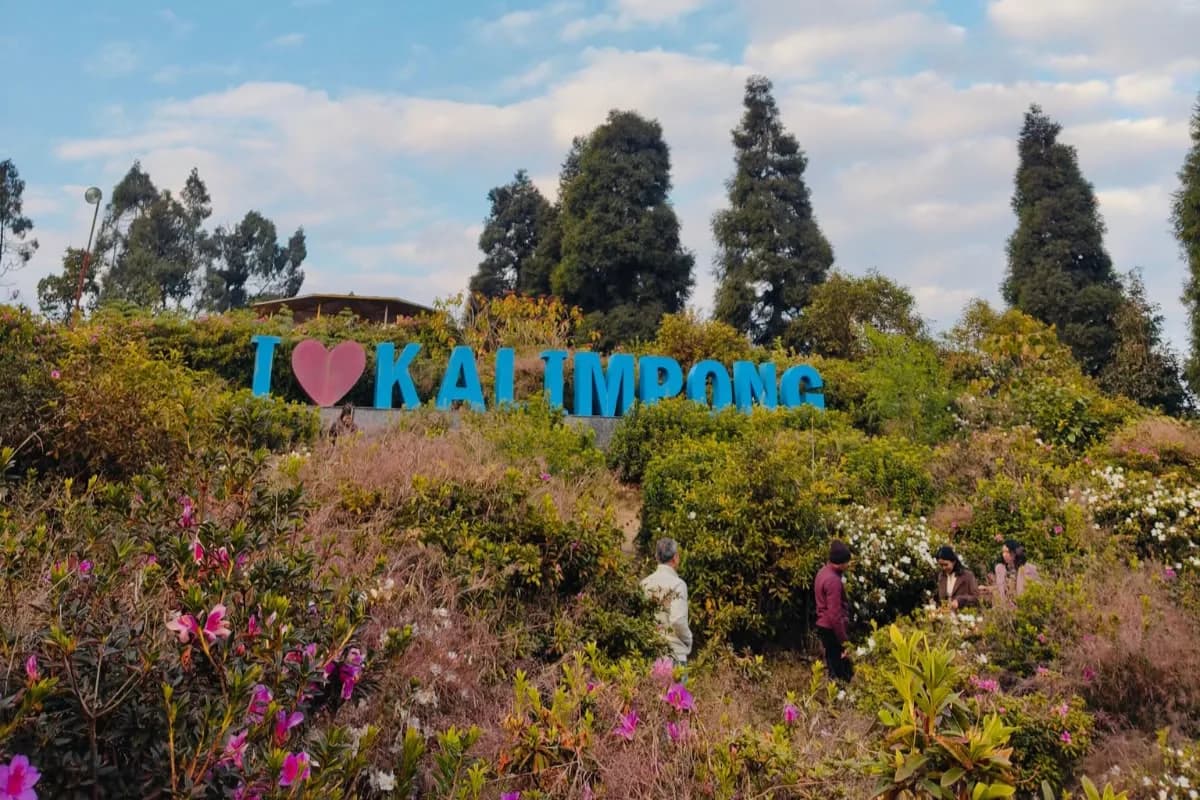
Perched in the foothills of the Himalayas, Kalimpong offers a different reason to visit with every changing season. Spring brings rhododendron blooms and adventure activities, autumn paints the surrounding forests in warmer shades, while winter offers some of the clearest views of the snow-covered Himalayas.
And then there is the food. From jhol momos and thukpa to sel roti and Nepali thalis, Kalimpong’s culinary appeal doesn’t disappear when the weather changes.
Thus, what would be the best time to visit Kalimpong? Well, according to the season-wise travel guide published in the magazine of Conde Nast Traveller India, the widest period suitable for travelling falls between October and February.
When is the best time to visit Kalimpong?
October to February is the recommended period if your priority is comfortable weather, autumn landscapes and clear Himalayan views.
Sal forests surrounding Sikkim will be decked up with autumn colours during October and November. December through February are famous for clear skies and better views of Mount Kanchenjunga.
On the other hand, for those who like adventure sports and would like to enjoy nature’s beauty, March and April may turn out to be more favourable seasons. Wildflowers and rhododendron bloom in this period.
The monsoon months can be less convenient for travel, with the source noting muggy conditions, difficult roads and the possibility of flash-flood warnings.
What can you see in Kalimpong during spring?
If flowers are the reason for your trip, late February to April is the season to consider.
The forests around Lava and Neora Valley National Park come alive with rhododendrons, with March and April generally considered a good period to see the blooms. Flowering can vary depending on altitude and weather conditions each year.
Spring also works well for hiking, birdwatching and scenic drives, while the surrounding hills offer opportunities for adventure activities.
When is the best time to see Kanchenjunga?
For Himalayan views, October to February is the strongest window.
Post-monsoon skies are generally clearer and humidity is lower. Early mornings are particularly favourable because clouds can gather around the mountains later in the day.
Deolo Hills and Durpin Dara Hill are among the viewpoints highlighted in the source. Travellers willing to venture farther can also explore Ramdhura, Lava and Rishop for mountain views.
ALSO READ| Sawan 2026: Planning a Jyotirlinga Yatra? Here’s a travel guide for you
What about Kalimpong’s food scene?
You don’t necessarily need perfect weather to visit Kalimpong if food is your priority.
The town’s culinary landscape draws from Lepcha, Nepali, Tibetan and Bhutanese influences, with dishes ranging from jhol momos and tingmo to thukpa, kewa datshi, pork momos and Nepali thalis.
The local Haat Bazaar, held on Wednesdays and Saturdays, is another attraction for food lovers, with local produce, pickled bamboo, millet-based ferments and street food.
How many days do you need in Kalimpong?
Three days can be enough to explore Kalimpong itself, according to the source.
However, travellers who want to explore surrounding tea estates and natural attractions at a slower pace can plan for a week or more.
The town can also be combined with a Darjeeling trip. Kalimpong is roughly a two-hour drive from Darjeeling, while Bagdogra International Airport is around 2.5 hours away by road, according to the source.
Kalimpong weather by season
March-April: 13°C-25°C
May-October: 17°C-30°C
November-February: 5°C-21°C
ALSO READ| Pancha Kedar–Part 1: Why did Lord Shiva hide from the Pandavas?
Ultimately, the best time to visit Kalimpong depends on what you want from the hills. Choose spring for rhododendrons and adventure, autumn for walks and changing forests, and winter for crisp mountain views. If food is the main attraction, Kalimpong’s momos, thukpa and local specialities are reason enough to visit year-round.