














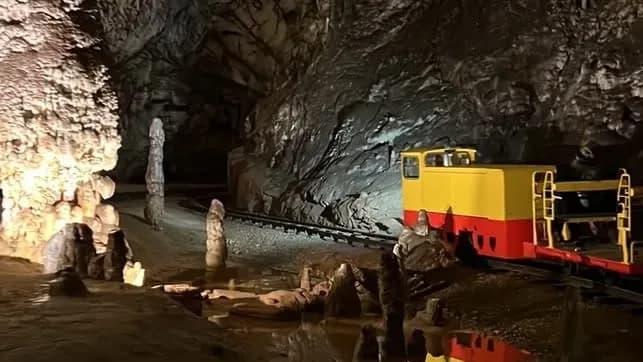
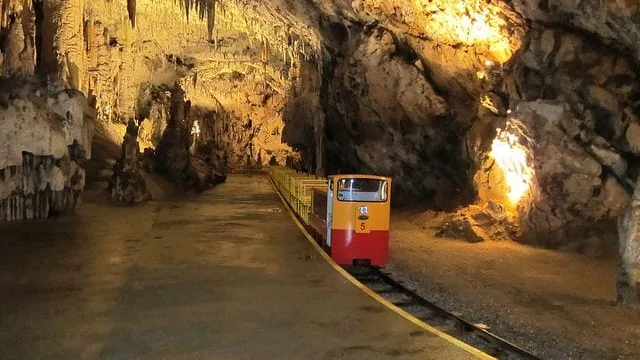
Imagine boarding a train that takes you deep beneath the ground, through enormous halls, rock formations and dark underground passages. At Slovenia’s Postojna Cave, this unusual journey is part of the experience, with visitors travelling by a cave railway before exploring the subterranean world on foot.
The train ride covers around 3.7 km and takes roughly 20 minutes each way. Once the ride ends, visitors continue their journey with a guide, discovering the cave’s formations and its rare inhabitants.
A railway beneath the surface
Postojna Cave has been attracting visitors since 1819 and has a long history of underground railway travel. The first cave railway began operating in 1872, when guides manually pulled two small carriages along the tracks. Each carriage could accommodate four visitors.
As visitor numbers increased, the railway was extended. A petrol-powered train was introduced in 1923 and could carry 20 passengers, while larger trains were later introduced with capacities of up to 150 people.
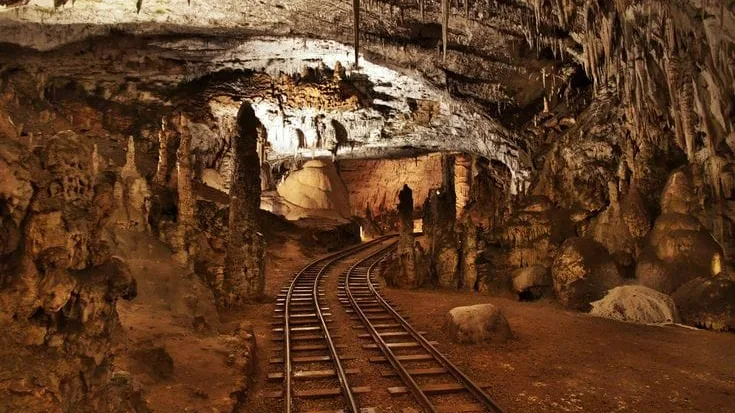
The petrol trains, however, created noise and fumes inside the cave. In 1956, battery-powered electric trains were introduced, offering a quieter and cleaner way to travel through the underground passages.
Rock formations and the famous Dance Hall
The train takes visitors through a network of underground corridors and large halls before the walking portion of the tour begins. Some of the formations inside the cave have developed over millions of years.
Among the highlights is the Brilliant, a five-metre-tall, bright-white rock formation that has become one of Postojna Cave’s best-known sights. Visitors can also see the Dance Hall, a huge underground chamber decorated with chandeliers hanging from its ceiling.
Slovenia’s tourism authorities describe Postojna as one of the country’s most important cave attractions. The cave railway takes visitors through karst corridors, galleries and halls, while guided tours introduce them to the geological and biological features of the underground environment.
Meet the cave’s ‘baby dragons’
The most unusual residents of Postojna Cave are the olm, also known as the human fish. These pale-skinned amphibians live in underground water and are specially adapted to life in complete darkness.
Their strange appearance and subterranean habitat have earned them the nickname “baby dragons”. According to Slovenian folklore, people once believed that the creatures were the offspring of a dragon living inside the cave.
Also Read | National Geographic’s 2027 travel list is out: Here’s 25 places worth exploring
The olm is also remarkable for its ability to survive in harsh underground conditions. It can live for decades and withstand extremely long periods without food. Postojna Cave is home to these animals as well as numerous other cave species.
In 2016, visitors and researchers witnessed olm hatchlings emerging from eggs inside the cave for the first time. The event attracted international attention and helped turn the so-called “baby dragons” into one of Postojna’s most famous attractions.
How to visit Postojna Cave
Visitors can book a timed entry online, with the cave experience combining the underground train journey and a guided walk. An audio guide is also available for those who want additional information about the cave’s history and wildlife.
A standard Postojna Cave ticket currently costs €34.90, approximately Rs 3,700. Combination tickets covering attractions such as Predjama Castle and the Vivarium are also available, although prices can change and visitors are advised to check the official booking website before travelling.
Also Read | Kerala in October is all about green hills, full backwaters and quieter escapes
Predjama Castle, built into a dramatic cliff near the cave, can also be included in a wider visit to the area.