












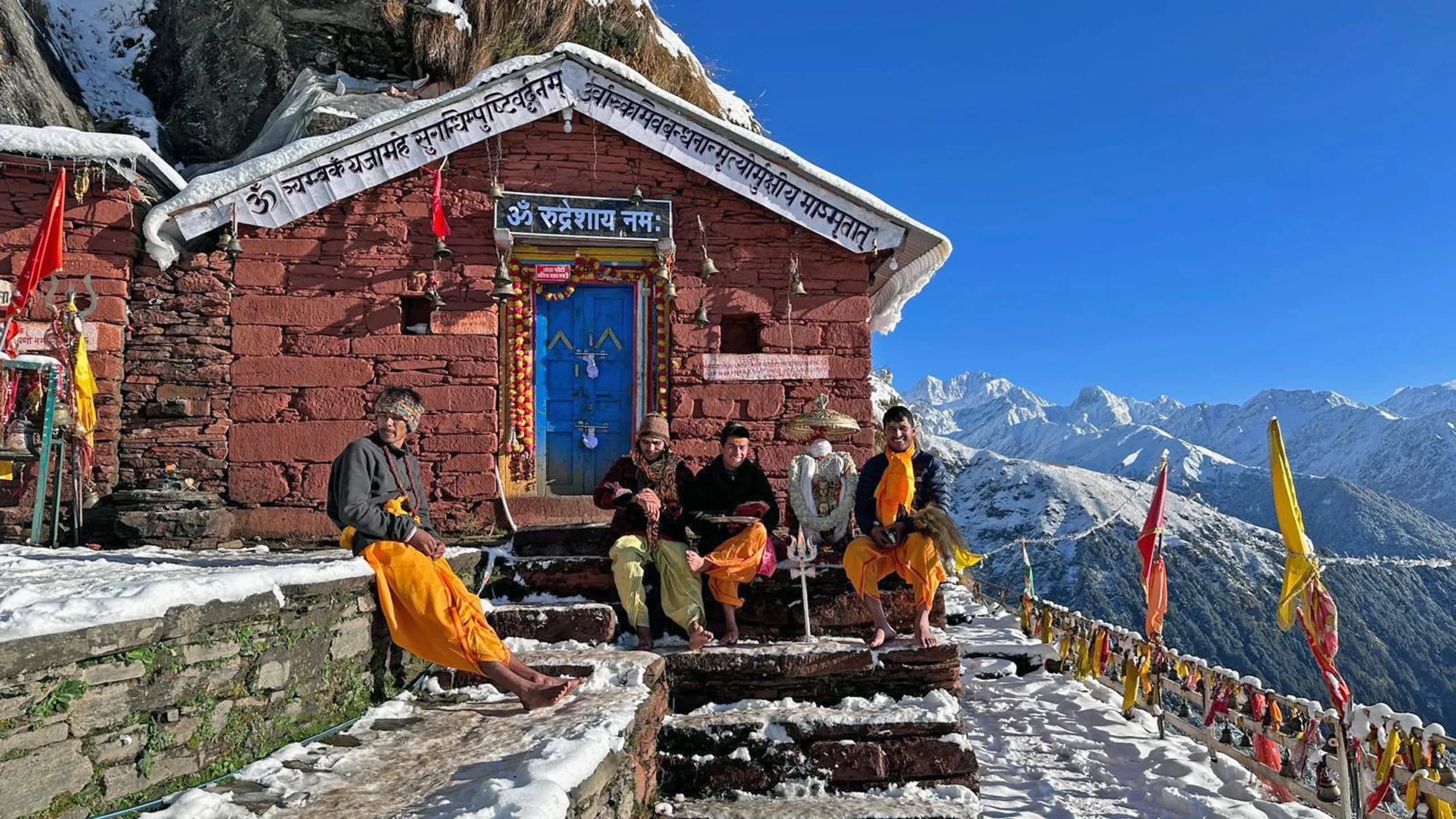
Some temples arouse devotion, some marvel with their architecture, and others attract millions of visitors through their ceremonies and festivals. Rudranath is a different world altogether.
Perhaps the most mysterious of the Pancha Kedar, Rudranath is nestled in dense forests, alpine meadows, and misty ridges at an elevation of almost 3,600 metres (11,800 feet) in the Garhwal Himalayas.
Rudranath is one of the less-frequented peaks of Kedarnath; compared to Kedarnath or the less steep path of Tungnath, the peak requires patience, endurance, and total surrender. No roads touch it, no bustling bazaars throng at its doorstep, and no grand processions greet it. One has to earn the right to stand before the Lord.
ALSO READ| Pancha Kedar–Part 1: Why did Lord Shiva hide from the Pandavas?
According to the ancient Pancha Kedar tradition, it is here that the Lord Shiva’s face appeared once He went underground to evade the Pandavas.
How is Rudranath different from other Kedars?
Unlike many temples where the deity is represented by a carefully sculpted idol, Rudranath preserves a naturally formed rock worshipped as the face of Shiva.
Human beings instinctively seek faces. We recognise emotions, intentions and identity through the face more than through any other part of the body. A smile comforts us. A glance reassures us. A stern expression warns us. Throughout history, the face has represented truth because it reveals what words often conceal. Perhaps that is why Shiva chose to reveal His face here.
The name itself gives an important hint: Rudranath. Rudra is one of the earliest names of Shiva, dating to the Rig Veda, well before the development of much mythology as found in the Puranas. Although the word is translated ‘the fierce one’ or ‘the roaring one,’ Vedic scholars have noted that Rudra is not only the destroyer, but also a powerful god. He is also the great healer, the deity who annihilates ignorance, thus bringing truth to light.
The normal starting point for excursions to Rudranath is from the villages of Sagar or Mandal, and the walk takes about 20 kms through dense oak and rhododendron woods to reach the large alpine meadows. The path follows ridges, crosses mountain streams and meanders through lonely areas where only birdsong and the rustle of the wind and the distant cawing of the cattle can be heard when they are grazing.
ALSO READ| Pancha Kedar–Part 2: Kedarnath, where Lord Shiva’s hump emerged and time stands still
Unlike many famous pilgrimage centres, Rudranath offers long periods of complete silence. Silence, in Indian spirituality, is never regarded as emptiness. It is regarded as revelation. Ancient sages believed that the deepest truths become audible only when the noise of the mind begins to settle. Perhaps that is why Shiva, the great yogi, chose such remote places for His manifestations. One does not simply visit Rudranath. One gradually becomes quiet enough to receive it.
As the final stretch of the trek unfolds, the temple appears almost unexpectedly, nestled within the mountains as though it has grown naturally from the rocks themselves.
Who built Rudranath?
It is thought that the existing stone temple was restored during the time of Adi Shankaracharya, who was an important figure in revitalising many ancient pilgrimage routes up the Himalayas. But local beliefs say that the shrine is much older and is connected to the Pandavas. The structure of Rudranath and the other Pancha Kedar temples is made with huge stones, which are supposed to withstand the rigours of the harsh Himalayan winters for centuries.
Rudranath is different from all other Kedars as per its atmosphere. Many pilgrims report that they experience a strange calmness when they get inside the temple. There are no elaborate decorations. The oil lamps softly flicker against old walls, and the scent of incense wafts through the cool mountain air. Mahadeva’s face is calm, compassionate and timeless, and the devotees realise that truth does not have to shout.
There are four water bodies around the temple, which are also considered sacred: Surya Kund, Chandra Kund, Tara Kund and Manas Kund. They both have their own local folklore and ritual meaning.
Another one of Rudranath’s unique traditions is Pitr Tarpan, special rituals performed for the departed ancestors. Many families come here to pray for the dead.
In the spring and early summer, the meadows are blanketed with flowers. The forests are home to Himalayan monals, musk deer, and countless birds from the mountains, and medicinal herbs, which have been used for centuries in Ayurveda, are still being found growing naturally on these slopes.
The temple is open for visits only in the summer. The deity is then taken in a ritual to Gopeshwar, where worship of the goddess is continued until the spring. Even here, tradition does not try to defy nature; it’s a natural thing. One thing the Lord seems to do is travel with the seasons, and He does so to teach mankind how to be in harmony with the earth; itself devotion.
ALSO READ| Pancha Kedar-Part 3: Tungnath, the highest Shiva temple in the world
For many pilgrims, Rudranath becomes the emotional heart of the Pancha Kedar journey. Kedarnath inspires awe. Tungnath offers serenity. Rudranath invites introspection.
Perhaps this is what the Pandavas experienced after finally standing before the face of Shiva. Forgiveness did not arrive through miracles. It emerged through understanding.
The face of Mahadeva did not condemn them for the war they had fought. Instead, it reflected their own humanity to them.
Hence the importance of Rudranath as one of the most significant places in the Himalayas. It’s not just a temple where Shiva’s face emerged by ancient storybook fairy tale. It’s a place where each pilgrim is softly asked to shed many layers of his or her mask and be confronted directly with the truth.
But that’s the true definition of Rudranath, isn’t it?