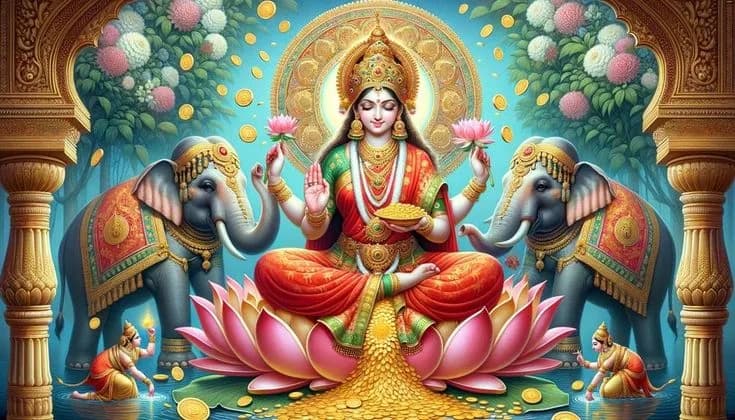














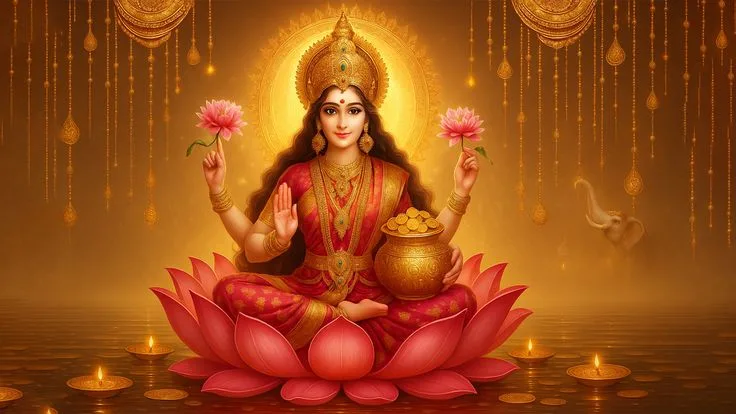
Goddess Lakshmi is widely worshipped as the deity of wealth, prosperity and good fortune. She is traditionally associated with Lord Vishnu and is often depicted seated on a lotus. But Hindu mythology also contains stories of a time when Lakshmi left the heavenly realm and took refuge beneath the ocean.
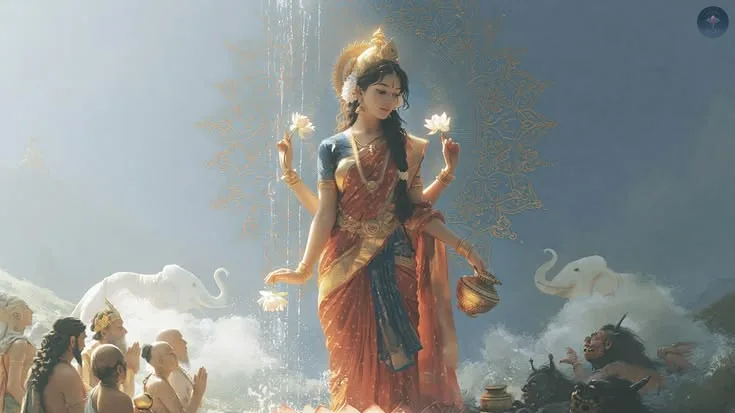
One such story connects her departure to the anger of Sage Durvasa. According to this account, an incident involving a divine garland, Lord Indra and his elephant Airavata eventually led to Lakshmi leaving the celestial world. Her absence had a dramatic effect on heaven, which was said to lose its prosperity and splendour.
How Durvasa’s curse changed the fate of Lakshmi
The story begins when Sage Durvasa presented Indra with a garland of Parijata flowers. The garland was not an ordinary gift. It carried divine significance and was meant to be treated with respect.
However, according to the Anandabazar account, Indra threw the garland towards his elephant Airavata. The elephant then trampled the garland under its feet. Durvasa was deeply offended by what he saw as an insult to the sacred gift.
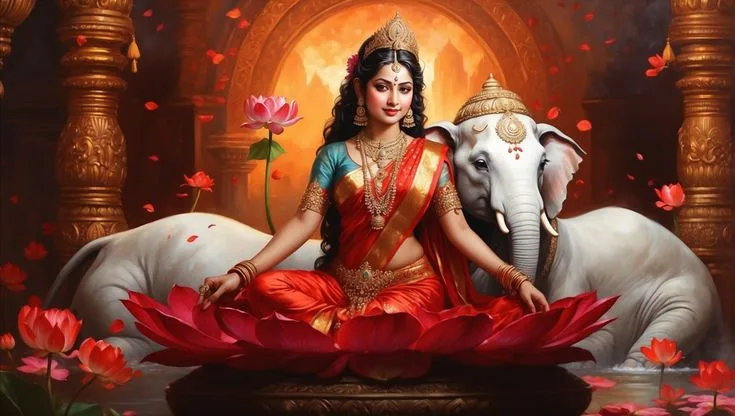
The sage became furious and pronounced a curse. Interestingly, in this version, the curse was directed at Goddess Lakshmi rather than simply at Indra. Durvasa declared that heaven would become deprived of Lakshmi.
With Lakshmi’s departure, the prosperity and brilliance of the celestial world disappeared. Heaven, which had once been associated with wealth, abundance and splendour, was suddenly described as being without the goddess of fortune. Lakshmi’s presence was said to have moved into the depths of the ocean.
The episode is also linked to the larger story of the Samudra Manthan, or churning of the cosmic ocean. The churning brought several extraordinary objects and beings into existence, including the deadly poison and the nectar of immortality. It was during this episode that Lakshmi returned and was reunited with Vishnu.
Another story says Lakshmi entered the sea for Vishnu
Also Read | Kalevala how one epic bridged Finland and Karelia
There is, however, another account that gives Lakshmi’s time beneath the ocean a very different meaning.
The Skanda Purana describes Lakshmi entering the ocean to perform intense penance because she wanted Narayana, or Vishnu, as her husband. Rather than being simply a consequence of a curse, her stay in the ocean is presented as part of her spiritual quest. She is said to have remained there for years, undertaking severe penance while waiting for Narayana.
During this period, several gods are said to have approached Lakshmi in disguise. They wished to win her over, but Lakshmi asked them to reveal their universal form. According to the story, this was something only Vishnu could do.
Eventually, Narayana appeared before Lakshmi and revealed his true form. The other gods were unable to meet her condition and had to leave. Lakshmi ultimately married Narayana, establishing the divine union between Lakshmi and Vishnu that is central to Hindu tradition.
Also Read | Ravana and Surpanakha: The unusual Raksha Bandhan bond
The Hindu mythology
These different versions show how Hindu mythology can preserve more than one explanation for the same divine figure or event. In one account, Lakshmi’s disappearance from heaven is tied to Durvasa’s anger and Indra’s disrespect towards a sacred gift. In another, her presence inside the ocean is connected to her penance and desire to marry Vishnu.
Together, the stories explain the recurring association between Lakshmi, the ocean, prosperity and the divine union with Vishnu, while also showing how different Puranic traditions can offer distinct versions of the same myth.