






Birendra Krishna Bhadra’s iconic voice transforms the 4 am dawn of Mahalaya into a timeless celebration of Bengali identity. From Kolkata’s lanes to London’s streets, his Mahishasura Mardini remains an inseparable part of Durga Puja, awakening devotion, nostalgia and the spirit of Bengal with every rendition of his legendary Chandipath.
Who was Birendra Krishna Bhadra?
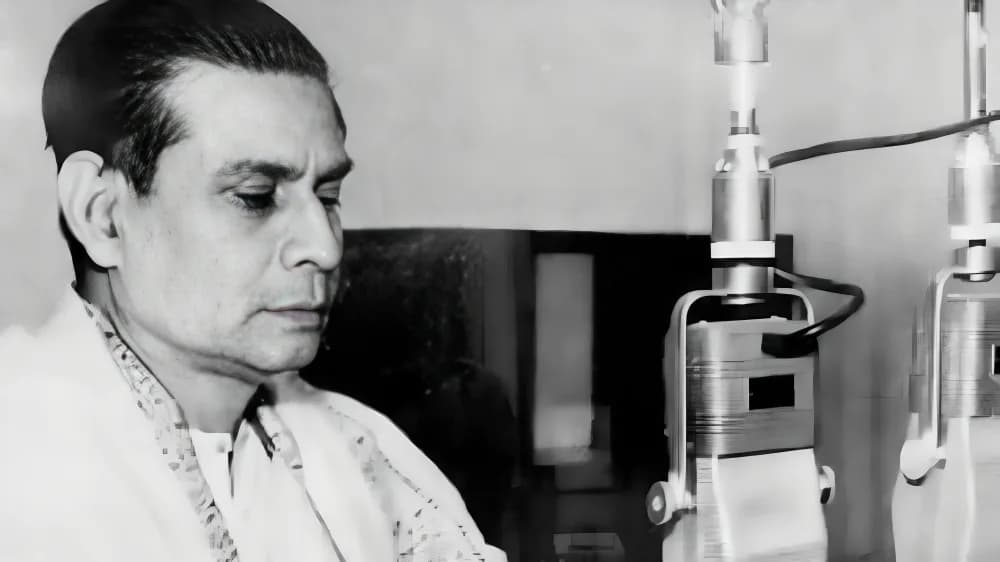
Born in August 1905 in Ahiritola, North Kolkata, Birendra Krishna Bhadra was the son of Roy Bahadur Kalikrishna and Sarala Bala Devi. He was a man of the theatre and words – a playwright, actor, broadcaster, and narrator.
Also Read | Why does Mahalaya mark Goddess Durga’s arrival? The myth and meaning behind the ritual
But his fate scripted his immorality while working in All India Radio, where his voice became inseparable from the spirit of Durga Puja in Bengal.
Why is he remembered on Mahalaya?
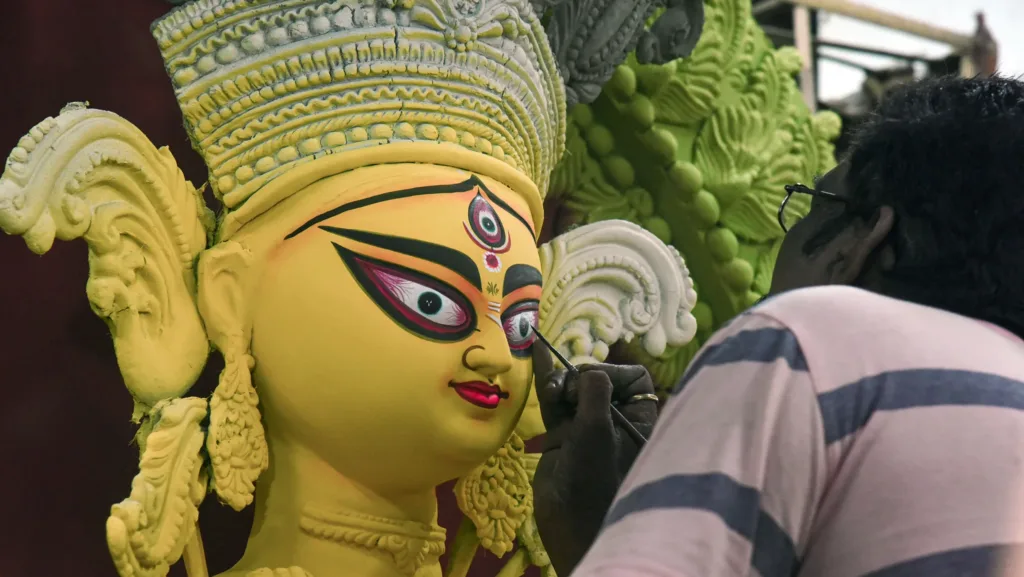
Bhadra’s place in history rests on a single creation: Mahishashur Mardini, first aired in 1931. This show became a dawn ritual on Mahalaya. Every year, as the sky still holds the last trace of night, Bhadra’s sonorous recitation fills the sky, the homes, marking the transition from Pitri Paksha (a time of remembrance) to Debi Paksha (the time of worship). For Bengalis across the world, Mahalaya is incomplete without Birendra Krishna Bhadra’s Mahishashur Mardini echoing through pre-dawn darkness.
About Mahishasur Mardini
It is a nearly two-hour-long epic that tells the legendary tale of Goddess Durga’s battle against Mahishasura, mixing Sanskrit shlokas with 19 devotional songs. With Bani Kumar’s powerful script, Pankaj Kumar Mallik’s timeless Music Direction, and Bhadra’s spellbinding voice, it is part myth, part music, part prayer, and wholly a magic.
Uttam Kumar vs Birendra Krishna Bhadra
In 1976, legendary Bengali actor Uttam Kumar was persuaded to record a new version. Although intrigued, he hesitated to replace Bhadra’s iconic rendition. And instead, a new programme titled Durga Durgatiharini with Hemanta Mukhopadhyay’s music was released on September 23, 1976.
Also Read | Durga Puja 2026: From Tant to Baluchari, 7 Bengali sarees to flaunt this puja
Despite Uttam’s charisma, Bengalis rejected it. For them, Mahalaya was not just about a story but about a voice. And the voice was Birendra Krishna Bhadra’s.
Even after his passing, decades after decades, travelling across generations and geographies, Bengal and Bengalis still wake each Mahalaya to the same voice- the voice which turned sound into ritual and ritual into memory.