















Someone sneezes, and before you even think about it, someone nearby says, “Bless you.” It is an almost automatic reaction, but the reason behind it is anything but ordinary. Why a sneeze, of all things, became something people felt the need to respond to has puzzled historians and fueled folklore for centuries.
Was it once linked to the fear of disease? Did people really believe a sneeze could make the soul leave the body? And what about the popular claim that your heart stops when you sneeze? The story behind this everyday phrase brings together ancient beliefs, religious traditions, health concerns and old superstitions. Here are eight facts that explain how “Bless you” became one of the most familiar responses to a sneeze.
There is no confirmed origin
The history of saying “Bless you” after a sneeze cannot be traced to a single person, place or event. Different explanations have emerged over time, and historians have linked the practice to several traditions surrounding sneezing.
Also Read | From tote bags to therapy talk: Is the ‘performative’ male changing men?
That makes the popular stories about its beginnings interesting, but they should not automatically be treated as established fact.
Did a sixth-century plague start the tradition?
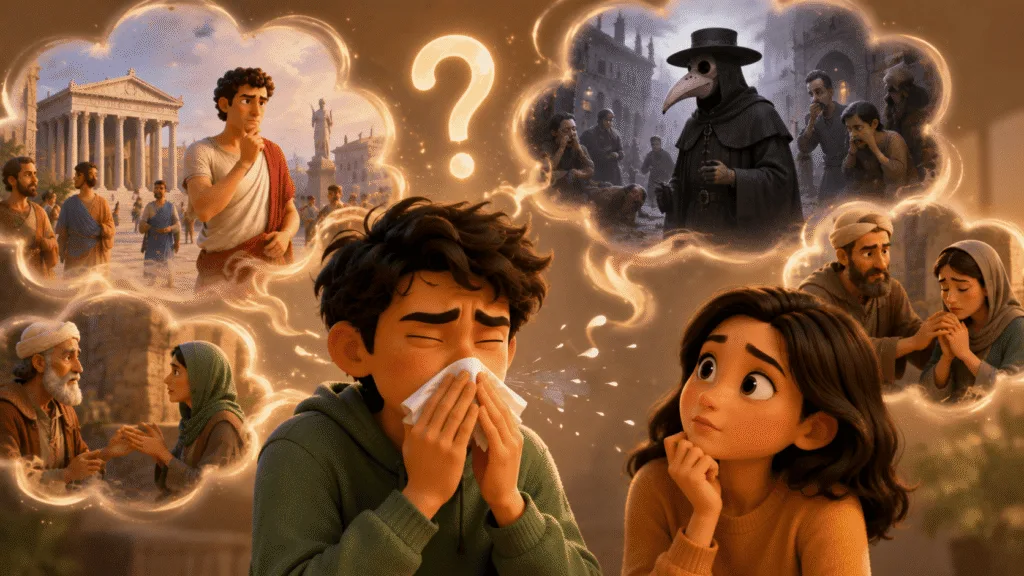
A familiar explanation connects “God bless you” with a plague outbreak in Rome around 590 CE. According to this theory, sneezing was regarded as a worrying indication of illness during the outbreak, prompting people to respond with a blessing.
However, this is a widely repeated explanation rather than a proven account of how the expression originated. Historical evidence does not establish the plague story as the single source of the custom.
People were responding to sneezes much earlier
The tradition may have roots that are considerably older than the sixth century. Roman author Pliny the Elder referred to the practice in his first-century work Natural History. His discussion suggests that sneezing already had social or cultural significance in the ancient world.
This is one reason the plague theory cannot simply be accepted as the beginning of the tradition.

A sneeze once carried a deeper meaning
Before modern medicine explained sneezing as a bodily reflex, people could attach very different meanings to it. In various cultures, a sneeze might be interpreted as an omen, connected with a person’s health or regarded as an event that required a protective response.
These interpretations helped give an otherwise ordinary bodily action a special place in social customs.
Was the soul thought to escape during a sneeze?
Folklore offers another explanation for the protective response. One enduring belief suggests that sneezing could allow a person’s soul or spirit to leave the body, making a blessing seem like a way to protect them.
Another tradition associated sneezing with evil spirits. Neither idea has scientific evidence behind it, but both became part of the folklore that surrounded sneezing in earlier times.

Does your heart really stop when you sneeze?
No. The idea that the heart stops during a sneeze is a common myth.
A powerful sneeze changes pressure inside the chest and can temporarily influence blood flow and the rhythm of the heartbeat. Those brief changes may explain why someone could experience an unusual sensation around the time of a sneeze, but the heart does not simply stop.
Sneezing traditions also exist in India
The meaning attached to a sneeze is not universal. In India, reactions can vary according to family traditions, region and community. Some people may regard sneezing as either auspicious or inauspicious in particular circumstances, while others attach no special meaning to it and respond out of everyday courtesy.

‘Bless you’ has a simpler meaning today
For many people, the phrase has moved far away from its older associations with superstition and religion. Saying “Bless you” can now simply be a polite response, an expression of concern or a small gesture of goodwill.
Also Read | Can you really listen with your heart? Understanding the art of listening
Other cultures have their own responses to sneezing, including expressions wishing someone good health or a long life.
Why do people say ‘Bless you’ after sneezing?
There is no single confirmed explanation. The familiar response appears to have emerged from several layers of cultural history, including ancient beliefs, concerns about illness, religious customs and social etiquette.
What may once have been linked to protection, omens or superstition has gradually become something much more ordinary: a quick and familiar response to a sneeze.