















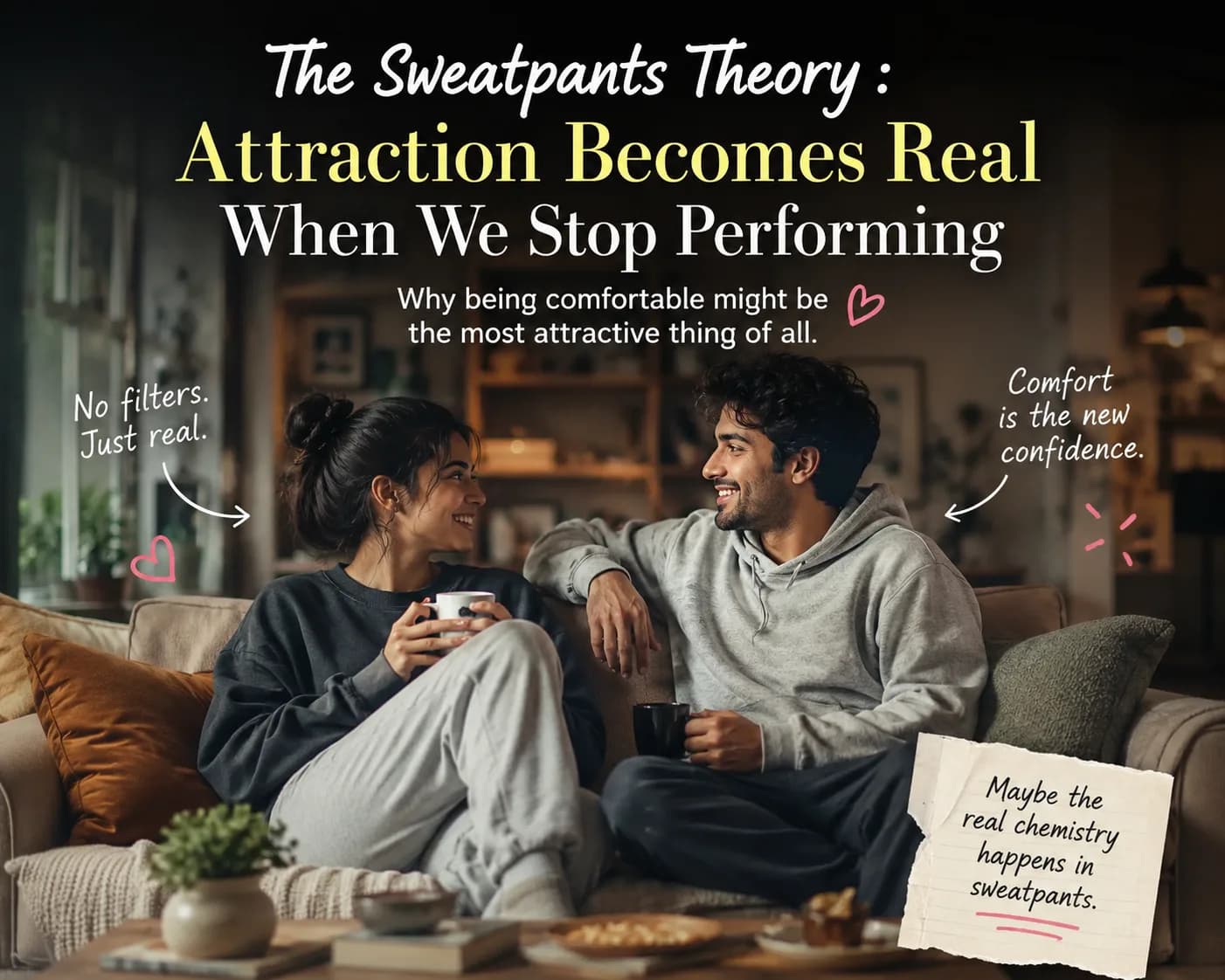
There is something faintly absurd about the modern dating vocabulary. We once had courtship, romance and heartbreak. We now have ghosting, breadcrumbing, situationships, love bombing and, apparently, the Sweatpants Theory.
Yet beneath its deliberately ridiculous name lies a rather serious proposition: perhaps attraction becomes more authentic when performance is reduced.
ALSO READ| What is digital jealousy? Online habit affecting modern couples
What is the Sweatpants Theory about?
The Sweatpants Theory has been circulating on TikTok and other social platforms as the idea that people can appear more attractive when they dress comfortably and behave without the elaborate self presentation traditionally associated with dating. In other words, the less one appears to be trying to impress, the more approachable and, paradoxically, attractive one may become.
It sounds like an internet joke. It is, however, a revealing symptom of how profoundly dating has changed.
For decades, a date was an exercise in presentation. Clothes were selected, hair arranged, perfume applied, conversation rehearsed and expectations carefully calibrated. The objective was to present the most desirable version of oneself before intimacy had earned access to the least curated one.
Modern dating has begun to distrust that theatre
The Sweatpants Theory essentially argues that comfort can become its own form of seduction. Someone who looks relaxed may appear more confident because they are not visibly negotiating the approval of the room. A person in ordinary clothes, laughing freely and behaving naturally, can communicate something that a meticulously assembled dating persona cannot: this is who I am when I am not trying to convince you to like me.
ALSO READ| Feeling fear during meditation? The surprising reason may not be what you think
That distinction matters in an age when dating apps have transformed romance into a marketplace of curated identities.
Profiles are edited. Photographs are selected with forensic precision. Biographies are compressed into witty sentences. First dates can feel less like encounters and more like auditions. Even vulnerability can become performative, packaged as evidence of emotional intelligence.
The Sweatpants Theory cuts against this economy of impression management. Its deeper appeal, therefore, may have little to do with sweatpants. It is about authenticity.
But there is a caveat. Authenticity should not become an alibi for indifference. Turning up looking deliberately careless is not necessarily confidence; sometimes it is simply carelessness. The distinction between being comfortable and making no effort remains important, particularly because relationships require reciprocity.
The theory becomes interesting precisely at that intersection. Modern daters increasingly appear exhausted by the elaborate rituals of romantic self marketing. They do not necessarily want someone flawless. They want someone recognisable. Someone whose dating persona does not collapse the moment the relationship moves from candlelit restaurants to grocery shopping, bad hair days, unfinished chores and Sunday afternoons spent doing absolutely nothing.
Perhaps that is the real revolution concealed inside the Sweatpants Theory.
ALSO READ| 25 years of Dil Chahta Hai: The friendship we grew up with
Romance has historically been obsessed with discovering whether someone finds us attractive at our most polished. Modern relationships demand a more uncomfortable question: will they still find us compelling when there is nothing left to perform?
The sweatpants, then, are merely sartorial shorthand and the real theory is about being seen without the costume.