
















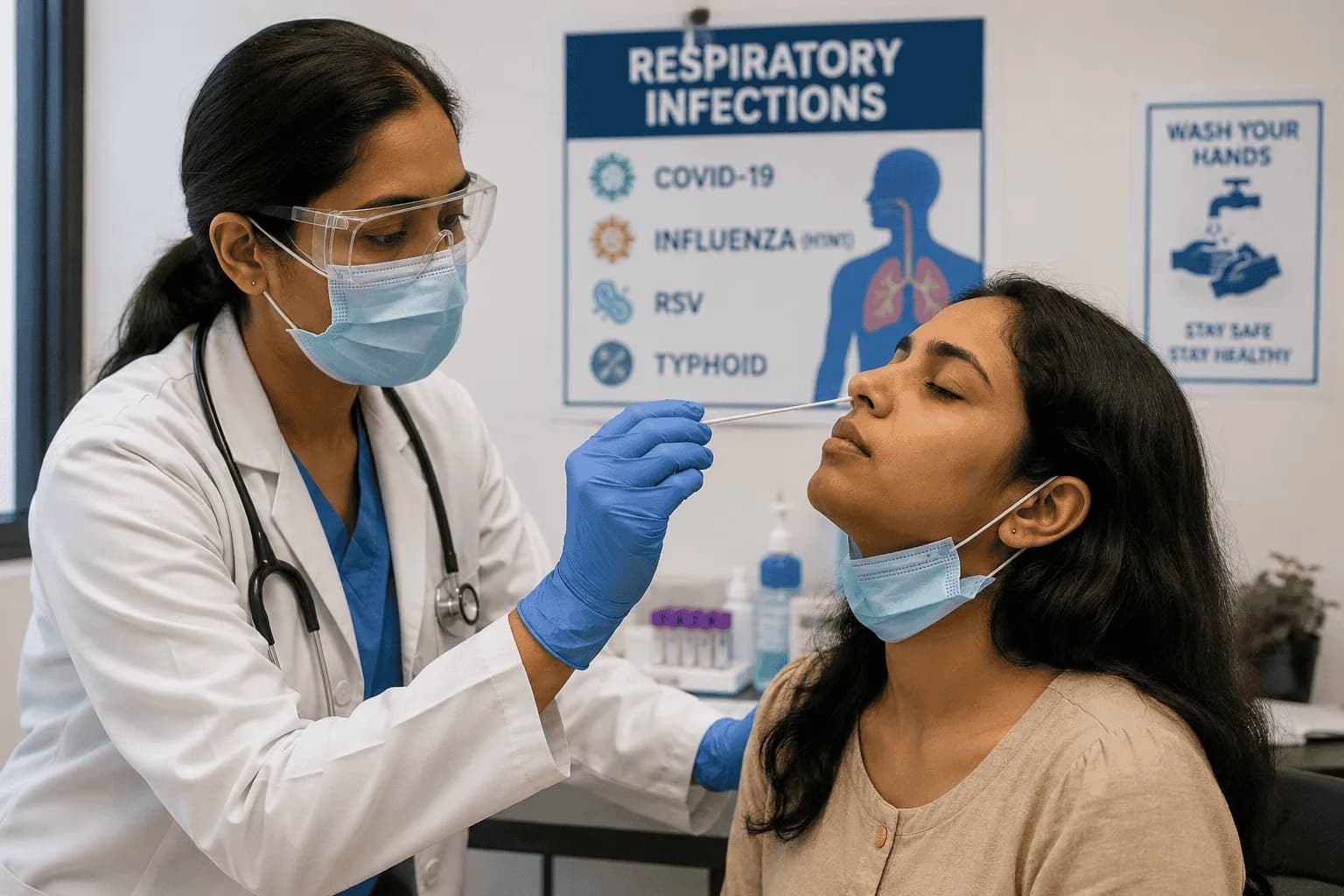
With H1N1 cases rising in parts of India, fever, cough, sore throat and body aches are prompting more people to wonder whether they have influenza or another respiratory infection. But symptoms alone cannot reliably distinguish H1N1 from seasonal flu, COVID-19 or other respiratory illnesses.
Doctors say testing is useful when the result could change treatment or clinical management, particularly in people at higher risk of complications or those with severe or worsening symptoms.
Symptoms alone can make it difficult to distinguish H1N1, COVID-19, seasonal flu and other flu-related illnesses.
That makes the question less about testing everyone and more about knowing when an H1N1 test can actually help.
Why can’t H1N1 be diagnosed from symptoms alone?
H1N1 is a subtype of influenza A, and its symptoms overlap considerably with several other respiratory infections.
Common symptoms can include:
Fever
Cough
Sore throat
Runny or blocked nose
Headache
Body or muscle aches
Fatigue
Chills
Breathing difficulty in some cases

COVID-19, seasonal influenza and respiratory syncytial virus (RSV) can produce similar symptoms. Therefore, having a fever and cough does not automatically mean a person has H1N1.
Also Read | Summer hydration tips: 7 simple food habits to stay cool and energised
The Infectious Diseases Society of America recommends influenza testing particularly when the result is likely to affect clinical decisions, including antiviral treatment, further investigations, antibiotic use or infection-control measures.
When is an H1N1 test actually needed?
Testing becomes more relevant when a patient has severe symptoms, belongs to a high-risk group or when knowing the result could change the course of treatment.
Doctors may consider testing particularly for:
Older adults
Children
Immunocompromised people
People with chronic lung disease
People with heart disease
People with diabetes and other metabolic conditions
Testing is also recommended for hospitalised patients who develop acute respiratory symptoms without another clear diagnosis.
For an otherwise healthy person with mild symptoms who is steadily improving, testing may not necessarily change treatment.
The basic consideration is whether the test result will affect what the doctor does next.
Is RT-PCR the best test for H1N1?
When laboratory confirmation is required, molecular tests such as RT-PCR are preferred because they are generally more sensitive than rapid influenza antigen tests.
RT-PCR detects influenza viral RNA in respiratory specimens. The World Health Organization lists detection of influenza-specific RNA using RT-PCR among established methods for laboratory confirmation of influenza and notes that rapid diagnostic tests generally have lower sensitivity.
Indian health authorities also recommend rapid molecular assays over rapid influenza diagnostic tests when influenza testing is indicated. For hospitalised patients, RT-PCR or other molecular assays are preferred over less sensitive influenza tests.
This distinction is important because a negative rapid influenza antigen test does not necessarily rule out influenza.
What is a multiplex respiratory RT-PCR panel?
A multiplex respiratory panel can test for several respiratory pathogens from the same respiratory sample.
Depending on the specific panel, it may detect:
Influenza A
Influenza B
Influenza A(H1N1) or other influenza A subtypes
RSV
SARS-CoV-2
Other respiratory viruses
Some bacterial respiratory pathogens
For someone recovering at home, a broad panel may provide additional information without necessarily changing treatment.
When should an H1N1 test be done?
The timing of the respiratory sample can affect detection. Influenza viral shedding is generally highest early in the illness, making prompt sample collection important.
Upper respiratory specimens for outpatients should ideally be collected as soon as possible after symptoms begin, preferably within four days.

A negative result also needs to be interpreted alongside the patient’s symptoms, exposure history and the type of test used. A negative test with a less-sensitive method does not necessarily eliminate a strong clinical suspicion of influenza.
Do you need another H1N1 test after recovering?
Generally, no.
Patients who are recovering well clinically do not usually need a repeat test simply to confirm that the infection has cleared.
One reason is that molecular tests detect viral genetic material, which can remain detectable even after symptoms have substantially improved. Therefore, a positive RT-PCR result after clinical recovery does not necessarily mean that the person remains clinically ill or infectious.
For most uncomplicated cases, doctors instead look at whether the patient is actually getting better.
How do doctors know H1N1 recovery is on track?
Clinical improvement is usually more important than obtaining a negative repeat PCR.
Doctors look for signs such as:
Fever reducing or disappearing
Cough and cold symptoms improving
Energy gradually returning
No breathing difficulty
No new or worsening symptoms
Recovery is assessed through clinical symptoms and examination, including reduction or absence of fever, improvement in cough and cold and the absence of breathlessness.
If the patient is steadily improving, eating and drinking adequately and breathing normally, a repeat PCR is generally not required merely to obtain a negative report.
When should a recovering H1N1 patient seek further evaluation?
Persistent or worsening symptoms require closer attention.
The source material identifies symptoms such as:
Persistent fever
Breathlessness
Worsening cough
Chest pain
Significant or persistent fatigue
as reasons for additional medical evaluation.
Doctors may consider blood tests or chest imaging where clinically indicated. Pneumonia and secondary bacterial infections are among the complications that may need to be investigated, particularly if someone deteriorates after initially improving.
Higher-risk groups, including older adults, young children, pregnant women and people with underlying medical conditions, may require closer monitoring.
So, who actually needs an H1N1 test?
The decision should depend on the patient’s condition, risk factors, timing of symptoms and whether the result will change management.
Testing becomes more useful when:
The illness is severe or worsening: Respiratory symptoms such as breathlessness or a worsening cough warrant medical evaluation.
The patient is at higher risk: Older adults, young children, immunocompromised people and those with chronic illnesses may require a lower threshold for testing and treatment.
The result could change treatment: Confirmation of influenza may affect decisions about antiviral treatment, hospitalisation or infection-control measures.
Testing is performed at an appropriate stage: Molecular testing is generally most useful when performed early in the illness.
Can H1N1 be prevented?
Testing identifies infection after symptoms develop, but vaccination remains an important preventive measure.
The World Health Organization recommends annual influenza vaccination as the most effective way to prevent influenza, particularly for people at increased risk of severe disease.
Basic precautions, including staying home when acutely unwell, avoiding close contact with vulnerable people, maintaining hand hygiene and following appropriate respiratory precautions, can also help reduce transmission.
With H1N1 activity increasing in parts of India, awareness is important, but not every fever, cough or body ache requires an RT-PCR or a comprehensive respiratory panel.
Also Read | Want to transform your body in 12 months? Fitness coach suggests these 4 basics
For patients who need laboratory confirmation, molecular testing can provide sensitive detection of influenza. For those recovering normally, however, doctors generally rely on clinical improvement rather than repeated PCR tests.
If symptoms persist, return or worsen, particularly fever, breathlessness, chest pain or a worsening cough medical evaluation becomes more important.