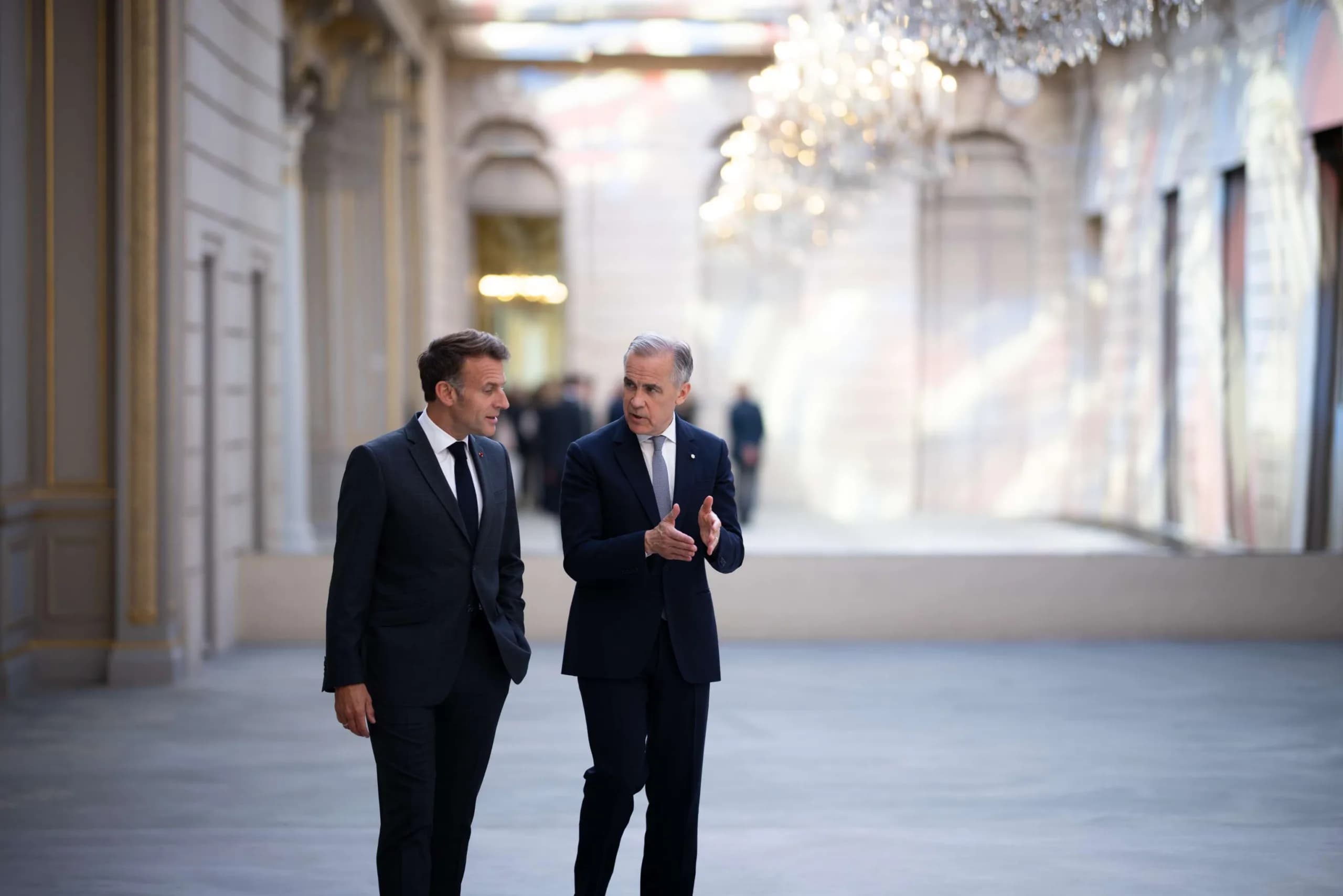








French President Emmanuel Macron and Canadian Prime Minister Mark Carney met on Sunday in Saint-Pierre-et-Miquelon, a small French territory off Canada’s Atlantic coast, and announced plans to deepen cooperation across defence, energy, space, technology and trade.
The meeting came at a sensitive moment for Canada, as Ottawa seeks stronger economic and strategic links with Europe while its relationship with the United States remains strained.
French President Emmanuel Macron arrives in Saint-Pierre-et-Miquelon ahead of a bilateral meeting with Prime Minister Mark Carney. The French territory is just 20 minutes from the southern tip of NFLD. pic.twitter.com/oT94BcEZWH
— Judy Trinh (@judyatrinh) September 20, 2026
Also Read | Can AI safety keep pace? Gemini hack and resignations deepen industry worries
A remote French possession
The location was significant. Saint-Pierre-et-Miquelon sits about 25 km from Newfoundland and is France’s last remaining territory in North America.
The two countries also share a maritime border there. Macron’s visit was the first by a French president to the territory since 2014, while Carney became the first Canadian prime minister to make an official visit there.
In the geopolitical thick of it
The islands sit close to Canada, but they are also French territory. Their location gives the meeting a clear Atlantic and sovereignty dimension.
That became more relevant after US President Donald Trump recently shared a map depicting Canada, Greenland and other parts of North America under a US flag.
Diplomats viewed Macron’s visit as carrying symbolic weight following that post. Macron said France did not need to repeatedly reaffirm the islands’ status because of what he described as “strange ideas or strange things”.
PM Carney participates in wreath-laying ceremony alongside French President Emmanuel Macron in Saint-Pierre-et-Miquelon, France
— Scott Robertson (@sarobertson_) September 20, 2026
(no sound) pic.twitter.com/j3clcQA35m
Half the story
The practical agenda, however, went well beyond symbolism. Carney said Canada and France would ask their space agencies and defence ministries to work together on infrastructure, including space launch systems and ground-based reception facilities.
The two countries also agreed to expand cooperation in energy, telecommunications, climate resilience and economic development.
Energy is a major piece of the discussion. Europe is dealing with renewed pressure on energy supplies as the conflict involving Iran disrupts global markets.
Macron said Canada could play a larger role in supplying liquefied natural gas to Europe. “Canadian liquefied natural gas projects can help. They are important for Europe,” he said.
Macron also said the talks could lead to more concrete bilateral agreements on energy.
A keen Canadian suitor
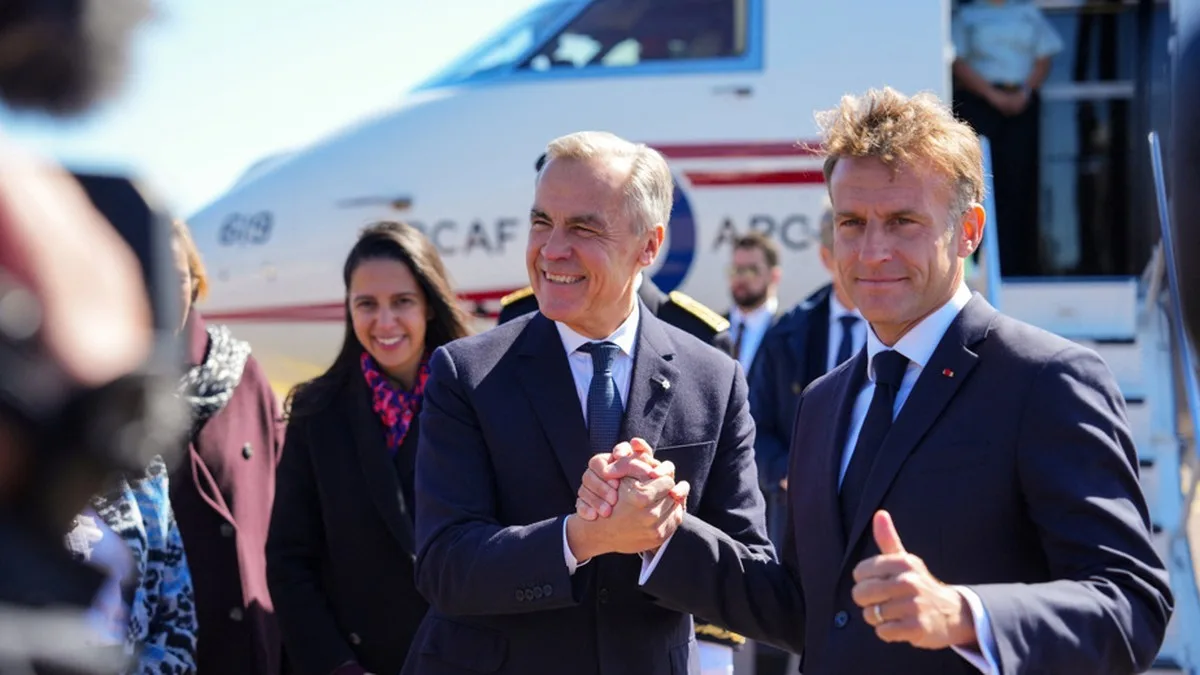
The bigger shift is economic and strategic. Carney has been pushing for a much closer relationship between Canada and the European Union.
During his European visit last week, he backed the idea of a new partnership that would go beyond the existing Canada-EU trade framework.
European Commission President Ursula von der Leyen has proposed opening the door for Canada to become the bloc’s first “associate member”.
The proposed status is not full EU membership, and its terms are yet to be worked out.
Some paperwork
Macron has backed that direction. At the Saint-Pierre meeting, he said France and Canada shared commitments to democracy, the rule of law, international law and free and fair trade.
Carney framed the effort in terms of resilience, arguing that sovereignty now also depends on secure access to areas such as AI, semiconductors, critical minerals, clean energy and space-based communications.
Canada’s strategy is about creating more options. For France and Europe, it offers a closer relationship with a major G7 economy rich in energy, critical minerals and advanced technology.
The meeting is only an early step. Any deeper Canada-EU integration will face political and practical hurdles, while existing trade arrangements such as CETA still have unresolved ratification issues in some EU countries.
Also Read | Love books? This country is rewarding people for reading every day