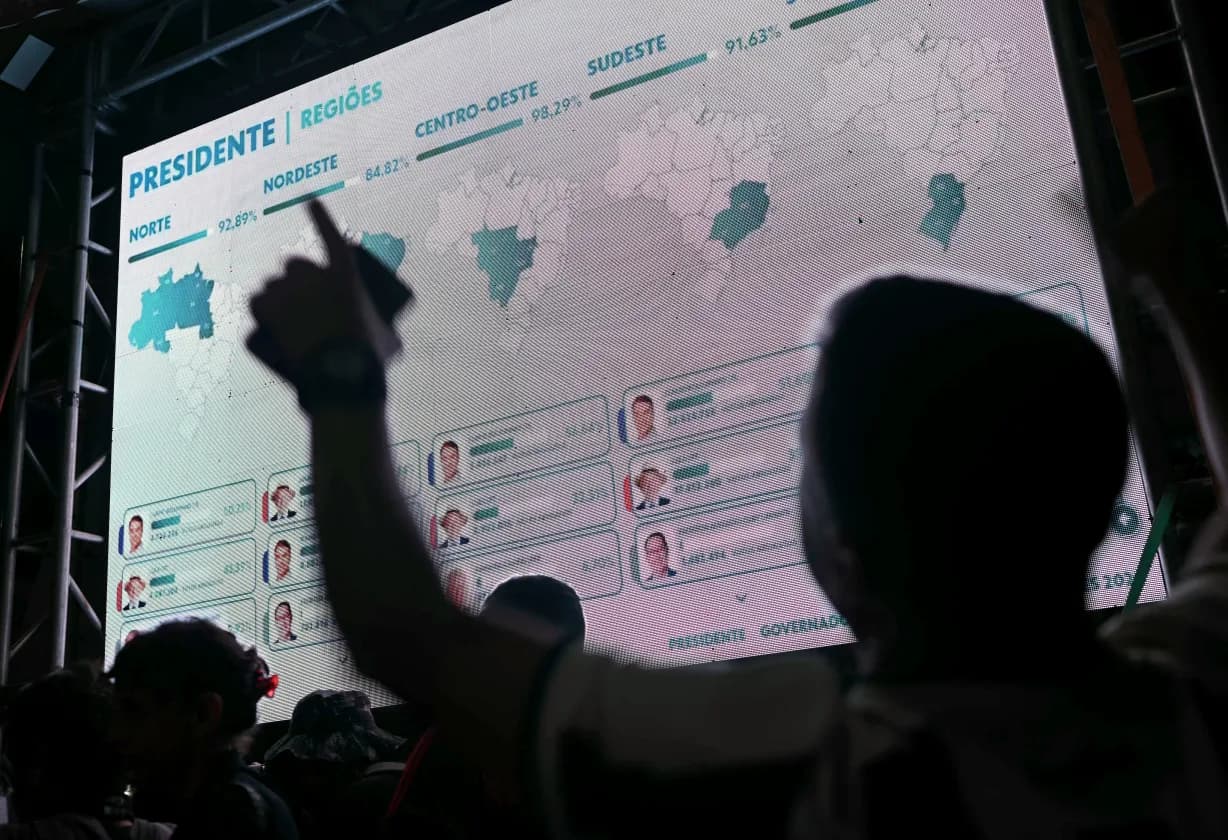













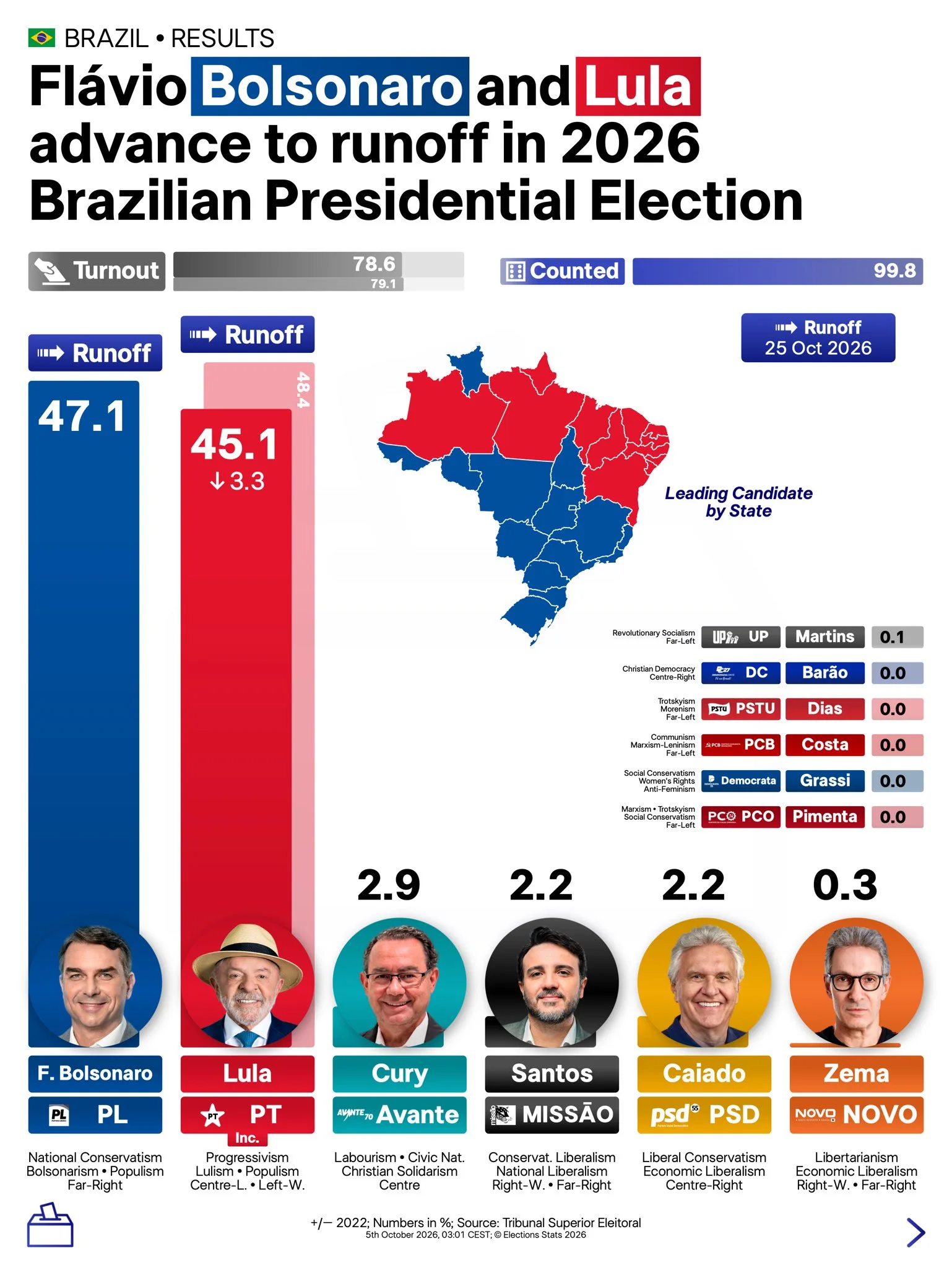
Brazil’s presidential election is heading for a runoff on October 25 after neither President Luiz Inácio Lula da Silva nor Senator Flávio Bolsonaro secured the majority needed for an outright first-round victory.
With nearly all votes counted, Bolsonaro finished narrowly ahead of Lula, taking about 47% of the valid vote against roughly 45% for the incumbent.
Brazil just threw the election wide open. Flávio Bolsonaro finished ahead of Lula in the first round, but neither got close enough to 50% to avoid a runoff. They’re going back to the polls on October 25. Lula hasn’t lost a first-round presidential election like this since 1998. Now Brazil has to choose between them again.https://t.co/xaeiVxWIiO
— TheCommonVoice (@MaxRumbleX) October 5, 2026
The result sets up a closely fought second round in Latin America’s largest economy. Brazil’s electoral system requires a candidate to win more than half of the valid votes to avoid a runoff, leaving the two leading candidates to compete again after failing to cross that threshold.
The next presidential term is due to begin on January 5, 2027.
Also Read | Ethiopia strikes back in Tigray, retakes Mekelle as rebels withdraw
A runoff awaits
The contest is more than a straight choice between two politicians. It has become a vote on the direction of Brazil’s politics.
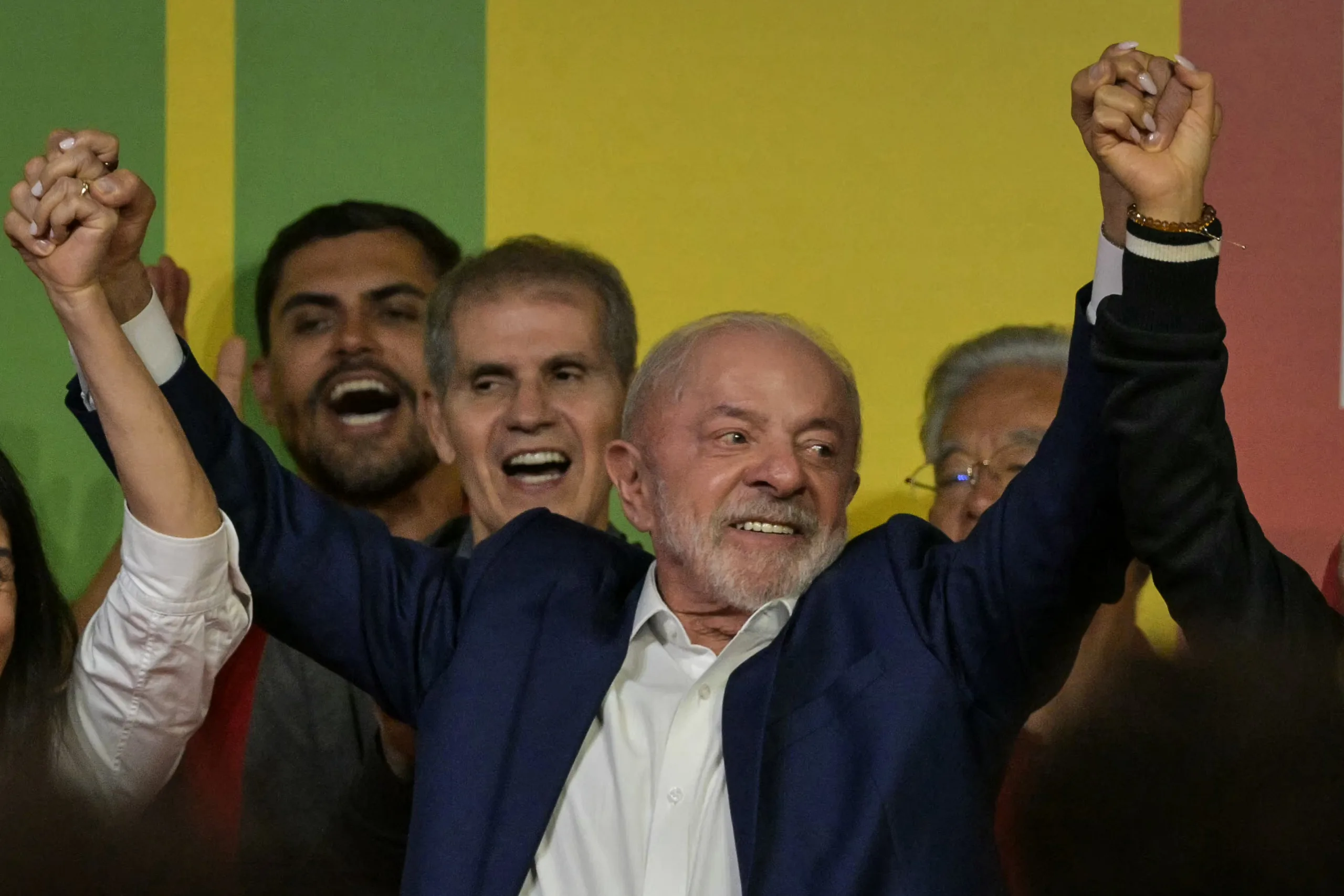
Lula, 80, is seeking a fourth non-consecutive term and is defending his record on social welfare while facing voter concerns over affordability and corruption.
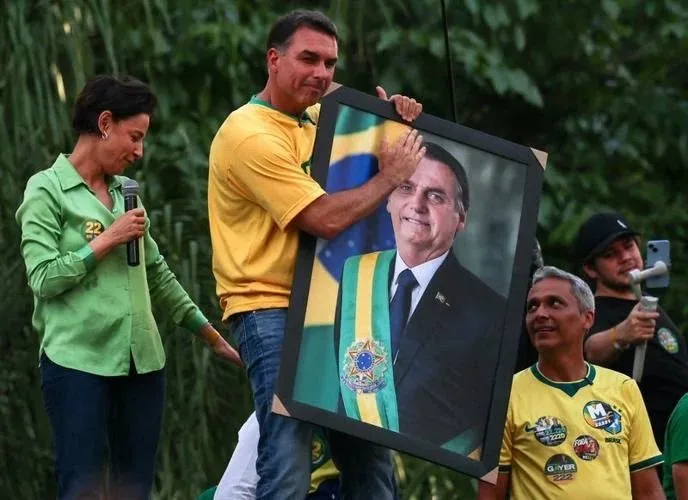
Flávio Bolsonaro, 45, is the son of former president Jair Bolsonaro and has presented himself as the candidate for political change, tougher action against criminal groups, and closer ties with US President Donald Trump.
“Brazil wants change; that’s the reading of what happened today,” Bolsonaro said after the result.
Lula, acknowledging that the outcome was unexpected, said, “Tomorrow we start a new campaign.” Both now have three weeks to win over voters who backed other candidates in the first round.
(Brazil) The results have now come in. The far right has exploded into the legislative chamber, pushing aside the older conservatives. The entire Bolsonaro seems to be in the chamber now – Michelle (Senator), Carlos (Son), Jair Renan (Son), Renato (Brother), and then of course Flávio into the presidential runoff against @LulaOficial . This is Nepobolsonarismo. Meanwhile, many of our comrades are now deputies – people such as @jonesmanoel_PE, @eliasjabbour, @GuajajaraSonia, @DepValmir, Camilo Daniel, @MissiasDias, @rosamst_, Adão Pretto, João Daniel, and others. (Picture of old friend Jones). Onward to 25 October, when Lula will face off against the Bolsonaro far right clique. Onward, onward, onward!
— Vijay Prashad (@vijayprashad) October 5, 2026
Institutional stakes
That second-round fight also has a wider institutional dimension.
Brazil’s next president would inherit an unusually large backlog of appointments to powerful institutions, including the Supreme Court, central bank, and economic regulators.
Two central bank board seats have been vacant since January, while a Supreme Court vacancy has lasted nearly a year after senators rejected Lula’s nominee Jorge Messias.
The securities regulator CVM has also faced vacancies since late 2024, while the antitrust watchdog Cade is operating close to its minimum quorum.
The delays reflect the growing political influence of Congress, where nominee confirmations have increasingly become a tool of negotiation.
The next president could have a significant opportunity to shape institutions responsible for monetary policy, financial oversight, and constitutional interpretation, although appointments still depend on the Senate confirmation process.
🇧🇷Brazil 2026 Election Poll 41% Eduardo Bolsonaro 38% Lula da Silva This shows that the impact of the tariffs was not enough for Lula to deceive the people and blame Trump for his own economic failure. And when the candidate is Jair Bolsonaro, the lead grows: 48% Jair Bolsonaro 36% Lula da Silva
— Eduardo Bolsonaro🇧🇷 (@BolsonaroSP) October 8, 2025
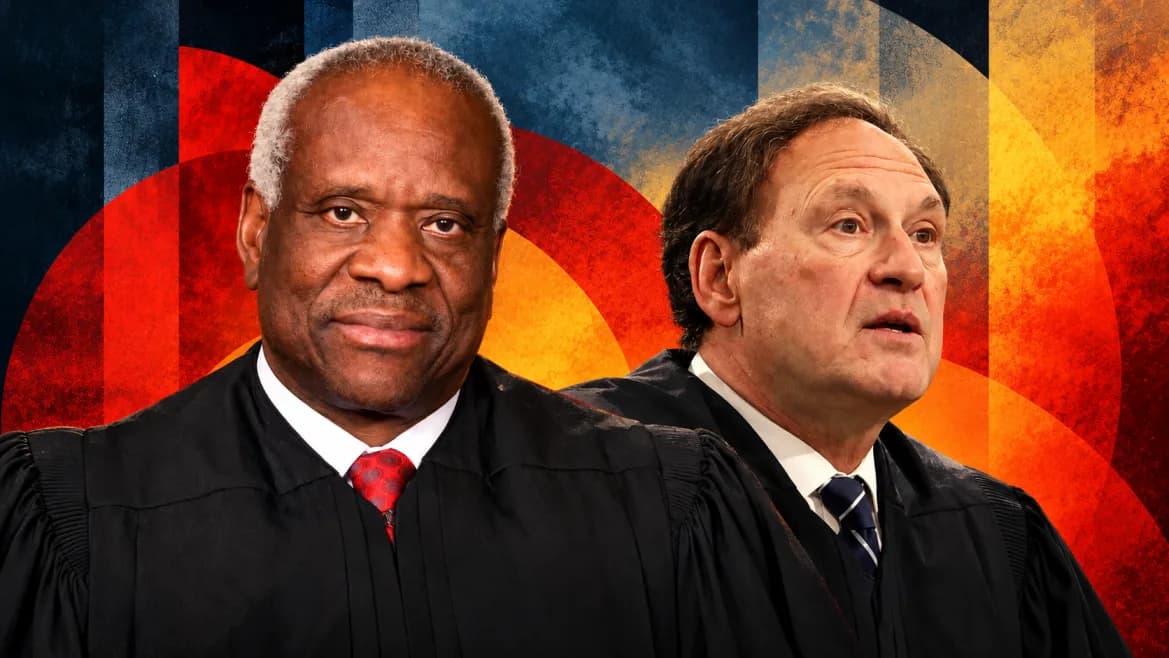
Also Read | As US Supreme Court term begins, Thomas-Alito factor gets fresh chances to wield power
Power in Brazil no longer sits in one place
The institutional question is tied to a broader shift in Brazil’s balance of power. Congress has gained greater control over public spending and the legislative agenda, reducing the room traditionally enjoyed by the presidency.
Congressional earmarks rose from 7.5% of effective federal discretionary spending in 2018 to 21% in 2025, according to Planning Ministry data.
The contrast is also visible in lawmaking. In 2025, Congress approved far more bills introduced by legislators than by the executive branch, reversing the pattern seen during Lula’s second term in 2007.
The October 25 runoff will therefore decide not only who occupies the Planalto Palace. It will also determine how the next president works with Congress and how much influence the administration may have over Brazil’s key institutions.
🇧🇷 Déjà vu with a twist. Brazil’s election heads to an October 25 runoff, but the man who edged ahead of Lula in the first round isn’t Jair Bolsonaro, it’s his son Flávio. A rematch of 2022, with a new name on the right and the same unresolved question hanging over it. 👇 https://t.co/3jaaL2zubW #Brazil #Lula #Bolsonaro
— The Diplomatic Affairs (@OvidiuStanica) October 5, 2026