












For an elite shooter, the smallest change in a shot can be significant. Years of training allow experienced shooters to recognise differences in the sound, recoil and feel of a round almost instantly. The rifle, ammunition and athlete have to work together with remarkable consistency.
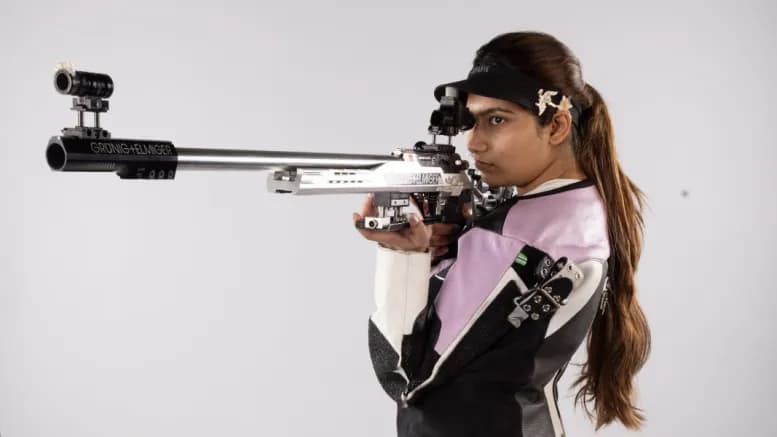
That became a concern for Indian rifle shooter Ashi Chouksey at the ISSF World Cup in Hangzhou, China, in July, just weeks before the 2026 Asian Games in Japan.
During the women’s 50m rifle 3 positions event, Chouksey reportedly felt that something was not right with her ammunition. Her coach asked her to continue because no alternative stock was available. According to Sportstar magazine, the ammunition came from stock left over from the Paris 2024 Olympics.
Chouksey eventually finished 23rd and failed to make the eight-shooter final.
The episode has brought renewed attention to the availability of match-grade .22-calibre ammunition in India, particularly after Indian shooters reportedly carried year-old ammunition to the Aichi-Nagoya Asian Games.
Why .22-Calibre Ammunition Matters in Competitive Shooting?
A .22 Long Rifle, commonly known as .22 LR, is used in several competitive shooting disciplines. The cartridge contains a bullet, case, primer and propellant and is widely used in both rifle and pistol events.
Match-grade ammunition is different from ordinary civilian or defence ammunition. Competitive shooters require rounds that deliver highly consistent velocity, trajectory and performance.
Olympic silver medallist and former international shooter Vijay Kumar explained the importance of controlled ammunition in precision shooting.
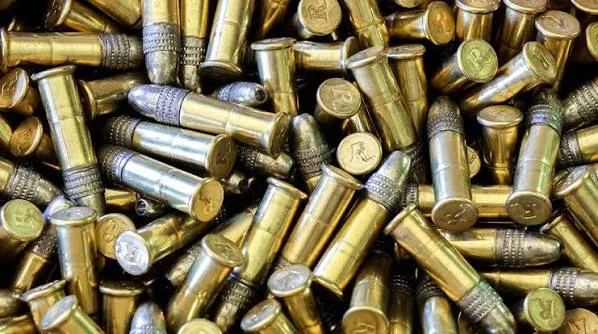
“Sports ammunition comes with a specific velocity and power designed around accuracy at 50 metres or 25 metres,” Kumar told India Today Digital.
“If you fix a gun at one point and fire a defence ammunition, the bullets will not repeatedly hit exactly the same place. But controlled-velocity ammo [used for shooting sports] is manufactured and measured so that the bullets hit the same place,” he added.
This consistency becomes particularly important when the difference between a strong performance and a disappointing result can come down to very small variations.
Indian elite shooters generally rely on imported match ammunition. Popular brands include ELEY, Lapua and RWS, with much of the competitive-grade supply coming from Europe.
Ashi Chouksey’s World Cup Experience Raises Questions
Chouksey’s experience in Hangzhou became an important example of the concerns surrounding ammunition availability.
Her case does not establish that old ammunition was solely responsible for her 23rd-place finish. Experienced shooters and officials interviewed by India Today Digital stressed that the age of a cartridge alone cannot determine its performance.
Former international rifle shooter Suma Shirur said ammunition can remain usable depending on how it has been stored.
“It [the performance of competition ammunition] depends on the kind of ammunition, and how long it has been stored. If you are keeping it in a place with moisture, or if it is not stored properly [as per protocol], it can affect its performance. So, the age of the ammunition and how it has been stored both matter,” Kumar told India Today Digital.
Temperature, humidity and storage conditions can all influence ammunition performance. This is why shooters generally prefer to test and select ammunition well before a major competition.
Chouksey herself later bounced back at the Asian Games, winning a silver medal in the women’s 50m rifle 3 positions team event with Tilottama Sen and Vidarsa Vinod.
Indian Shooters Report Delays in Getting Match Ammunition
The issue goes beyond one shooter’s experience. International-level shooters, coaches and people involved in the ammunition trade told India Today Digital that access to match-grade .22 ammunition has been a concern, particularly for shooters outside India’s elite group.
Gagandeep Singh, proprietor of Delhi’s Sharda Gun House in Ramesh Nagar, said delivery times had increased considerably.
“Civilian shops generally don’t keep match-grade bullets. But I can tell you that right now, the shortage is such that orders that used to take three to four months now take anywhere between eight and 10 months,” Singh told India Today Digital.
A former NRAI official, who requested anonymity, also said ammunition delays had affected preparation ahead of the Asian Games.
“Shooters have faced difficulties getting new ammunition in the run-up to the [Asian] Games, which affected their practice,” the former official said.
“Shooters have been practising with old ammunition, which means they might not know whether an error is coming from their technique or the ammunition itself,” the former official added.
That uncertainty can be particularly difficult in a sport where athletes spend considerable time refining their technique and equipment.
NRAI Denies Shortage Affected Asian Games Preparation
The National Rifle Association of India acknowledged that there had been a period of limited .22-calibre ammunition supply.
NRAI Secretary-General Pawan Singh attributed the situation to supply-chain constraints linked to the Russia-Ukraine war and the wider geopolitical situation.
However, Singh rejected the claim that the required ammunition was unavailable for the Asian Games.
“The required ammunition was made available before the Asian Games and was used and tested by the athletes during their training and competition preparation for the Asian Games,” Pawan Singh told India Today Digital.
That statement presents an important distinction. While supply problems had existed, the NRAI maintained that ammunition required for the Asian Games was eventually made available and tested.
A former NRAI official, however, maintained that some shooters had practised with older ammunition.
“Shooters had practised with older ammunition for the Asian Games,” the former official said.
How Shooters Select and Test Their Ammunition?
Getting match-grade ammunition is only part of the process. Shooters also need to establish which ammunition works best with their individual firearm.
Suma Shirur explained that the same ammunition may not perform identically in every rifle or pistol.
“It depends on which rifle the ammunition is best suited to. We extensively test it and go for testing before selecting ammunition,” Shirur told India Today Digital.
This creates an additional challenge for Indian shooters because much of the match-grade ammunition is produced in Europe.
“Most of the ammunition manufacturers are in Europe, so even club-level shooters there can go and get their ammunition tested before buying it. Unfortunately, we don’t have that luxury in India,” Shirur said.
Vijay Kumar believes India should eventually develop the ability to produce competitive ammunition domestically.
“I completely agree that what we import should be manufactured in India. As shooting grows and the number of players increases, there should be at least one or two companies here producing ammunition to the same standard,” Kumar told India Today Digital.
Kumar repeated the importance of domestic production, adding, “As shooting grows and the number of players increases, there should be at least one or two companies here producing ammunition to the same standard.”
Elite Shooters and Other Participants Face Different Challenges
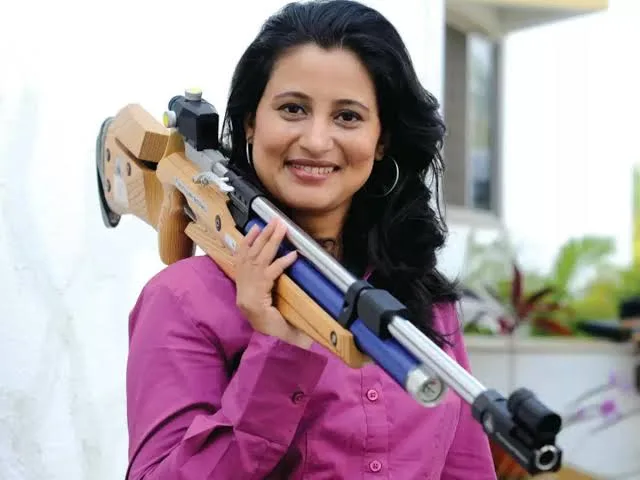
Former Olympian and Arjuna Award winner Anjali Bhagwat distinguished India’s top shooters and those trying to break into the elite level.
“Elite shooters did not have a problem [in getting .22 ammunition],” Bhagwat said. She added, “Normal participants have no access to ammunition.”
The difference matters because regular access to suitable ammunition is an important part of training. Shooters outside the national elite group need opportunities to practise and develop before they can compete for places at major international events.
The reported delays therefore raise questions about the broader development pathway, even though the available evidence does not establish that ammunition shortages directly caused India’s lower medal tally at the Asian Games.
Why Is There a Global Shortage of .22 Ammunition?
The supply problem is not limited to India. The wider ammunition industry has faced pressure over the availability of raw materials, including nitrocellulose, which is used in smokeless propellant. The European Commission has identified constraints involving nitrocellulose and nitroglycerine as challenges to increasing ammunition production.
The European Union introduced the Act in Support of Ammunition Production, or ASAP, in 2023 to increase production capacity, replenish stocks and support ammunition supplies to Ukraine.
However, increasing manufacturing capacity is not an immediate process. Specialised chemical facilities, machinery and other inputs are required, meaning production cannot simply be expanded overnight.
There is also a wider geopolitical dimension involving critical raw materials and chemical supply chains. European Parliament records have raised concerns about China’s role in supplies of strategic materials and chemicals connected to ammunition production.
These developments show how international conflicts, trade restrictions and industrial bottlenecks can affect ammunition supply chains.
However, those factors alone do not establish the precise extent to which the global situation contributed to the shortage of match-grade .22 ammunition faced by Indian shooters.
Is Old Ammunition Always Bad?
Experts interviewed for the report were cautious about linking ammunition age directly to poor performance.
Suma Shirur said there is no simple rule that older ammunition is automatically unsuitable.
“You can’t generalise it. The condition of a batch of bullets depends on so many factors, like how it’s stored, the temperature, the humidity, and many other factors. Yes, a shooter tries to get the same brand or bullet whose behaviour they know, but the bullets being old doesn’t mean they are bad. There is some old ammunition that does work. I can’t make a general statement on whether it is good or bad,” she said.
Vijay Kumar also rejected the idea that ammunition age can automatically explain an underwhelming result.
“I think if somebody is saying this is the reason for my poor performance, that is clearly an excuse,” Kumar said.
He pointed out that ammunition-related malfunctions can occur even when cartridges are not old.
“In rapid fire [a sport Vijay Kumar masters], malfunctions happen. It depends on your luck, the quality of the gun, how properly it is maintained and how the ammunition is stored.”
Kumar also stressed that athletes cannot expect to win every competition.
Also Read | ‘Ek Kachori, Do Samosa’: How Delhi women are turning protest slogans into viral Gen Z activism
“A shooter cannot win all the time. An athlete cannot win all the time. If somebody finishes 20th or 30th, they have to come back, work harder and improve their score and consistency,” he said.
Did Ammunition Shortage Cost India Medals at Asian Games?
India finished the 2026 Asian Games shooting competition with 15 medals, including three gold, eight silver and four bronze. That was lower than its 22-medal haul at the 2023 Asian Games in Hangzhou, where Indian shooters won seven gold medals among their 22 medals.
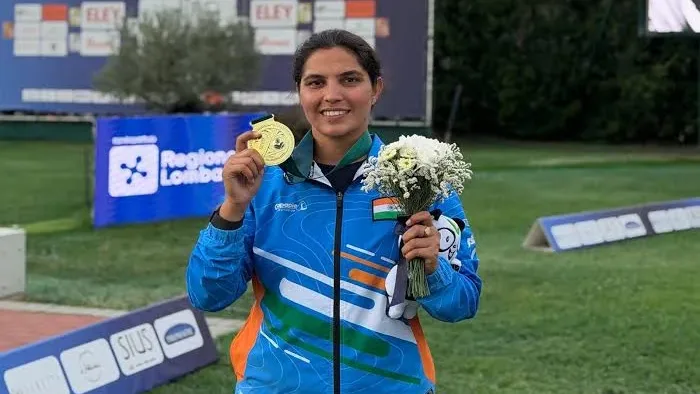
Of the 28 shooting events at the 2026 Asian Games, eight involved .22-calibre ammunition. India won three medals in those events.
That makes it difficult to establish a direct connection between ammunition availability and the overall medal tally.
Vijay Kumar summed up the uncertainty surrounding equipment and performance in shooting.
“Shooting is a sport where equipment can malfunction. Performance depends on the gun and ammunition working as they should,” Kumar said.
At the same time, the reported supply difficulties remain relevant. Shooters outside the elite group have faced problems accessing match-grade ammunition, while concerns over older ammunition have also surfaced around major international competitions.
The evidence does not show that ammunition shortages directly cost India a specific medal at the 2026 Asian Games. What it does highlight is a broader dependence on imported match-grade ammunition and a supply chain exposed to disruptions beyond the control of individual athletes.
For Indian shooting, reliable access to the right ammunition is therefore not simply a question of having enough rounds. Shooters need consistent ammunition, enough time to test it with their equipment and dependable supplies well before major competitions.
In a sport built around precision, even small uncertainties can become important. The challenge for Indian shooting is ensuring that athletes have as few of those uncertainties as possible when they step onto the international stage.