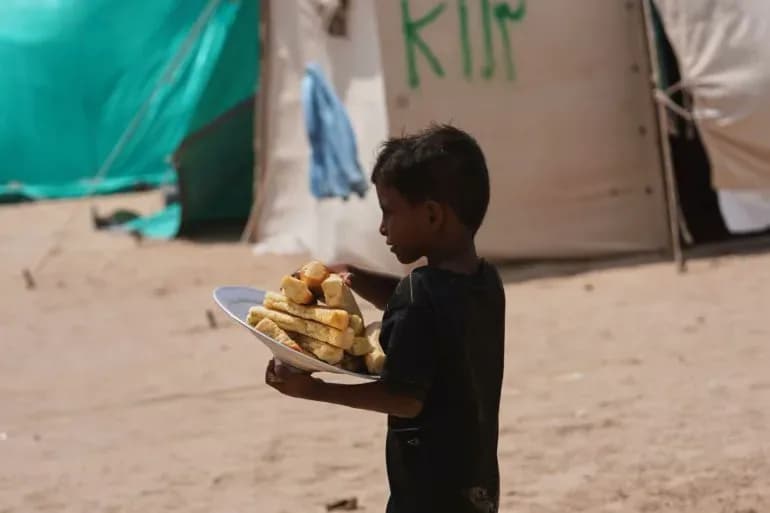
















Yemen’s hunger crisis is worsening sharply as renewed fighting disrupts food supplies and forces more families from their homes.
The World Food Programme (WFP) said on October 2 that 74% of households in accessible government-held areas were unable to meet their basic food needs.
That is the highest level recorded there this year. The figure does not cover all of Yemen. It refers to areas where WFP can still operate and monitor food security.
Still, the warning is significant. Government-held areas are home to an estimated 10 million people. Across the country, 18.3 million people are facing acute food insecurity, while 2.2 million children under five are acutely malnourished.
Families in #Yemen are fleeing escalating fighting, some surviving on bread and soup made from whatever they can find.
— World Food Programme (@WFP) October 2, 2026
WFP’s @mfjhollingworth explains how teams are scaling up, and why urgent funding is needed before stocks run out. ⬇️ pic.twitter.com/tlXb9XxVrf
Also Read | Europe weighs 50 million-barrel diesel stock release amid US pressure
Food is there, but reaching it is another matter

The immediate problem is not simply that there is less food. The fighting is making it harder for families to reach food, earn money and receive aid.
Tens of thousands of people have been displaced by the latest escalation. Families arriving around Aden and Taiz are reportedly reaching safer areas without enough food or water.
Some have had to flee more than once. At the same time, prices of basic staples such as wheat flour and vegetable oil are rising.
Yemen imports about 90% of its food, which makes the country especially vulnerable when conflict disrupts transport, markets and commercial supplies.
For households already living with little financial security, even a modest price rise can mean buying less food or switching to cheaper, less nutritious options.
🛑🛑🛑 Yemen artık büyük ölçüde Direniş Ekseni’nin kontrolünde sayılır. Önümüzdeki günlerde kalan şehirlerin de İsrail destekli güçlerden temizlenmesi bekleniyor.
— Murteza OCAKLI (@MortezaOjaghlou) October 3, 2026
🛑🛑 Hudeyde sakinleri direniş sözü vererek Yemen ordusuna desteklerini açıkladı.
Yahya el-Vezir, Hudeyde’den… https://t.co/FMlPeUqpBK pic.twitter.com/GfuHk8YZPX
Aid access and funding pressures
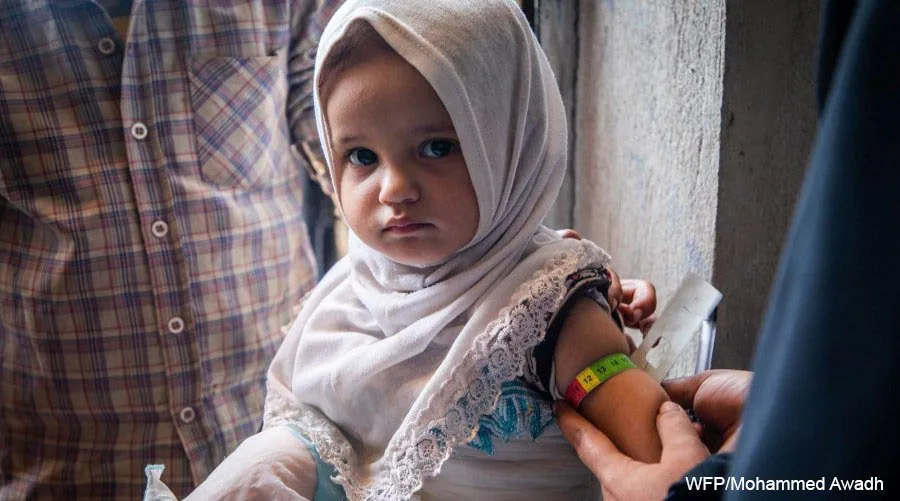
Aid agencies are also facing a second problem: reaching people in the first place. WFP says fighting has cut access to parts of Taiz and Hodeidah, leaving about 350,000 people it previously served without assistance.
Its teams are finding it increasingly difficult to move food into frontline areas. Matthew Hollingworth, WFP’s Assistant Executive Director for Programme Operations, described the impact of the latest escalation as “absolutely devastating” for food security.
He warned, “We are looking at a hunger crisis that is going to grow as it persists.”
WFP is trying to expand its emergency response, but it says it needs $109 million to provide food and nutrition assistance to up to 1.5 million people affected by the escalation. It has already shifted resources away from food distributions planned for November.
🚨 YEMEN: FORCES ENTER LIBERATED AREAS OF TAIZ
— Bitcoin Snow (@HouseDecrypto) October 3, 2026
Yemeni forces have advanced into liberated areas of Taiz province, capturing strategic positions including the Al-Rasen mountain range.
Casualties: 70+ killed in 24 hours as clashes intensify.
Saudi response: 94 airstrikes across… https://t.co/ZF3rRaSp05 pic.twitter.com/bitYPqllOU
Also Read | Taiwan gets first 2 of 66 F-16V jets; China tensions add to the stakes
One conflict, several choke points
The wider conflict explains why the food crisis is moving so quickly.
Yemen has been divided by years of war, with the Iran-aligned Houthis controlling much of the north, including the capital Sanaa, while the internationally recognised government is based in Aden.
The latest fighting has further disrupted already fragile supply routes. The country also sits besides the Bab el-Mandeb Strait, a major shipping route at the southern entrance to the Red Sea.
WFP has warned that wider disruption around the Red Sea, the Strait of Hormuz and the Black Sea could raise global food, fuel and fertiliser costs.
For Yemen, however, the pressure is already immediate. Families are struggling to secure basic meals while aid agencies face shrinking access and an urgent funding gap.
🆘 #Yemen: WFP is scaling up its emergency response, so far reaching over 50,000 newly displaced people in Aden.
— World Food Programme (@WFP) September 23, 2026
More support is urgently needed as fighting forces thousands of families from their homes. pic.twitter.com/UjJfKXIsFd