
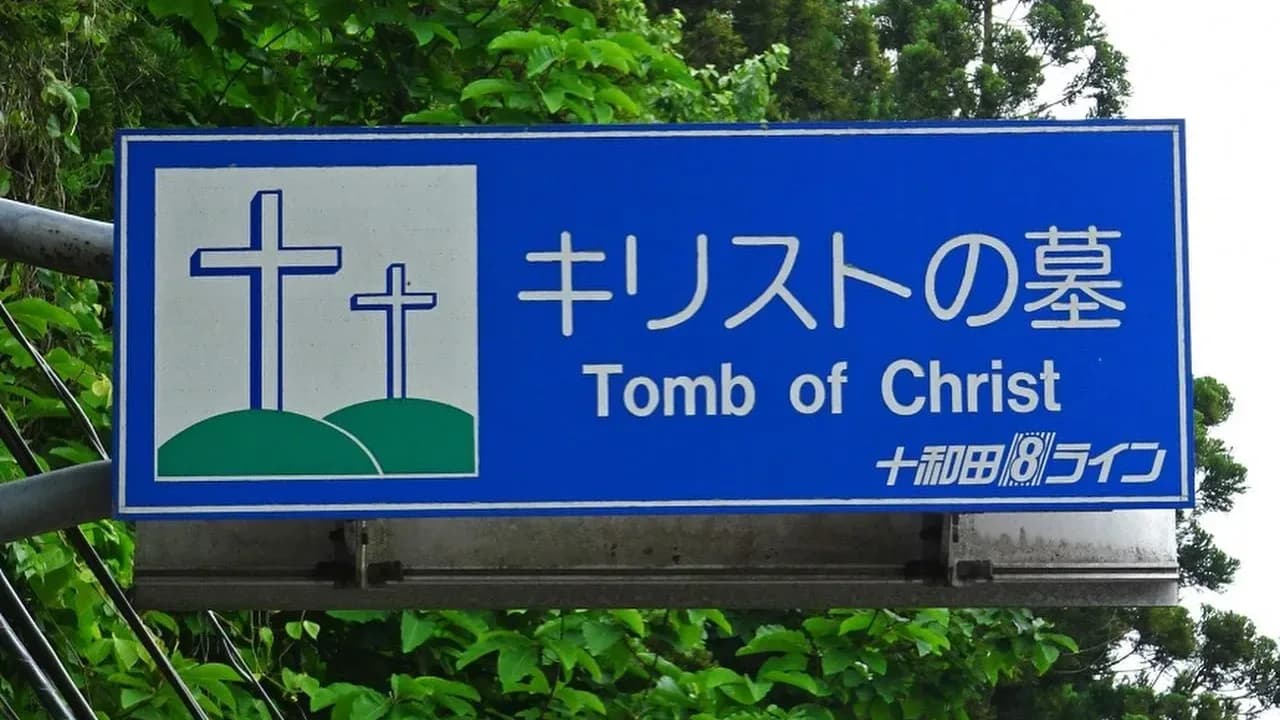












Deep in the wooded hills of Japan’s Aomori prefecture, a blue highway sign carries an unlikely message: “Tomb of Christ.”
The sign points towards a remote site in Shingo village, where two burial mounds on a quiet hillside are said by local legend to be connected to Jesus Christ and his brother.
The claim is not part of biblical history and is not accepted by the Catholic Church. The documents said to support the story have also been widely dismissed as a hoax.
Also Read | Four Madhya Pradesh sites added to UNESCO tentative list
Yet the legend has survived for decades.
Today, Shingo treats the site less as a question of historical proof and more as a piece of local heritage. Every year, the village holds a Christ Festival, bringing together Shinto rituals, traditional dances, local food and visitors curious about one of Japan’s most unusual legends.
What is the ‘Tomb of Christ’ in Japan?
At Christ Park in Shingo, two mounds of earth are surrounded by short white fences and marked with large wooden crosses.
According to the local legend, one is the grave of Jesus, while the other contains the ear of his brother, Isukiri.
The story claims that Jesus did not die on the cross in Jerusalem. Instead, his brother supposedly took his place and Jesus eventually travelled to Japan, where he became a farmer, married and lived until the age of 106.
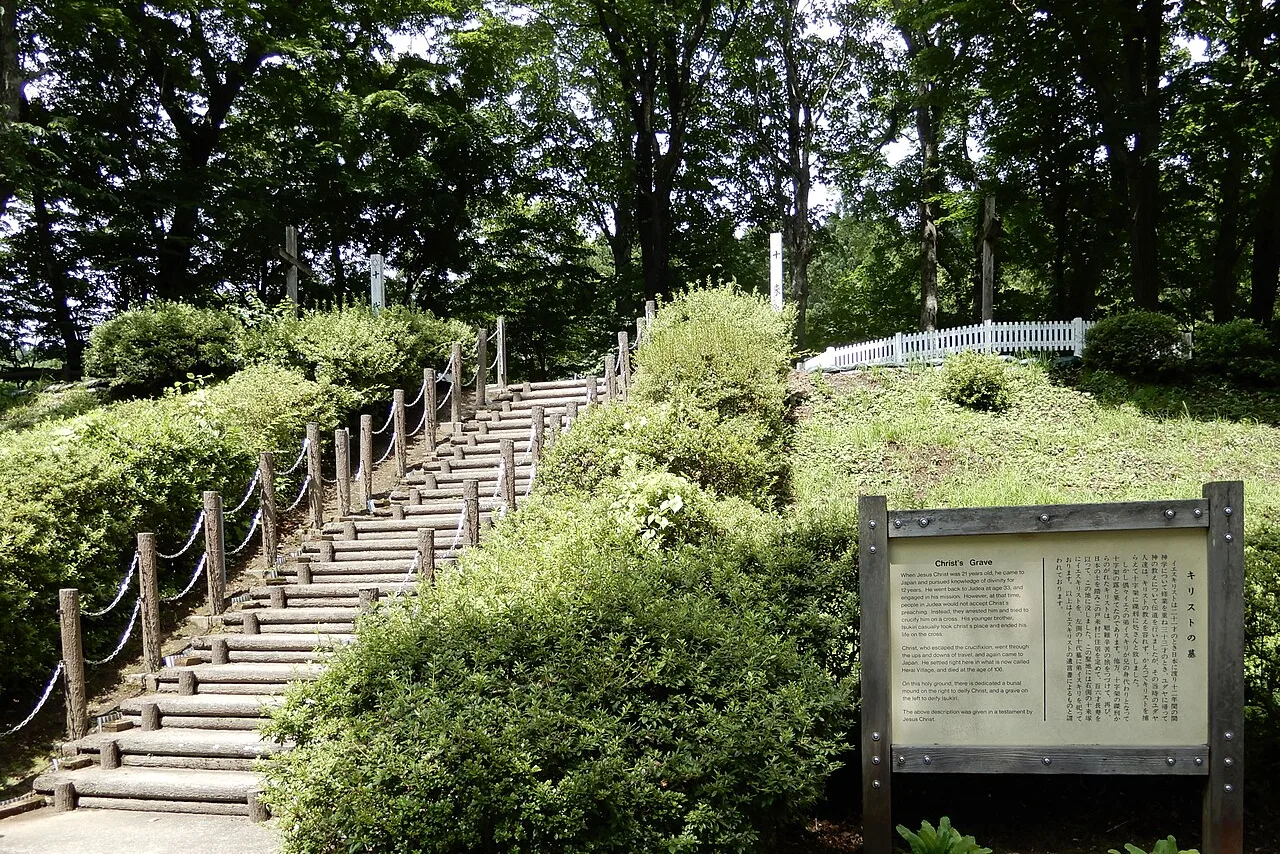
The legend is based on a set of manuscripts known as the Takenouchi Documents, which were reportedly rediscovered in the 1930s.
However, the original documents were allegedly destroyed during World War II, leaving copies behind. Their claims have been widely debunked and there is no reliable historical evidence that the mounds are the graves of Jesus or his brother.
The Shingo museum itself advises visitors to treat the story strictly as a legend.
How did Jesus supposedly end up in rural Japan?
According to the story presented at Shingo’s Christ Village Tradition Museum, Jesus supposedly travelled to Japan twice.
Museum director Hidenobu Kadogishi, speaking to CNN, explained that the Takenouchi Documents claim Jesus first visited what is now Toyama prefecture and worked for Japan’s Imperial family before returning to Judea.
Years later, when he was supposedly facing crucifixion, the legend says his brother Isukiri took his place.
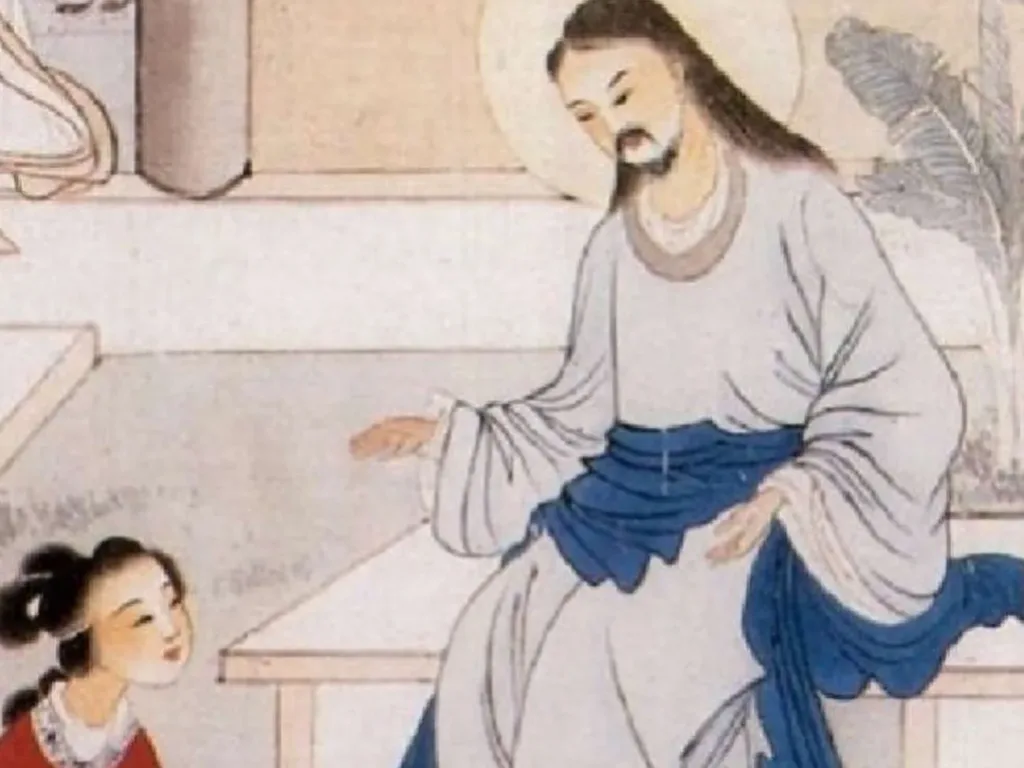
Jesus then allegedly made another journey to Japan, eventually settling in what was then known as Herai, now Shingo village.
The story says he lived there, had three children and died at the age of 106. There is no biblical or established historical evidence supporting this account.
When did the ‘Tomb of Christ’ legend begin?
The modern story took shape in 1935, when a religious leader named Kiyomaro Takenouchi claimed to have discovered the grave of Iesu Kirisuto, the Japanese name for Jesus Christ.
According to the village’s account, Takenouchi was guided to the burial mounds by local residents.
The mysterious documents he associated with the discovery subsequently became the foundation of the legend.
In 1996, the village built the Christ Village Tradition Museum to explain the story and display reproductions of the documents and other material connected with the folklore.
Photography and video are not permitted inside the museum.
Why does Shingo celebrate a Christ Festival?
The village’s connection with the legend has evolved into a cultural tradition rather than a conventional Christian religious observance.
The Kirisuto Matsuri, or Christ Festival, has been held annually since 1964, on the first Sunday of June.
The event combines elements of local Japanese culture with the Christ legend.
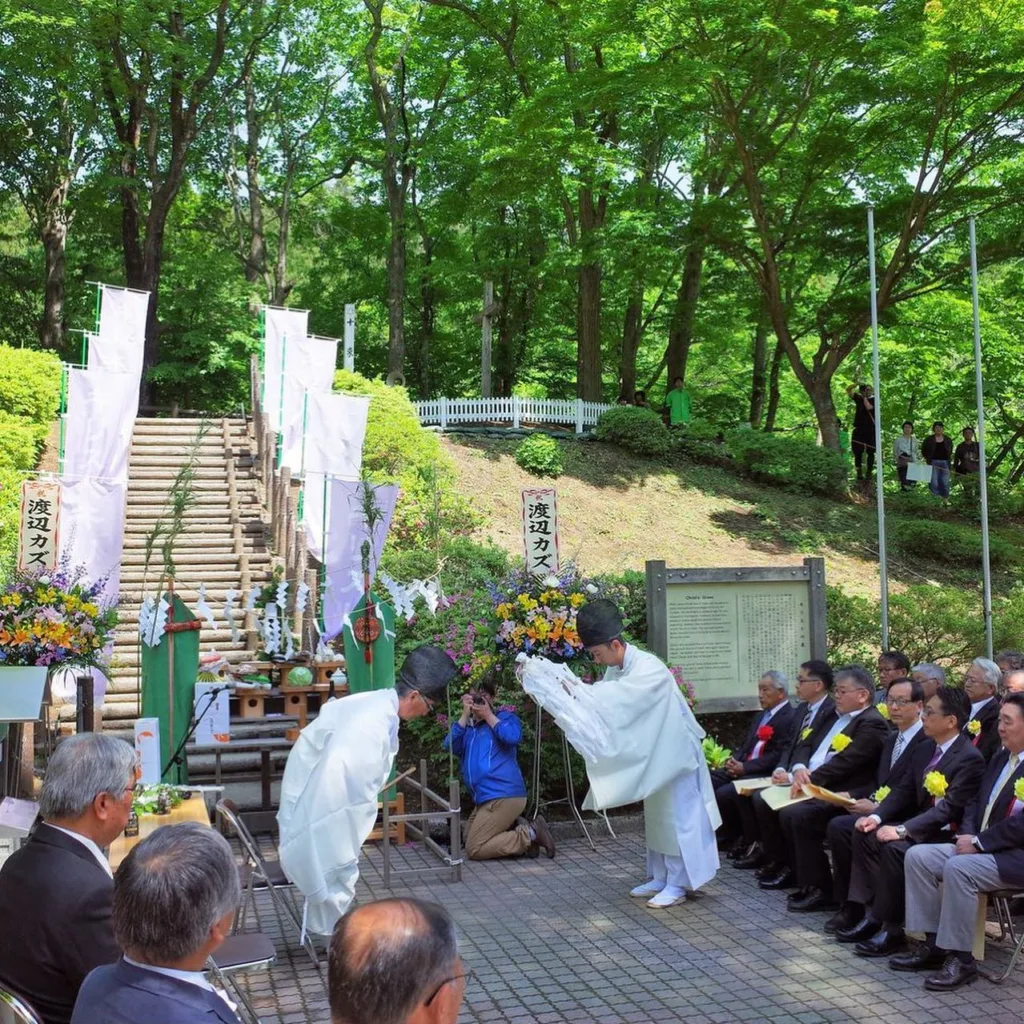
A Shinto priest conducts a memorial ceremony near the burial mounds, while performers stage a shishimai, or lion dance. Women dressed in kimonos also perform the traditional Nanyadoyara folk dance around the mounds.
Visitors are later invited to join the dance.
Around 1,000 people attended the 2026 festival, making it a record turnout for the event.
Is the festival Christian or Shinto?
The festival is not organised by a Christian church and does not follow conventional Christian worship.
Japanese professor Ryosuke Okamoto, who teaches theology and tourism at Hokkaido University, told CNN that the central ceremony is a Shinto memorial ritual performed by a local Shinto priest.
There are no conventional Christian elements such as Bible readings.
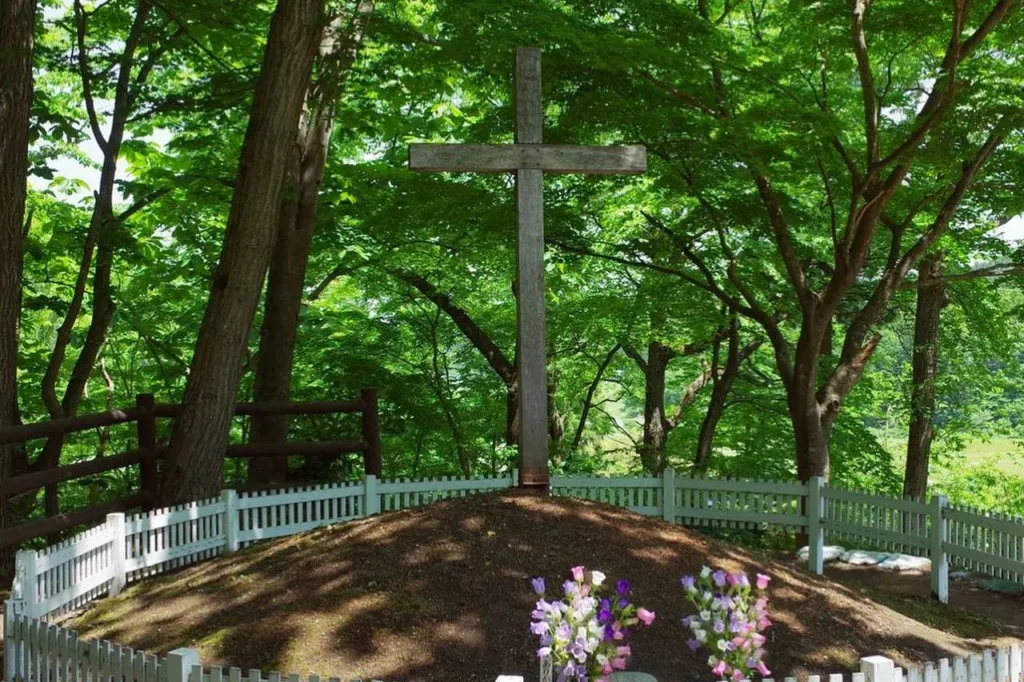
Okamoto said the tradition survives not because everyone believes Jesus was literally buried there, but because residents value the place, the festival and its connection to previous generations.
Why does the village keep the legend alive?
For Shingo, the Tomb of Christ appears to have become less about proving an extraordinary historical claim and more about community, heritage and tourism.
The village has around 2,000 residents and, like many rural Japanese communities, faces population decline.
The tomb’s biggest contribution may not be large-scale tourism revenue but visibility, giving outsiders a memorable reason to discover Shingo and the wider Aomori region.
Also Read | Work from forest? Keralam’s SHOLA workation brings WFH to nature
The village hopes visitors will combine the site with other attractions such as Oirase Gorge, Lake Towada and Hachinohe, rather than travelling to Shingo solely for the tomb.
For residents, the mystery is part of the attraction.
The legend may never establish that Jesus lived and died in rural Japan. But in Shingo, it has survived for generations as a story, a festival and a tradition the community continues to protect.