





“Ek kachori, do samosa, in mardon ka kya bharosa.”
It sounds like something that could be shouted across a crowded college canteen. Instead, the line has become one of the most recognisable slogans from a new wave of women-led protests in Delhi.
Alongside chants demanding justice, accountability and freedom, protesters have been using rhymes, food references, pop-culture language and wordplay to talk about something far more serious: women’s safety in public spaces.
The slogans have since travelled beyond the streets. Videos from the protests are being turned into Instagram Reels, remixed and shared by creators who were not necessarily present at the demonstrations.
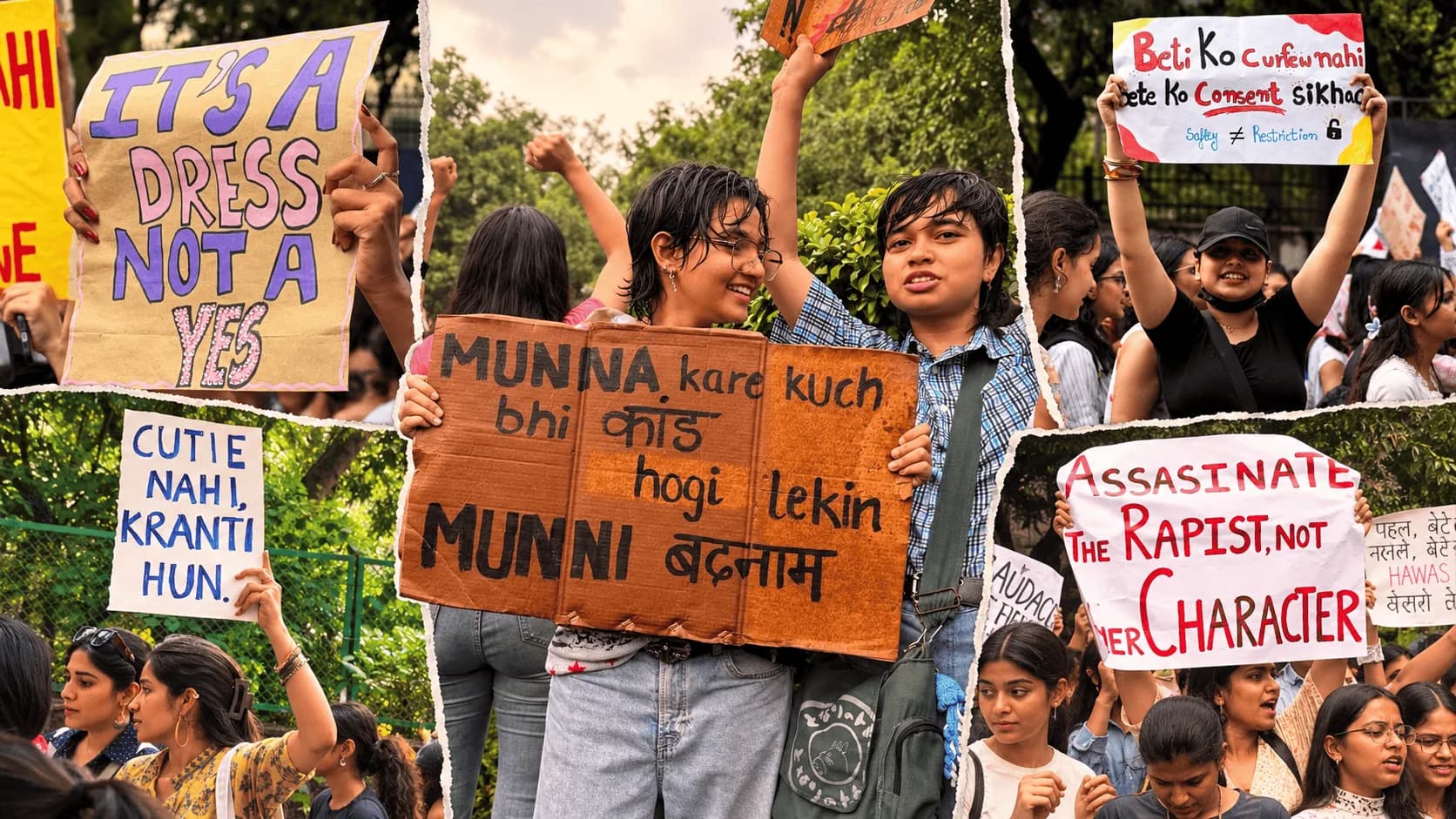
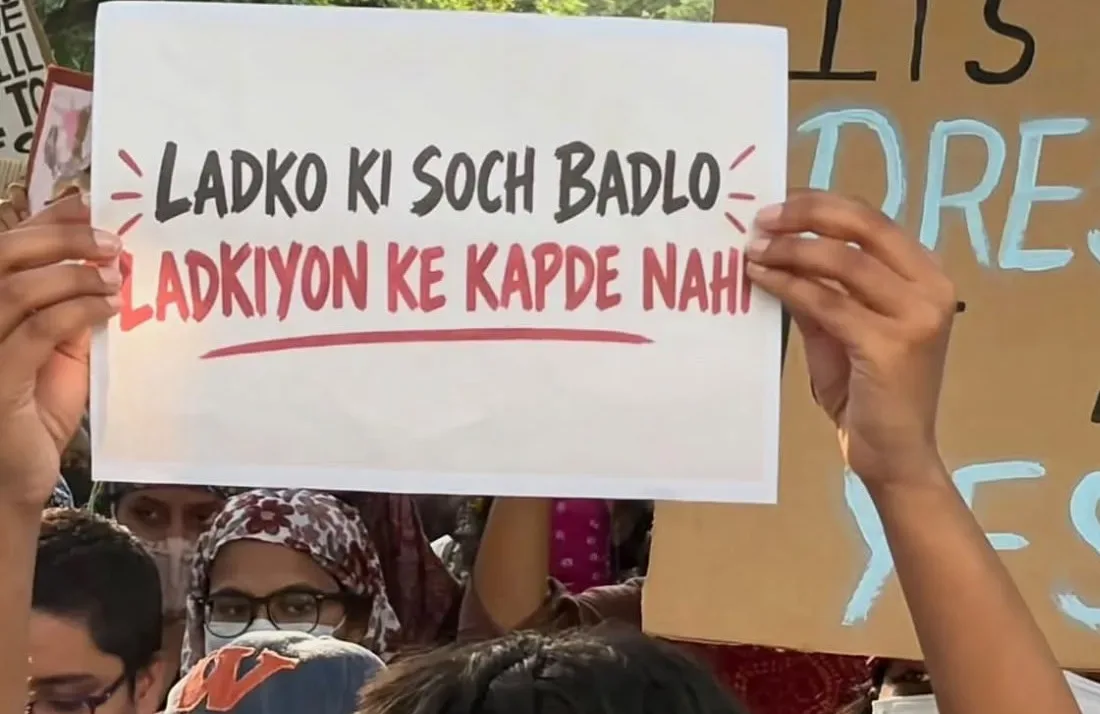
Recent reports have documented slogans including “Ek Kachori, Do Samosa”, “Rapist ko andar karo, ladkiyon ko nahi” and “Beti ki location nahi, bete ka intent check karo”.
The result is a form of protest language that sounds distinctly Gen Z: quick, rhyming, easy to remember and built for the internet.
Why are Delhi’s protest slogans suddenly sounding different?
The change is not necessarily in what protesters are demanding, but in how those demands are being expressed.
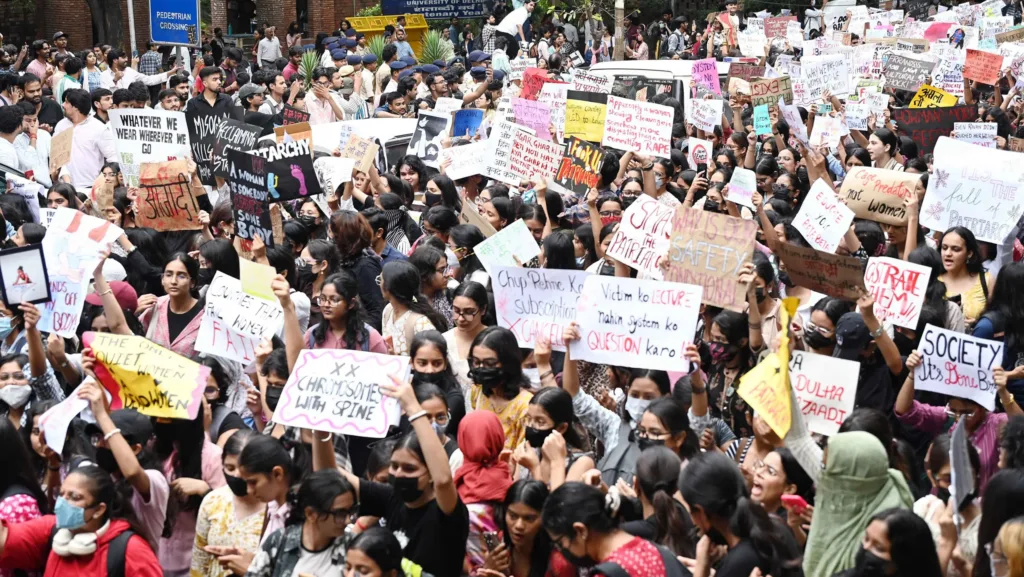
At recent Delhi University demonstrations, women students and members of the queer community have protested concerns around women’s safety, public infrastructure and freedom of movement. Reports from the protests describe chants ranging from “Nariwaad Zindabad” to “Ek kachori, do samosa, in mardon ka kya bharosa.”
Other slogans have been more direct:
“Rapist ko andar karo, ladkiyon ko nahi”
“Beti ki location nahi, bete ka intent check karo”
“Girls just wanna have fundamental rights”
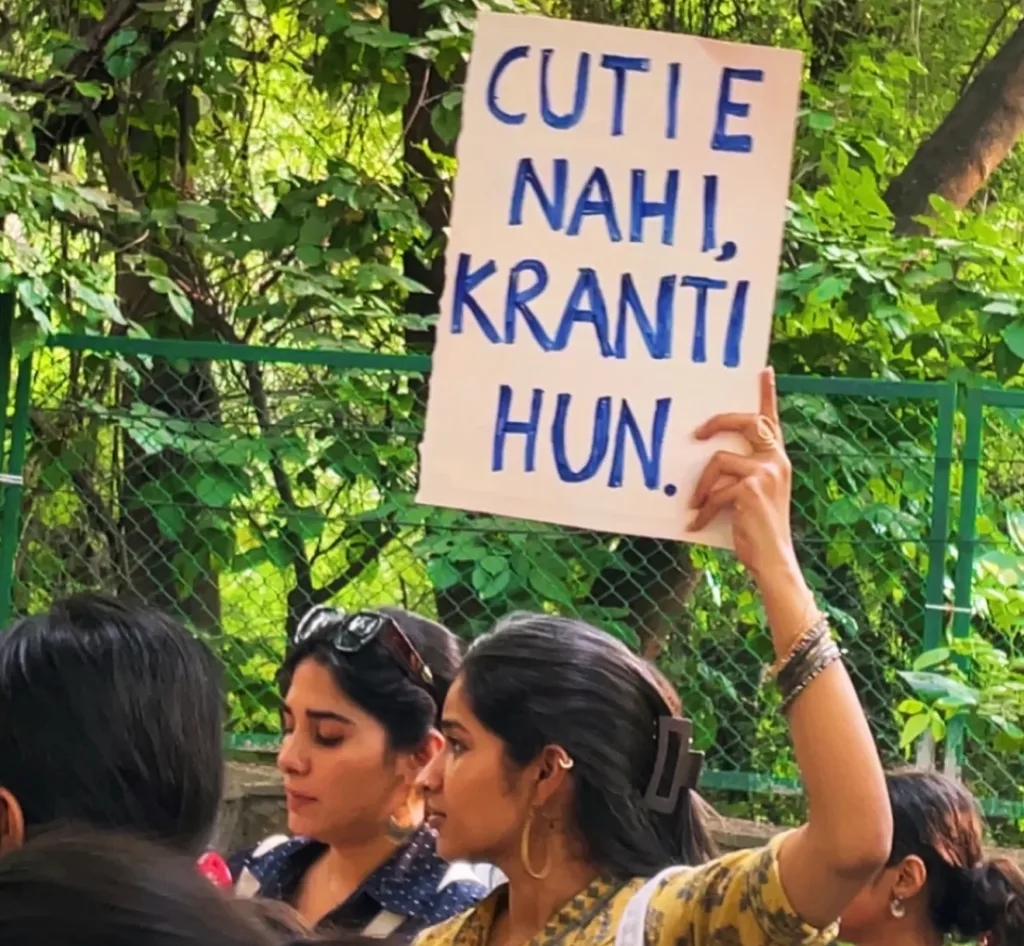
“Cutie nahi, kranti hoon”
“Hamari skirt nahi hai chhoti, inn mardon ki soch hai chhoti”
The language may be playful or deliberately sharp, but the underlying arguments are about safety, autonomy and victim-blaming.
That contrast is precisely what makes the slogans stand out.
Is ‘Ek Kachori, Do Samosa’ just a meme?
Not quite.
Once a protest slogan reaches Instagram, it can easily become detached from the protest that produced it. Someone records a chant, another person turns it into a Reel, a creator adds music, someone else writes a new version and suddenly the original political context can get buried beneath the meme.
But the slogans documented at the Delhi protests are tied to specific demands around women’s safety and public spaces. Reports say protesters have questioned why women should have to change where they go, when they return home or how they behave simply because certain spaces are unsafe.
One placard captured that argument particularly bluntly: “Rapist ko andar karo, ladkiyon ko nahi.”
The message is that restrictions on women should not become the default response to violence against them.
From ‘Votes for Women’ to ‘#MeToo’
Protest language has always evolved alongside the issues movements are addressing.
The early women’s suffrage movement used direct political demands such as “Votes for Women”, reflecting the fight for voting rights and political representation.
The feminist movements of the 1960s and 1970s broadened the conversation to reproductive rights, equal pay, bodily autonomy and violence. “The personal is political” became closely associated with that era.
Later movements brought greater attention to diversity and intersectionality, while the fourth wave of feminism was heavily shaped by social media. #MeToo demonstrated how a hashtag could transform individual accounts of sexual harassment into a global conversation.
Today’s protest language is shaped by the same digital environment.
Only now, the slogan has to work in two places at once: on the street and on the screen.
How did the slogans move from protests to Instagram?
For Gen Z protesters, documenting a demonstration can be part of the demonstration itself.
A chant can be recorded on a phone, uploaded to Instagram, remixed by another creator and seen by thousands of people who were nowhere near the original protest.
That process is already visible around the Delhi demonstrations. Slogans such as “Ek Kachori, Do Samosa” and “Cutie Nahi, Kranti Hoon” quickly gained attention online.
Some creators have also joined the conversation by reacting to or extending the slogans.
But the social-media dimension has not gone unnoticed by protesters themselves. One placard at a Delhi University demonstration reportedly read: “Generation Z didn’t come out in the rain just to shoot Instagram Reels.”
That line captures the tension at the heart of the new protest culture: social media can amplify activism, but it can also make the content look like the activism itself.
What do the protesters actually want?
Behind the slogans are demands that are considerably more conventional than the language used to express them.
The protests have called for safer public spaces, better lighting, safer public transport, security in parks and greater accountability from authorities, according to reports on the demonstrations. Protesters have also challenged approaches that restrict women’s movement rather than addressing the conditions that allow violence to occur.
The demonstrations have also brought back references to the 2012 Nirbhaya case, with protesters questioning what has changed after years of public protests and legal reforms.
Placards reportedly included messages such as “Nothing changed since Dec 16, 2012” and “We should not need a protest to feel safe.”
Can a protest slogan be funny and serious at the same time?
That may be the most interesting part of this new protest vocabulary.
A slogan does not necessarily have to sound solemn to carry a serious political message.
“Ek kachori, do samosa” is memorable precisely because it sounds unlike a conventional protest chant. It borrows from everyday Indian language and food culture, turns the line into a rhyme and makes it easy to repeat.
Also Read | From Smit Machchhar to Neerja Bhanot: Indian aviation heroes who defied danger
That makes it particularly suited to the internet.
But virality comes with a risk: the meme can become bigger than the message.
The more a slogan is remixed and recreated, the easier it becomes to forget why it was created in the first place. And yet, that may also be why these chants have travelled so far.
The rain may end. The march may disperse. The placards may disappear into bags. The Reel remains.
And somewhere between a kachori, a samosa and a demand for safer streets, a new generation of protesters is showing that activism does not always have to sound the way it used to. The rhyme may be new. The demand is not. Women still want to walk home without having to calculate the risk.