












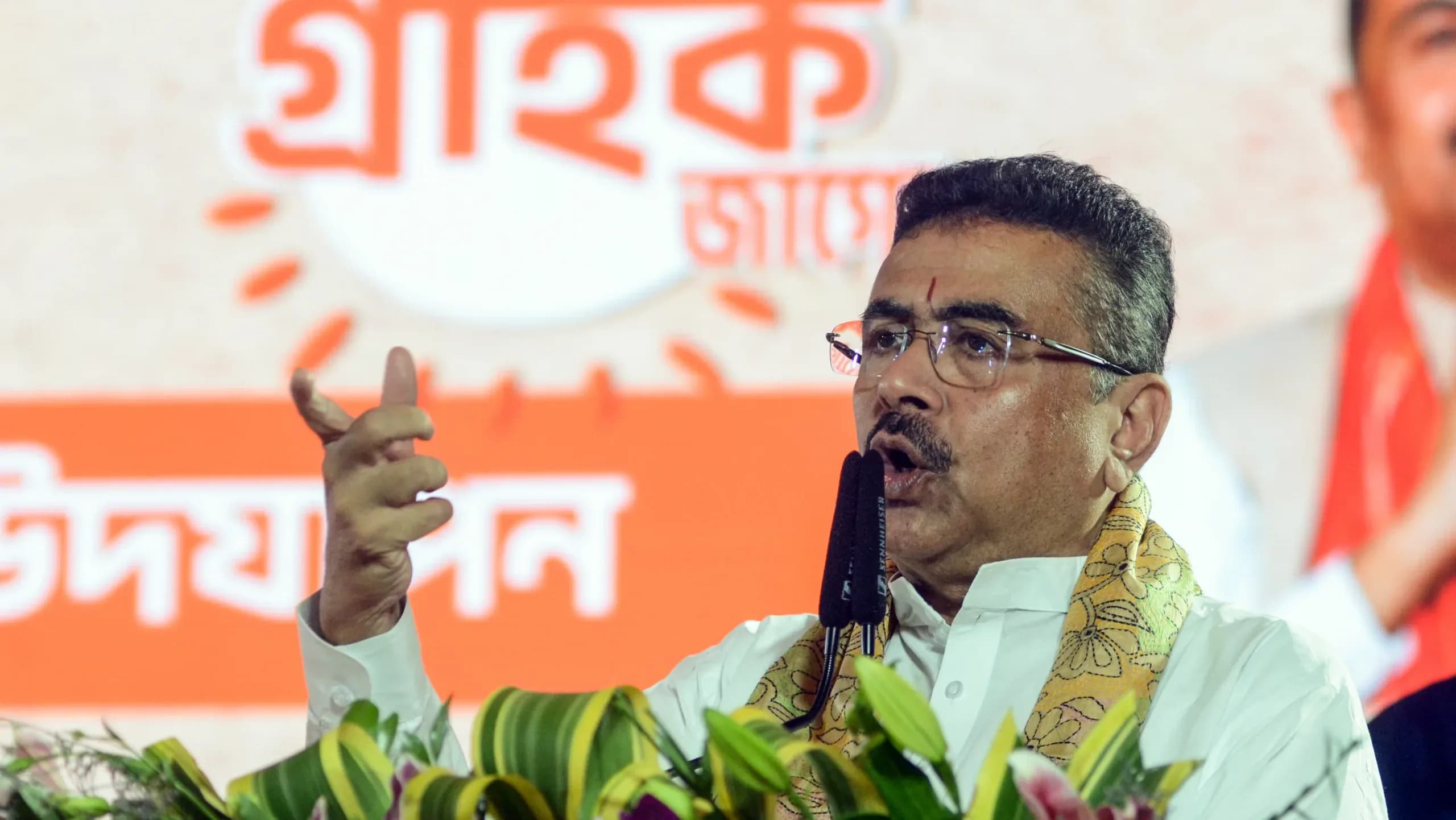
West Bengal Chief Minister Suvendu Adhikari is set to lead the Saffron Samman Yatra, also referred to as the Gerua Samman Yatra, in Kolkata on Wednesday. The march will begin at Golpark, pass through Dhakuria and end at the 8B bus stand near Jadavpur University, covering roughly three kilometres.
The BJP has presented the programme as a campaign to promote nationalist thought and highlight the values associated with the colour saffron. The timing, however, gives the march a wider political context.
Also Read | Why Kolkata Police filed an FIR against Mamata Banerjee? Exploring
It comes less than a fortnight after a large Vande Mataram mobilisation near Jadavpur University and amid an ongoing battle over political graffiti and slogans on the campus.
Why is Suvendu Adhikari pushing the saffron theme now?
The Saffron Samman Yatra follows Adhikari’s appearance at the “Vande Mataram in 10,000 voices” programme around Jadavpur University. At that event, he criticised what he described as anti-national influences on the campus and argued for a stronger emphasis on national and cultural traditions.
The latest march takes that message further by placing saffron at the centre of the political narrative.

Organisers have described saffron as a symbol of sacrifice, self-surrender, courage and Sanatan tradition. The BJP has urged people to participate in the procession, framing it as an expression of nationalist thought.
The political backdrop is significant. Jadavpur University has been witnessing a continuing graffiti battle involving rival student groups, including Left-wing groups and the RSS-affiliated ABVP. Walls have repeatedly been painted over and rewritten with competing political messages.
How does the march fit into Bengal’s cultural politics?
The argument behind the Saffron Samman Yatra is broader than the colour saffron itself.
According to the analysis, BJP leaders and party insiders believe Bengal’s traditional and nationalist cultural identity was weakened during the state’s long Left Front rule and subsequently affected by what they describe as a different form of cultural politics under the Trinamool Congress.

Some RSS leaders have used the term “cultural Marxism” to describe what they see as the influence of Left-oriented ideas on Bengal’s cultural and political life. These are political and ideological characterisations made by BJP and RSS figures, rather than an established description of Bengal’s cultural history.
The BJP’s current pitch is that Bengali pluralism and cultural diversity can coexist with a stronger emphasis on Indian nationalism and Hindu cultural traditions.
What does this mean for Bengal’s pluralist identity?
This is where the political debate becomes more complicated.
Bengal has historically had a distinctive cultural mix in which religious traditions, food habits, literature, art and intellectual life have often existed alongside one another. The analysis points to figures such as Rabindranath Tagore, as well as scholars Kshitimohan Sen and Amartya Sen, in discussions around this heterogeneous cultural identity.
The BJP’s emphasis on a return to traditional heritage is being viewed differently by its political opponents. Critics fear that an aggressive focus on nationalism and Hindutva could weaken Bengal’s pluralistic and inclusive character.
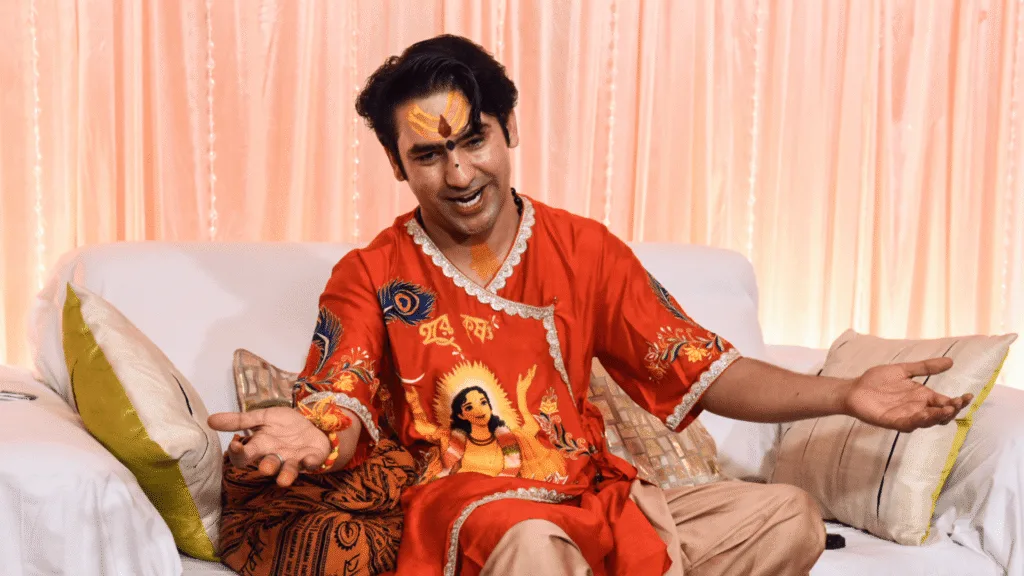
The debate has also extended to food and religious practices. The recent appeal by self-styled godman Dhirendra Shastri, popularly known as Bageshwar Baba, asking Bengalis to give up non-vegetarian food during Durga Puja triggered discussion because Bengal’s religious and culinary traditions have historically not followed a uniformly vegetarian model.
RSS chief Mohan Bhagwat, meanwhile, has stressed a less confrontational approach to food habits, saying there should not be negativity around what people eat.
Is the Saffron Samman Yatra also an election strategy?
The timing makes the political calculation difficult to ignore.
West Bengal’s civic polls are expected after Diwali, with elections to the Kolkata Municipal Corporation, Howrah Municipal Corporation and several other municipalities potentially becoming important political battlegrounds.
The Saffron Samman Yatra therefore gives the BJP a high-visibility platform to take its nationalism and cultural-identity message directly to voters.
The march also keeps Jadavpur University at the centre of a wider political conversation. From the Vande Mataram event to the graffiti disputes, the campus has become a prominent site for competing arguments over nationalism, student politics and Bengal’s cultural identity.
Also Read | Kolkata parking rules change from Sept 1: Here’s what drivers need to know
For the BJP, the saffron campaign can serve as a way to consolidate its ideological message and reach voters beyond conventional party politics. For opponents, it raises questions about whether Bengal’s traditionally heterogeneous cultural identity is being recast through a more explicitly Hindutva-oriented political lens.
The Saffron Samman Yatra, therefore, is not simply a march about a colour. It is part of a larger contest over nationalism, cultural identity and the political meaning of Bengal’s traditions.