














What appeared on Thursday as a routine attempt by Kolkata Police and KMC officials to remove an allegedly unauthorised billboard from Abhishek Banerjee’s Camac Street office rapidly transformed into a political flashpoint.
But the real story lies beyond the scuffle. This address is no ordinary party office—it is the nerve centre of Abhishek Banerjee’s political empire, the war room of Trinamool Congress’s new generation, and perhaps the most symbolically charged building in Bengal’s post-2024 politics.
Also Read | Why do the survivors describe the Kolkata hotel fire as ‘a scene from a horror movie’?
Why does Camac Street matter so much in Bengal politics?
On Camac Street, amid the polished façades of corporate towers and luxury boutiques, stands a building that has quietly rewritten the grammar of Bengal politics. It bears no overt grandeur, no monumental architecture, and yet it has acquired the aura of a fortress. This is Abhishek Banerjee’s office—less an office than the command headquarters of Trinamool Congress’s most influential strategist after Mamata Banerjee.
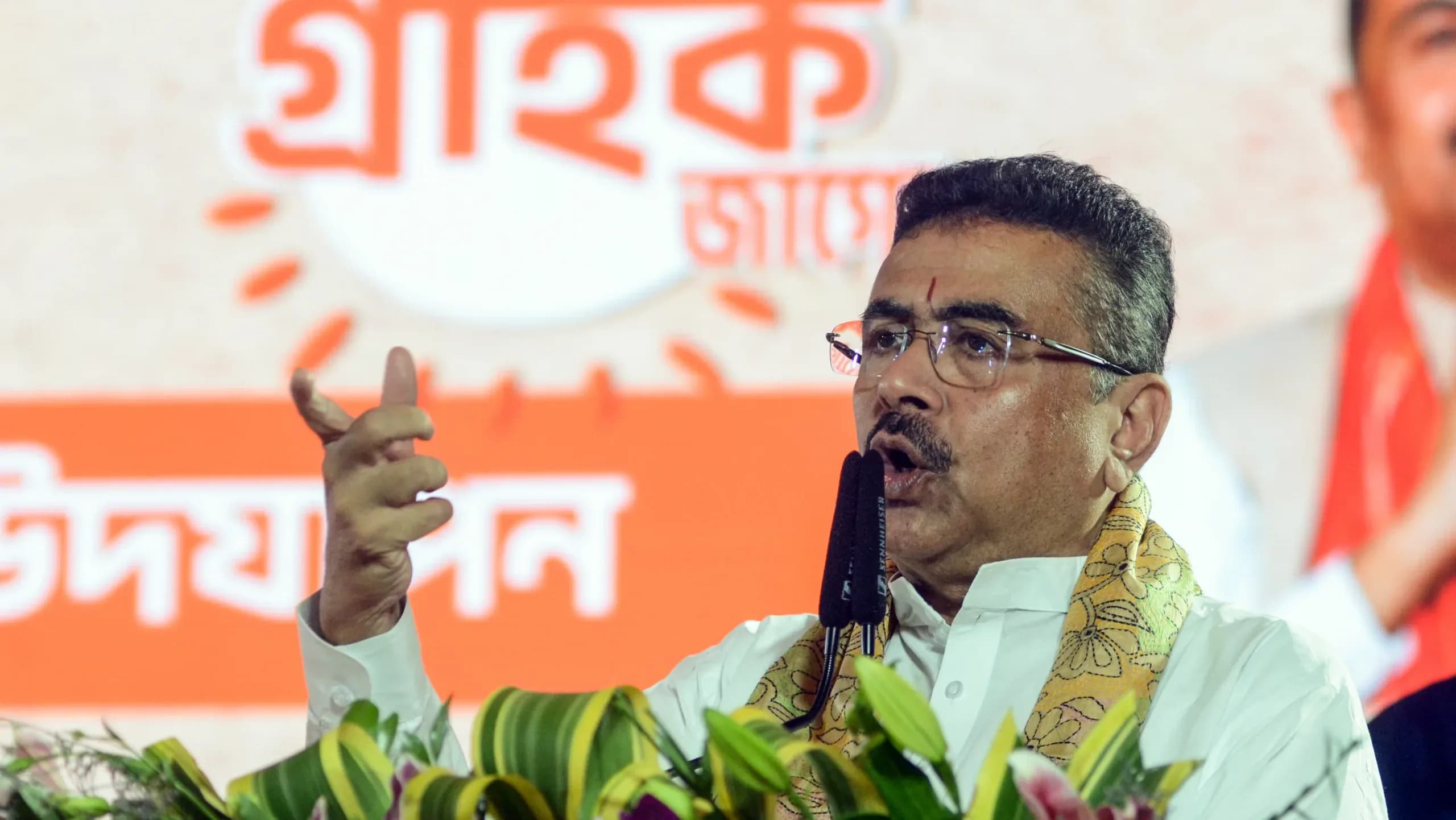
Thursday’s confrontation was ostensibly about a billboard. Kolkata Police, accompanied by officials from the Kolkata Municipal Corporation, arrived to remove a Trinamool hoarding that authorities described as unauthorised. Within minutes, the routine municipal exercise spiralled into a dramatic face-off, with Abhishek demanding written orders and accusing officials of attempting an illegal entry. The officials eventually withdrew, and the episode instantly became the day’s defining political spectacle.
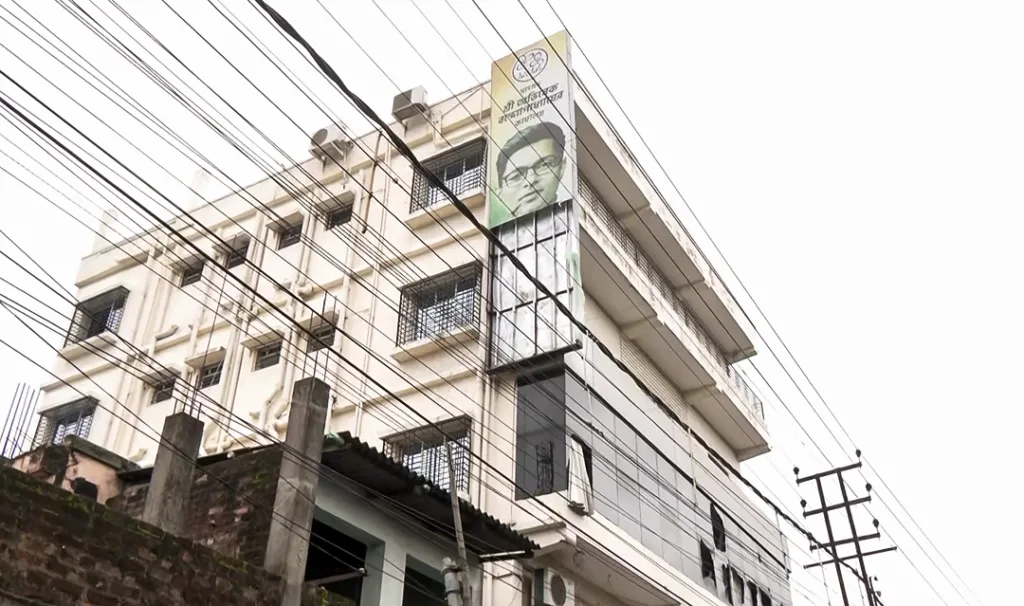
Yet, to understand why a billboard became a battle, one must understand what Camac Street represents.
For nearly a decade, this office has evolved into Abhishek Banerjee’s independent political ecosystem. Candidate selection, campaign planning, organisational restructuring, digital outreach, grievance redressal and welfare initiatives have all flowed through this address. It is here that the Diamond Harbour MP cultivated an image distinct from the traditional Kalighat establishment—modern, data-driven and relentlessly organisational.
If Kalighat is the emotional capital of Trinamool Congress, Camac Street is its operational capital.
The symbolism has only intensified since the political upheavals following the 2026 Assembly election. The Trinamool Congress entered one of the most turbulent chapters in its history, confronting electoral setbacks, internal dissension and a series of criminal investigations. The alleged signature-forgery controversy brought investigators repeatedly to Abhishek Banerjee’s doorstep, making Camac Street a recurring destination for CID teams and police officers.
This was not even the first search operation at the premises. In June, CID officials entered the Camac Street office as part of the investigation into the alleged forgery of legislators’ signatures on Assembly documents, even as simultaneous searches were conducted at the Kalighat party headquarters adjoining Mamata Banerjee’s residence.
That parallelism was politically telling.
For decades, Harish Chatterjee Street in Kalighat symbolised unquestioned authority within Trinamool Congress. Camac Street’s emergence reflects a generational transition—an institutional shift from charisma to machinery. It is the space where Abhishek Banerjee built his own network of political managers, researchers, lawyers, social media professionals and constituency coordinators.
This is precisely why every visit by investigators acquires disproportionate significance.
What makes Thursday’s confrontation politically significant?
Thursday’s episode also unfolded against a sensitive legal backdrop. Only days earlier, the Calcutta High Court granted Abhishek Banerjee interim protection from coercive action in three criminal cases, restraining police from arresting or subjecting him to custodial interrogation while the matters remain under judicial consideration.
That judicial shield has inevitably heightened the political optics surrounding every police action involving him.

The Trinamool Congress has framed Thursday’s development as selective targeting, arguing that numerous commercial establishments in the vicinity display similar billboards without municipal intervention. Abhishek himself alleged political vendetta and announced plans to challenge the action before the High Court.
Also Read | Who was Asish Banerjee? Close Mamata Banerjee aide found dead at TMC party office in Birbhum
The administration, meanwhile, maintains that the exercise concerned an allegedly illegal advertisement structure rather than the office itself. That distinction may be administrative, but in Bengal’s charged political climate, symbolism often overwhelms procedure.
Camac Street is no longer merely an address on Kolkata’s map. It has become a metaphor for the contest over Trinamool’s future—between state power and political resistance, between institutional investigation and allegations of vendetta, between an inherited legacy and an emerging leadership.
In Bengal, political geography has always mattered. Writers had College Street, revolutionaries had Alipore, the Left had Alimuddin Street, and Mamata Banerjee had Kalighat. Today, Abhishek Banerjee has Camac Street.
And that is why when police knock on its doors, Bengal does not see a municipal inspection. It sees a struggle over the state’s evolving political centre of gravity.