


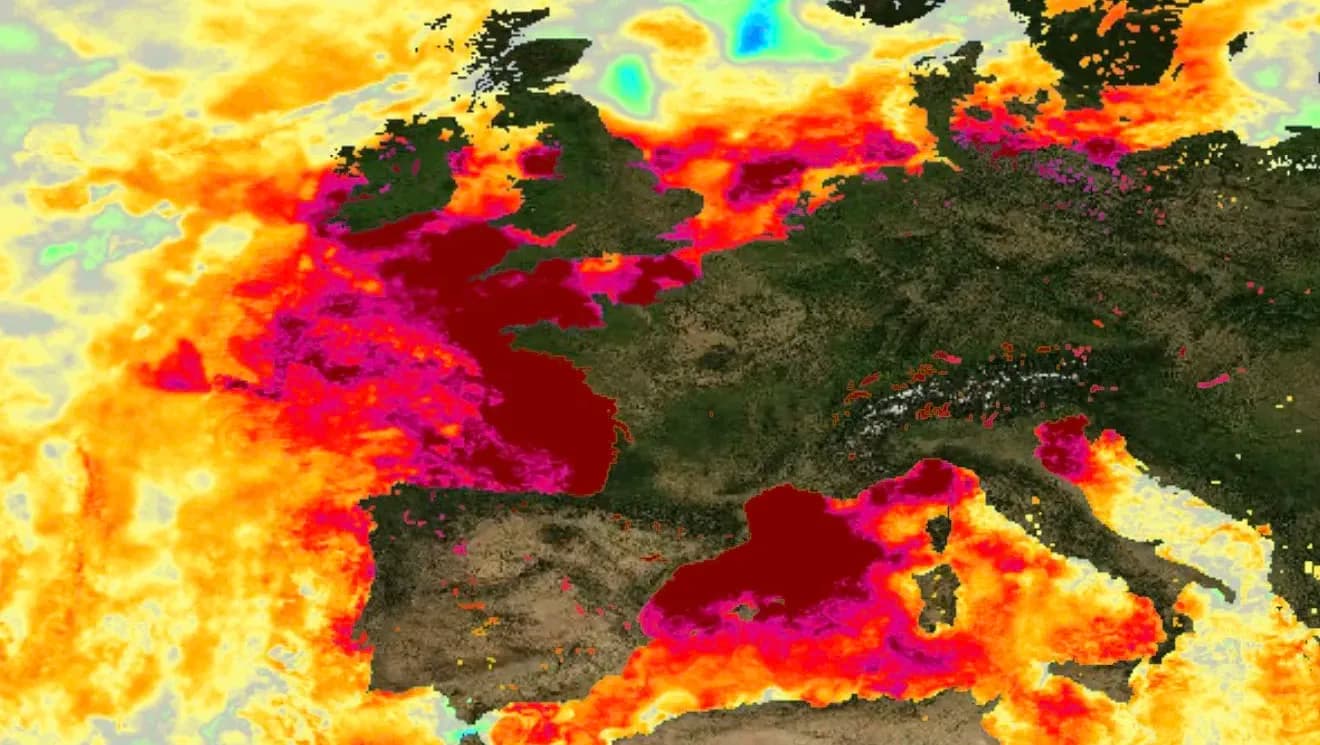













European waters have just had their hottest June-to-August period in 45 years of available data.
An analysis of sea-surface temperatures found that average temperatures across European seas reached 21.6°C this summer. The heat was especially pronounced in the Bay of Biscay, where waters averaged 21.4°C, which is more than 2.4°C above the 1991-2020 average.
Europe’s seas are losing the idea of a short, exceptional heat season.
— Ahmad Shah Mohibi (@WarGuy_) September 26, 2026
Marine heat waves in the English Channel have lasted about six months annually since 2022, scientists say.
That changes the baseline marine life must survive, not just the occasional temperature spike.…
An offshore buoy near Mallorca also recorded 33.02°C on August 5, the highest temperature ever registered in the Spanish port authority’s buoy network.
The concern is not simply about warmer water. Marine heatwaves can change where species live, reproduce, and feed. This change can quickly affect fishermen whose livelihoods depend on relatively stable marine ecosystems.
As the world warms, the #Mediterranean moves into motion.
— Copernicus Marine (@CMEMS_EU) September 23, 2026
The video below reveals how environmental change and species movement are reshaping the Mediterranean, combining temperature data from #CopernicusMarine with observation data of invasive species.
🔗Interactive version:… pic.twitter.com/Es09VURQOb
Also Read | Elon Musk, Tim Cook, Sam Altman join Trump’s Dinner for Xi Jinping
Too toasty
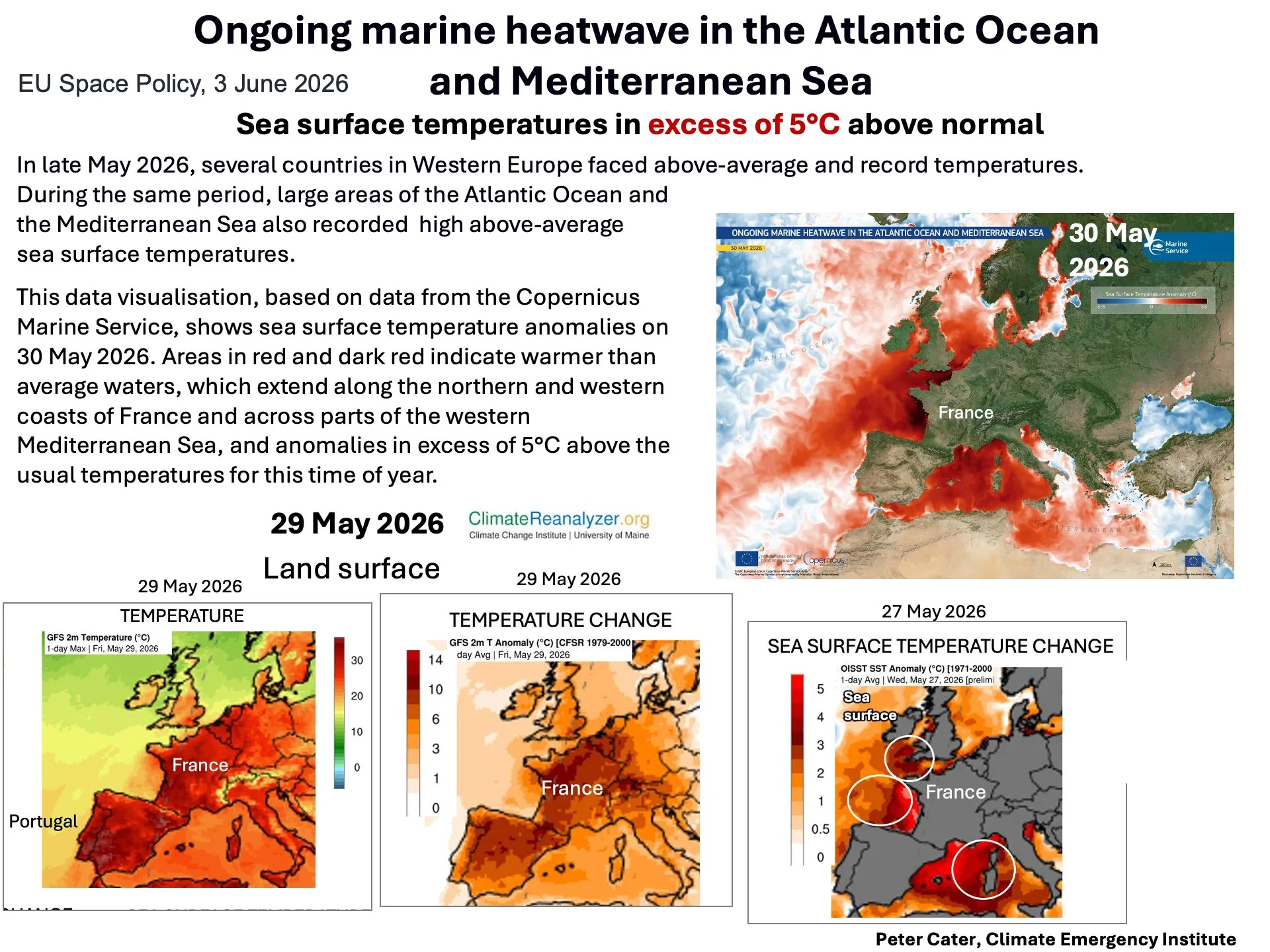
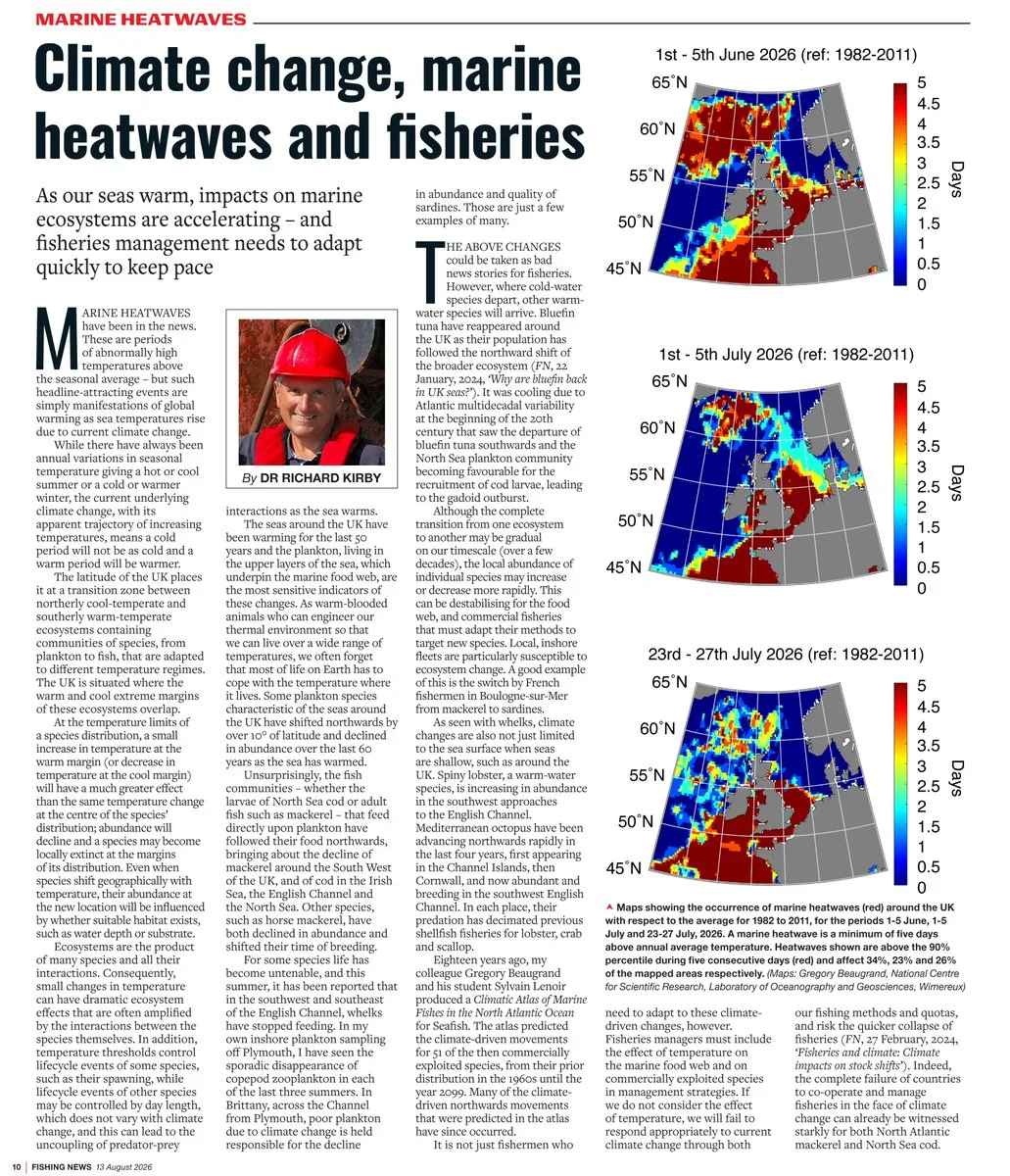
A marine heatwave is generally defined as at least five days when sea temperatures remain unusually high for that location and time of year.
In the Bay of Biscay, such events were once relatively limited. By the end of August this year, the bay had recorded 186 heatwave days, Reuters found.
Scientists say the warming seas are becoming more frequent, intense, and widespread as greenhouse gas emissions raise global temperatures. The oceans absorb most of the planet’s excess heat and retain it for longer than land and the atmosphere.
Jean-Pierre Gattuso, a senior research scientist at France’s National Centre for Scientific Research, described the speed of change as particularly striking.
“What is surprising is the speed at which this occurs,” he said. “Records are broken almost every day in many places.”
🌍 Earth's Heat Is Rising — And We Can't Ignore It
— Chosen People (@ChosenPeopleVIP) June 27, 2026
The latest global temperature map paints a worrying picture. Extreme heat is spreading across large parts of North America, Europe, Africa, and Asia. If we don't act now, heatwaves, droughts, wildfires, crop failures, and water… pic.twitter.com/5qlJcgB7bJ
A changing rhythm
The Bay of Biscay shows what that change can mean on the ground.
Northern Spain once had extensive kelp forests that provided food, shelter, and nursery grounds for many marine species. Jose Manuel Rico Ordas, a marine ecology professor at the University of Oviedo, estimates that roughly 95% of the large brown kelp stands along parts of the Asturias coast have disappeared since 2010.
He attributes the decline primarily to climate change and says kelp generally needs water below about 20°C to survive.
With the habitat disappearing, species associated with it are also becoming harder to find.
“We are finding no more lobster, no more crayfish, no more sea urchins, and many other species that are associated with the good status of kelp forests,” Rico Ordas said.
Fishermen and scientists are now trying to restore kelp by planting laboratory-grown seedlings.
Europe: Record Sea Temperatures Alter Marine Ecosystems
— IUDHR NEWS (@IUDHRNEWS) September 26, 2026
European sea temperatures hit a record summer high of 21.6°C, driving marine heatwaves that disrupt fisheries and ecosystems via #ClimateChange, #OceanWarming,and species shifts across #Europe. pic.twitter.com/ZxgBbBQx8F
New arrivals, fishermen’s worries
At the same time, warmer waters are allowing other species to expand into places where they were once uncommon.
In the Mediterranean, researchers say more than 1,000 non-indigenous species have been recorded, many arriving from warmer regions through the Suez Canal.
Britain offers another example. Fishermen along the south coast of England reported about 2,600 metric tons of common octopus landings in 2025 and more than 3,000 tons so far this year, compared with annual landings of less than 30 tons before 2025.
The ongoing El Niño is warming Pacific waters, raising shrimp disease risks and driving feed costs higher. In this #CommoditiesFocus episode, our experts explain how El Niño is reshaping shrimp supply, pricing and margins.
— Agriculture by S&P Global Energy (@SPGEnergyAg) September 23, 2026
🎧Full podcast (20:29)🔗 https://t.co/sJGkxdTP0Z pic.twitter.com/vIBqJ2NZtV
One thing to remember is that an increase in one species does not necessarily mean better fishing conditions overall.
Octopuses prey on crabs, lobsters, and scallops, and some shellfishermen say their traditional catches have suffered.
The South Devon and Channel Shellfishermen’s cooperative described 2026 as an “octopus apocalypse.”
The shift is becoming harder to ignore. As some familiar species decline and others move into new waters, fishermen are being forced to adapt to a sea that is changing faster than before.
Also Read | Did you know QR codes were not made for digital payments? Here’s the real reason