


![‘Possibly [be] needed in 90-120 days’: Why is the US checking Cuba readiness?](/_next/image?url=https%3A%2F%2Fd243y9xj05uh4.cloudfront.net%2Fwp-content%2Fuploads%2Fbengalinsight%2F2026%2F09%2F28034806%2FHTO03ZcXgAEX35j.webp&w=3840&q=75)




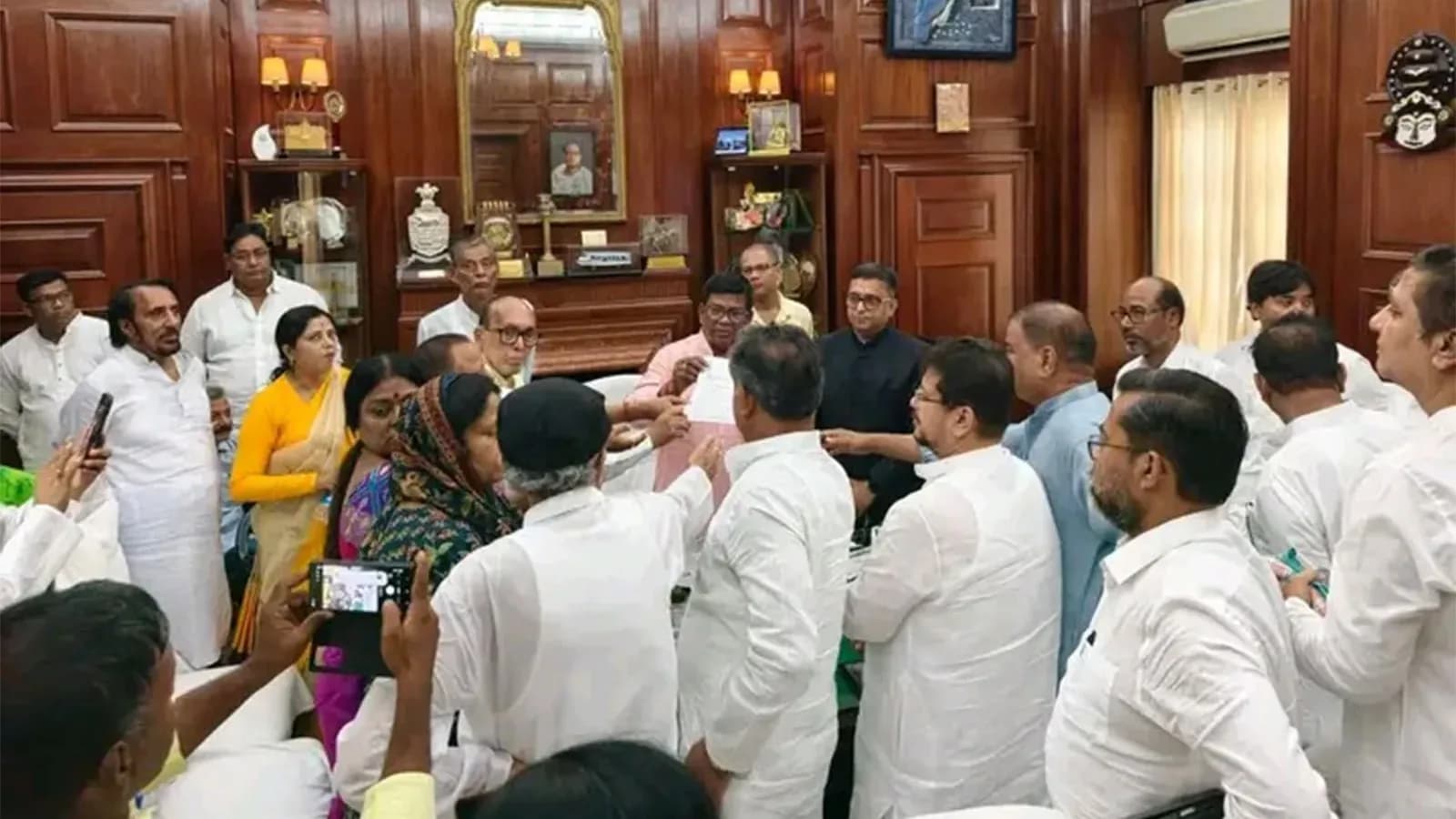
The Supreme Court on Monday said West Bengal Assembly Speaker Rathindra Nath Bose has time until October 8 to decide disqualification petitions filed against 10 rebel Trinamool Congress (TMC) MLAs.
The petitions were filed on July 8 by TMC leader Sohandeb Chattopadhyay.
A three-judge bench headed by Chief Justice of India Surya Kant and comprising Justices Joymalya Bagchi and V Mohana referred to the Supreme Court’s 2020 ruling on disqualification proceedings while dealing with the matter.
Also Read | BJP’s Bengal poll bill exceeds Congress’ spend across five polls
The court said the Speaker, while deciding such petitions, acts as a tribunal and is expected to take a decision within a reasonable period.
What the Supreme Court said on TMC rebel MLAs
The bench relied on its earlier judgment in Keisham Meghachandra Singh v Speaker, Manipur Legislative Assembly, decided in 2020. In that case, the Supreme Court had held that a Speaker exercising powers over disqualification petitions acts as a tribunal.
The court noted that the 2020 judgment had prescribed a three-month period for the Manipur Speaker to decide the pending disqualification petitions.
Applying that principle to the West Bengal case, the bench said the Speaker should follow the same timeline.
The bench stated, “We have every reason to believe that the Speaker is fully cognisant” of the principles laid down by the court and would make efforts to take an appropriate decision within the prescribed period.
The Supreme Court ultimately disposed of the petition after taking the earlier ruling into account. It did not keep the matter pending despite a request from the petitioner’s side.
Who filed the disqualification petitions?
The petition before the Supreme Court was filed by senior TMC leader Sohandeb Chattopadhyay. He had also filed the disqualification petitions against the 10 rebel MLAs in the West Bengal Assembly.
The legislators named in the proceedings include Ritabrata Banerjee, Arup Roy, Firhad Hakim, Sandipan Saha, Akhuruzzaman Ansari, Shiuli Saha, Sabina Yasmin, Biplab Mitra, Javed Khan and Rathin Ghosh.
Senior advocate Kapil Sibal appeared for Chattopadhyay. He asked the Supreme Court to keep the matter pending, pointing out that similar issues were arising in several proceedings.
The bench, however, declined that request. During the hearing, the court remarked that there were several proceedings in which judicial timelines had not been followed, saying it was “gloriously in breach” of such timelines.
What is the TMC rebel MLAs dispute?
The dispute follows the political developments after the 2026 West Bengal Assembly election. According to the Hindustan Times report, around 58 newly elected TMC MLAs broke away from the party and backed Ritabrata Banerjee as Leader of the Opposition. The group described itself as the “real TMC”.
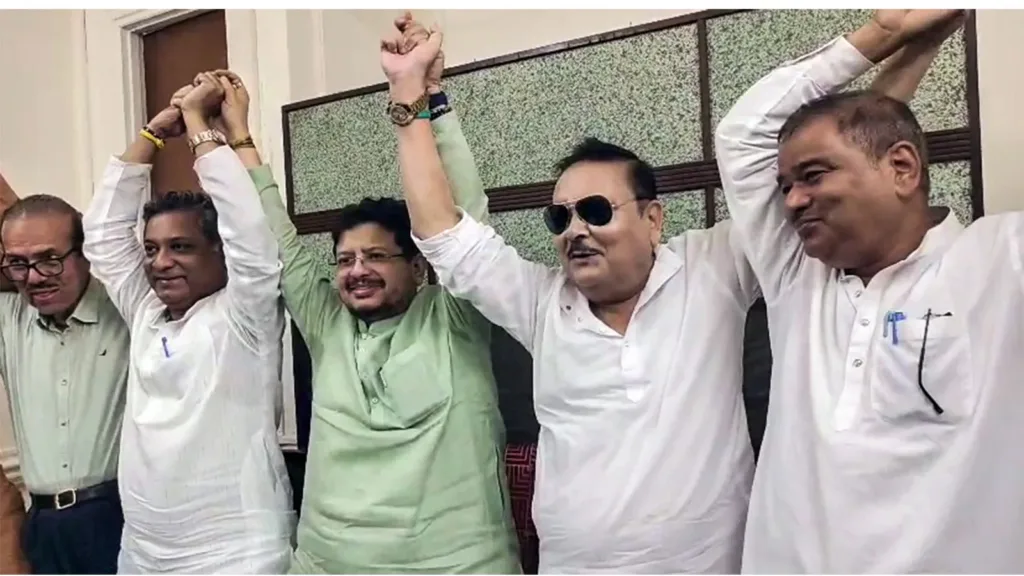
The TMC subsequently expelled Ritabrata Banerjee and Sandipan Saha, citing “anti-party” activities. The disqualification proceedings against the 10 MLAs form part of the wider dispute involving the rival TMC factions.
The Supreme Court’s order does not itself decide whether any of the 10 MLAs should be disqualified. That decision remains with the West Bengal Assembly Speaker under the applicable proceedings.
Separate case involving 20 rebel TMC MPs
The West Bengal Assembly case is separate from another disqualification matter involving 20 rebel TMC Members of Parliament.
TMC general secretary Abhishek Banerjee has filed a separate petition in the Supreme Court seeking an expedited decision on disqualification petitions against the 20 rebel MPs pending before the Lok Sabha Speaker.
Also Read | Chief Minister Suvendu Adhikari promises major investments in Bengal; Adani hospital project set to begin
The October 8 timeline discussed in Monday’s order concerns the 10 rebel MLAs in the West Bengal Assembly. It should not be confused with the separate proceedings involving the 20 rebel MPs in the Lok Sabha.
Reports on the latter indicate that October 8 is the deadline given to the MPs to submit their replies, rather than a court-imposed deadline for the Lok Sabha Speaker to deliver a final decision.
The Supreme Court’s latest order therefore places the focus on the West Bengal Assembly Speaker’s handling of the 10 disqualification petitions, with October 8 now marking the timeline referred to by the court.