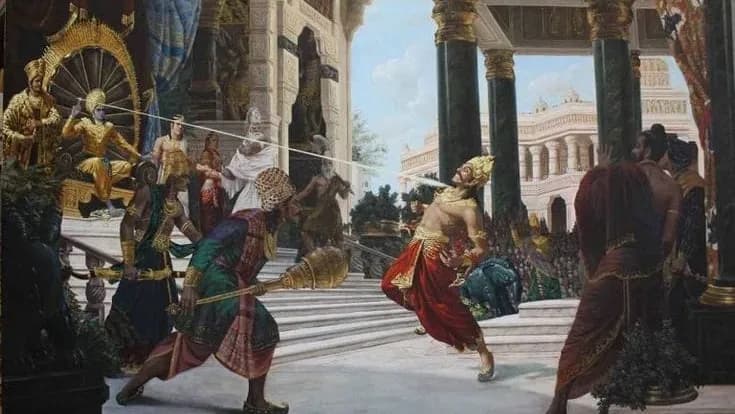
















Most of us grow up in an Indian household hearing mythological stories like Ramayana, Mahabharata as tales where good ultimately defeats evil. While the theme of Good vs Evil remains an important theme in the Ramayana, Mahabharata and Puranas. Many stories in the mythology also carry lessons that go far beyond a simple moral victory. They explore power, ethics, difficult choices and the consequences of human actions.
Here are three stories that offer a different perspective.
Bhasmasura teaches that power without wisdom is dangerous
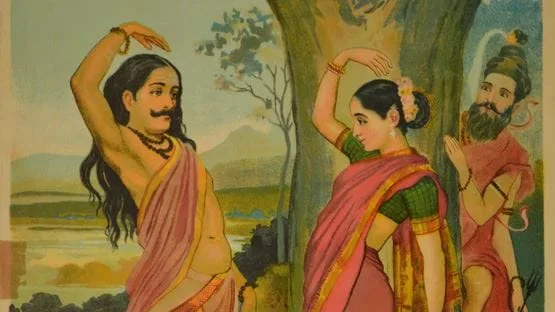
Bhasmasura earned a powerful boon from Lord Shiva after intense penance. He gained the ability to reduce anyone to ashes by touching their head. Instead of using that power wisely, he tried to use it against Shiva himself. Lord Vishnu, in the form of Mohini, tricked Bhasmasura into placing his own hand on his head, leading to his destruction.
The story is often seen as the defeat of evil, but it also warns that power without empathy or responsibility can become self-destructive. It reminds us that strength and authority require wisdom and restraint.
Jaya and Vijaya show that challenges can become a path to growth
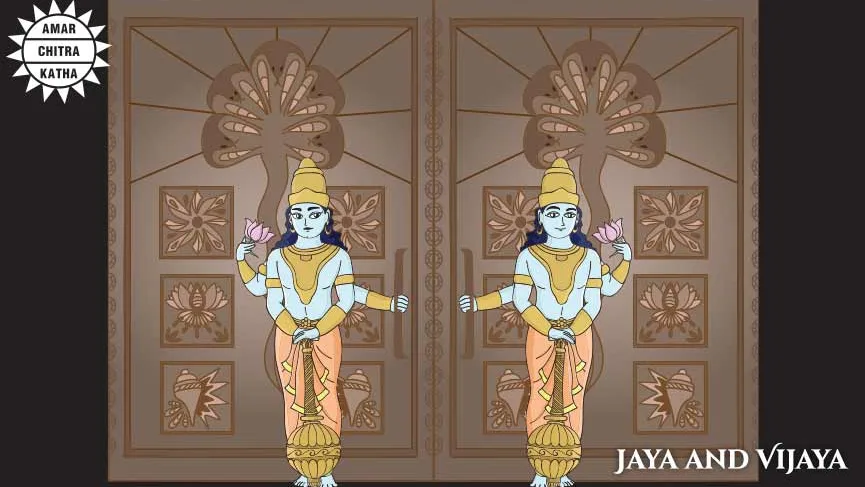
Jaya and Vijaya were the gatekeepers of Vishnu’s abode, Vaikuntha. After being cursed by the four Kumaras, they had to choose between seven births as devotees or three births as Vishnu’s enemies. They chose the shorter but harder path and were born as Hiranyaksha and Hiranyakashipu, Ravana and Kumbhakarna, and finally Shishupala and Dantavakra before returning to Vaikuntha.
Also Read | Why Hindus Should Read Islamic Mythology and What It Reveals About Shared Traditions
The lesson is that hardships and setbacks are not always punishments. Sometimes difficult journeys become the fastest route to learning, transformation and spiritual growth.
Ashwatthama’s story explores the complexity of truth
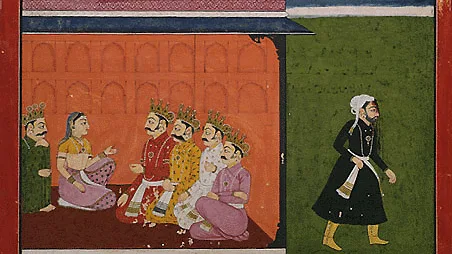
During the Kurukshetra war, Krishna knew Dronacharya could not be defeated. Bhima killed an elephant named Ashwatthama, and Yudhishthira said, “Ashwatthama is dead,” while the rest of his sentence, “the elephant, not your son”, was drowned out by loud conches. Believing his son had died, Dronacharya laid down his weapons.
This episode raises difficult ethical questions. It suggests that truth is not always simple and that moral decisions can involve painful dilemmas, especially when protecting a larger cause.
Why these stories still matter today
These three stories highlight that Hindu mythology is not only about heroes defeating villains. They encourage readers to think about responsible use of power, resilience during challenges and the moral complexity of truth. That is why these ancient stories continue to remain relevant in everyday life.
Also Read | Narad Muni the first cosmic journalist of Hindu mythology with 11 lesser-known facts