










Swiss glaciers and Greek lakes are showing signs of a wider change in Europe’s water cycle.
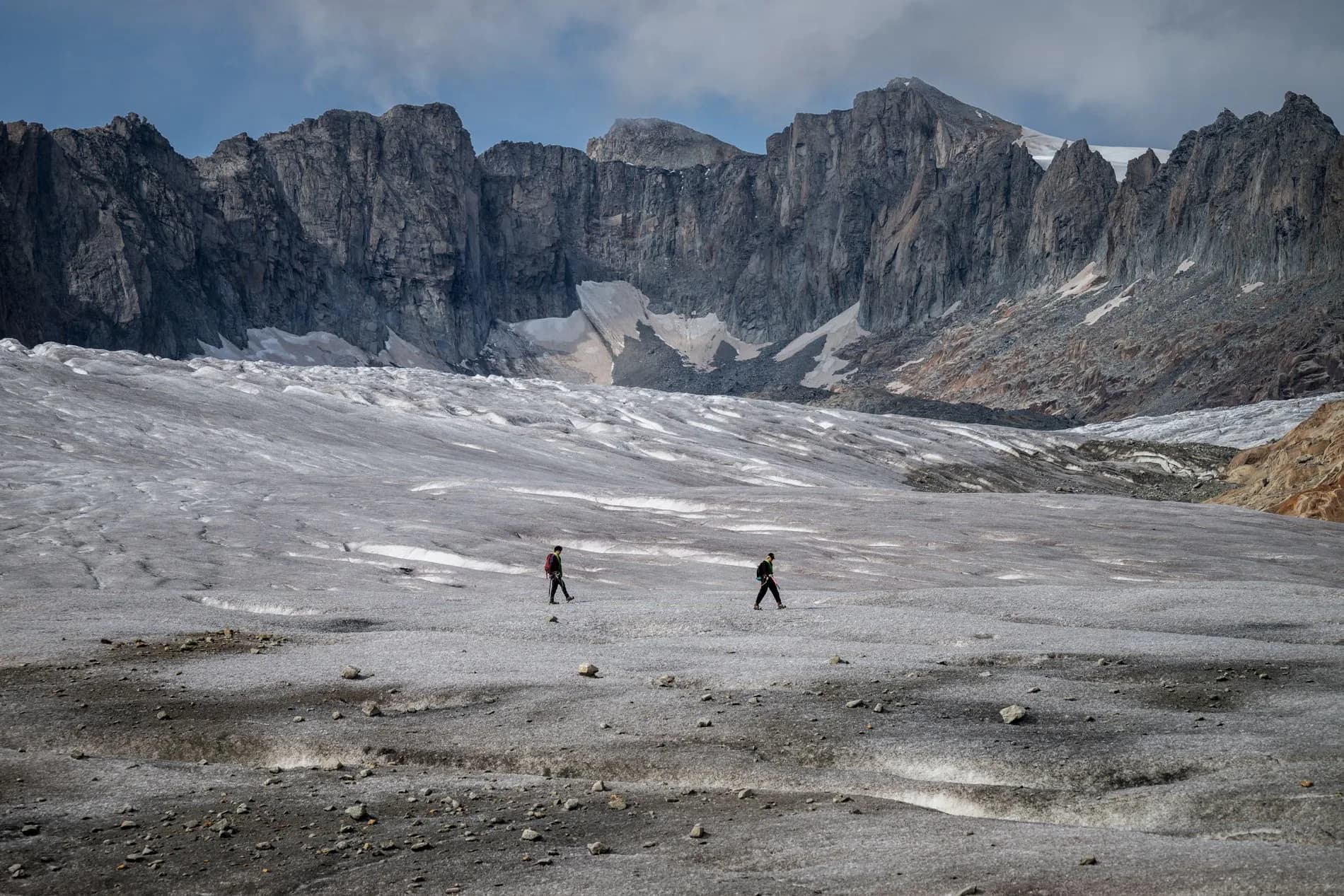
In Switzerland, glaciers lost more than 5% of their ice in 2026, according to a report by the Swiss Glacier Monitoring Network (GLAMOS) and the Swiss Commission for Cryosphere Observation of the Swiss Academy of Sciences. Over the past five years, Swiss glaciers have lost almost one-fifth of their ice.
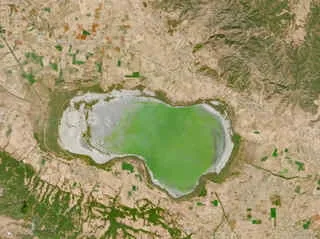
In Greece, Lake Koroneia in the north has shrunk to just 2.7 square kilometres from 34.4 square kilometres in 2016, according to data from the National Observatory of Athens.
The lake, once a major wetland, is now reduced largely to shallow pools and exposed lakebed. The two cases differ. But both show what happens when less water arrives and more water is lost.
🇨🇭 Glaciers are turning one bad winter and one hot summer into a visible warning.
— Ahmad Shah Mohibi (@WarGuy_) October 1, 2026
Scientists say Switzerland’s glaciers lost an enormous amount of ice after low snowfall and record European heat.
Less snow leaves the ice with less protection when extreme heat arrives.…
Also Read | Trump’s SI order replaces AI in US government language: Here’s why
A summer of melting
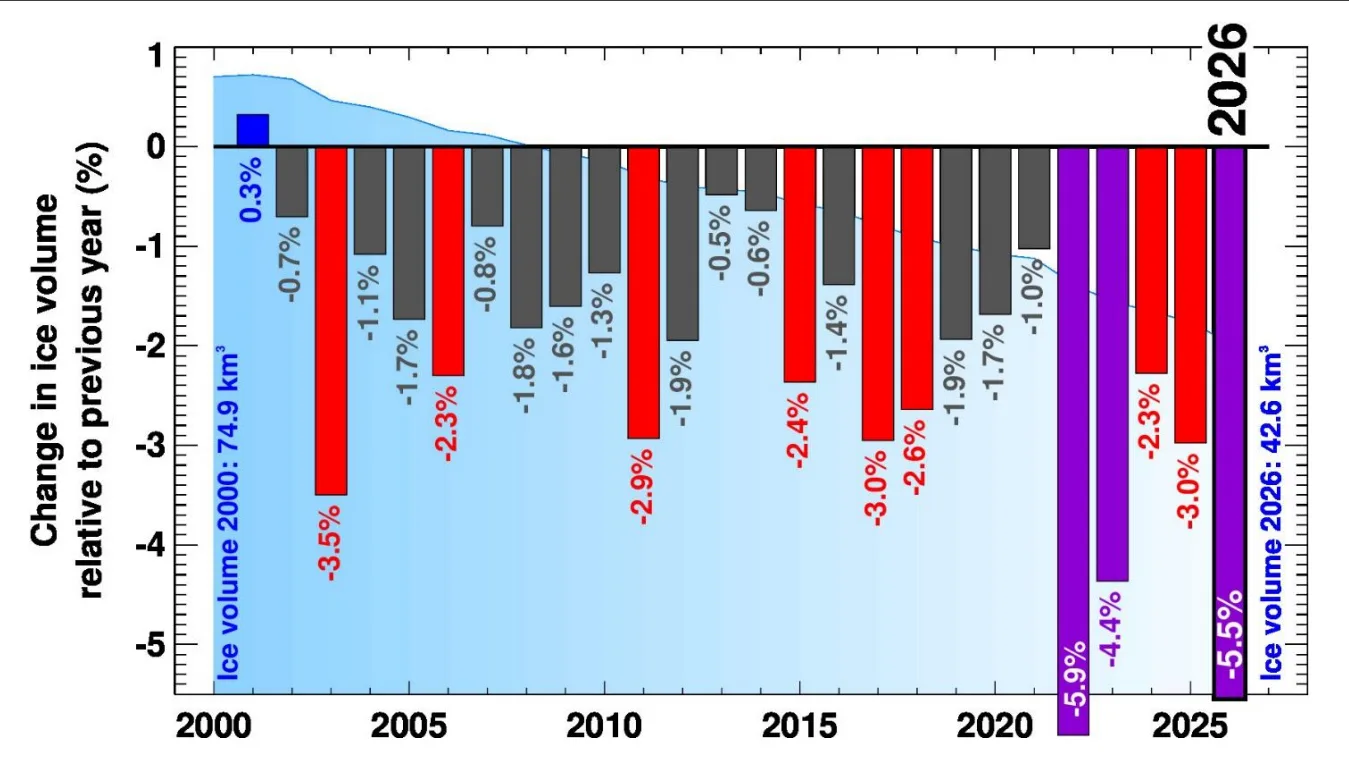
For the Swiss glaciers, the immediate problem was a damaging combination of weather conditions. The winter brought too little snow. Then came record summer temperatures and repeated heatwaves across Europe.
Snow matters because it shields older glacier ice and adds fresh material that can eventually become new ice.
The freezing level in the Swiss mountains stayed above 4,000 metres for 76 days, a Swiss record. By September, there was no snow on some glaciers even at elevations of 3,500 metres.
Glacier thickness fell by an average of 2.5 to 4 metres, while some glacier tongues lost around 10 metres over the summer.
Switzerland’s largest glacier, the Aletsch, recorded its biggest melt on record in 2026. Matthias Huss, who heads GLAMOS, described the situation bluntly, “Now we are in this new world, in this future, where glaciers are just melting away.”
Summer heat widened Swiss glacier loss to 20% over past 5 years https://t.co/8NfCLXkVO6 via @LauraMillanL pic.twitter.com/eLDraiMsrk
— Zoe Schneeweiss (@ZSchneeweiss) October 1, 2026
Less rain, more evaporation
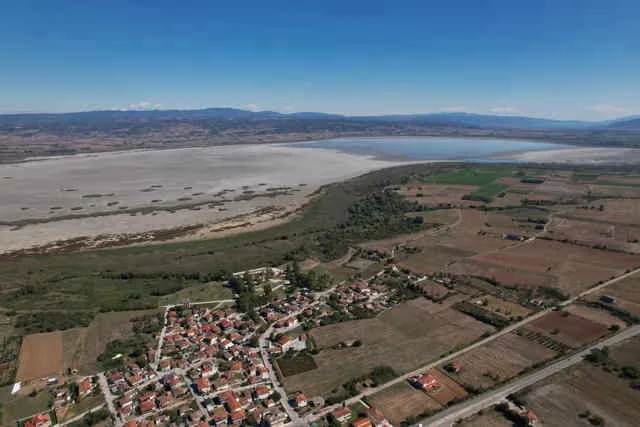
Greece presents a different but connected problem. Lake Koroneia has been squeezed by years of low rainfall, higher temperatures and heavy use of water for irrigation.
Rainfall in the lake’s catchment has averaged about 400 millimetres a year over at least the past five years. That is around 150 millimetres below previous decades.
Rising temperatures have also increased evaporation by about 100 to 150 millimetres a year, according to Dimitris Papadimos of the National Wetland Center.
Human water use has added further pressure. Farmers have relied on the lake to supply water for crops and livestock during dry periods. The result has been dramatic.
Its water surface fell from 34.4 square kilometres in 2016 to 2.7 square kilometres in 2026. Similar fluctuations have been recorded in other Greek lakes, including Volvi, Doirani and Pikrolimni.
Some have experienced periods of complete summer drying.
Every glaciated region on the planet lost ice for four years in a row now. From 2023–2025 alone, glaciers lost around 1,400 gigatonnes of ice, equivalent to roughly 560 million Olympic swimming pools (the official weird measure for anything water related). Source:… pic.twitter.com/LmsAouLKh3
— Simon Kuestenmacher (@simongerman600) September 28, 2026
Also Read | Flydubai FZ1073: The 5 people who helped stop a mid-air catastrophe
Nature’s savings account is running low
The consequences go beyond what can be seen from the ground. Glaciers act as stores of frozen freshwater.
Their meltwater can support rivers during hot, dry months.
In 2026, Swiss glaciers released an estimated 2.2 trillion litres of water between July and September alone, more than four times the annual drinking-water consumption of Swiss households.
But that short-term boost comes with a longer-term cost. As glaciers become smaller, their ability to provide that seasonal supply also declines. Lakes face a similar problem, with a different ecological dimension.
Shrinking wetlands can lose fish, birds, reeds and other habitats.
Koroneia has previously experienced mass deaths of fish and birds and periods when it dried completely. What these cases show is not simply that Europe is getting hotter.
They show how heat, changing rainfall, melting snow and human demand for water can combine to push natural water systems beyond their old patterns.