











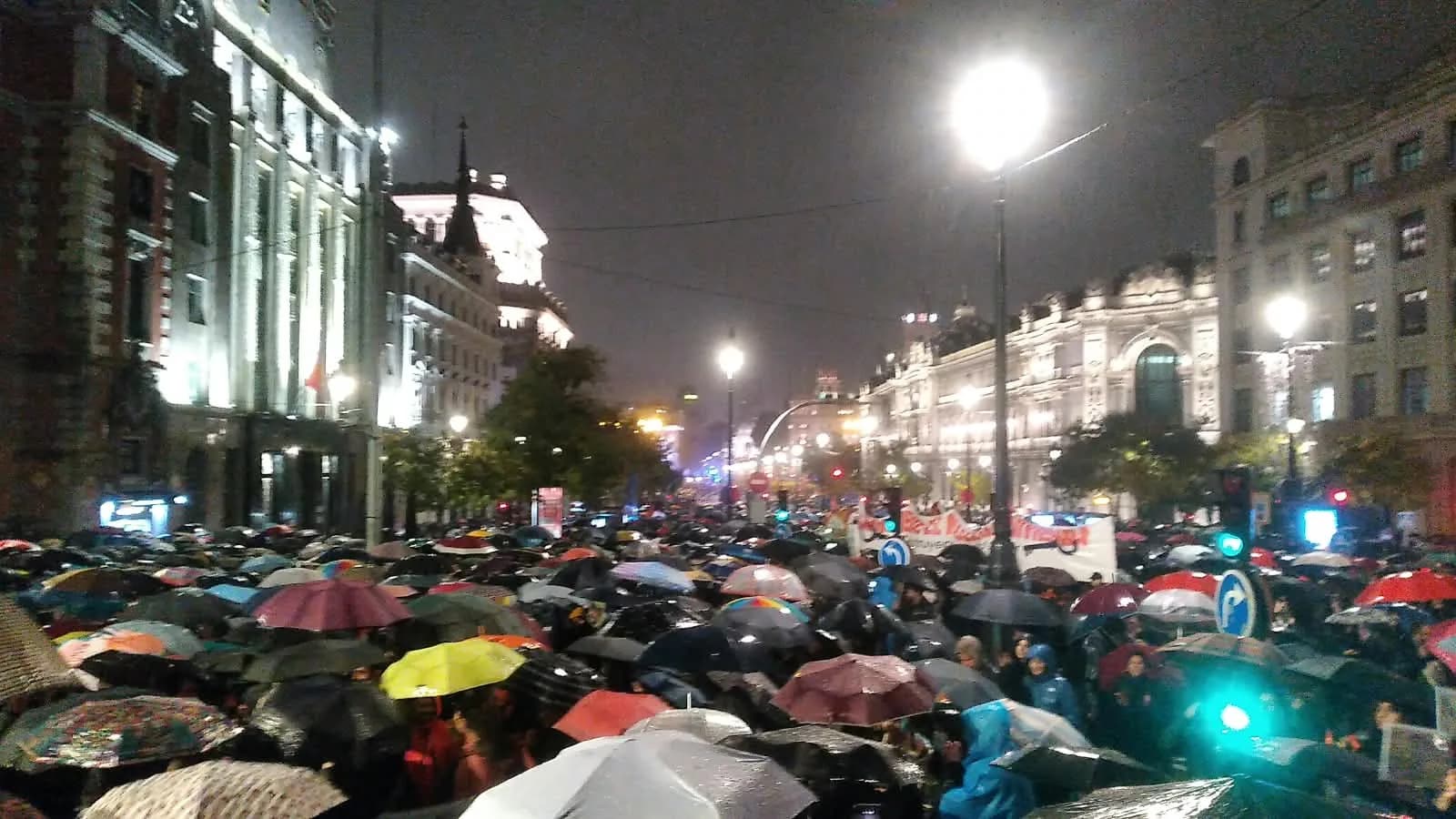
Spain witnessed its first general strike in 14 years on Wednesday, November 11, as workers across the country walked off their jobs to demand action over the growing housing affordability crisis.
The 24-hour nationwide strike disrupted public transport, factories, shops and several other sectors. Backed by the country’s two largest trade unions, UGT and CCOO, the protest brought together workers and tenants’ associations united by a common concern; finding an affordable place to live is becoming increasingly difficult.
The strike began at midnight and comes less than three weeks before Spain’s November 29 general election.
Workers across Spain are holding a general strike over housing costs ahead of the country’s snap election. https://t.co/n3QAa3urtt
— Unbiased Alpha (@UnbAlpha) November 11, 2026
Also Read | M John Harrison wins 2026 Booker Prize for dystopian novel ‘The End of Everything’
An expensive roof over one’s head
The problem goes beyond rising rents. Spain is facing a significant shortage of homes, while property prices and rental costs have continued to increase.
The Bank of Spain estimates that the country has a housing deficit of around 750,000 homes. The shortfall could exceed one million by 2028. With fewer affordable properties available, more people are competing for rental accommodation, pushing prices further beyond the reach of ordinary households.
The numbers offer an indication of the pressure. According to figures from Spain’s Youth Council, the average monthly rent stands at around 1,176 euros. That is equivalent to approximately 98.7% of the average monthly salary of a young person in the country.
In other words, a young worker earning the average income could spend almost an entire month’s salary on rent alone.
A separate figure from property portal Idealista showed that a 50-square-metre apartment in Madrid cost an average of 1,170 euros per month in October.
🇪🇸 Spain is paralyzed by a general strike today Officially, it is organized by the left to demand better wages and public services The most notable part, however, is that they are not letting anyone else work either https://t.co/NyJnQE5Zlv
— Anastasia M (@AnastasiaMazh) November 11, 2026
A home for everyone, except the locals?
The changing use of residential properties has added to the debate. Housing campaigners argue that more homes are being used as tourist accommodation, short-term rentals and speculative investment assets rather than being made available to permanent residents.
Rents had increased by around 80% over a decade, while home prices had risen by 63%. This has intensified concerns that local residents are increasingly competing with the tourism and investment markets for available housing.
For young people, low and middle income households, and those living in major cities, the prospect of renting or buying a home has become increasingly difficult.
🇪🇸 Things are getting heated in Spain… Police used pepper spray and batons against protesters in Madrid as workers launched what TRT World reports is the country’s first general strike in 14 years. And it wasn’t just Madrid. Picketers blocked major roads in Valencia and Barcelona too, protesting rising housing costs and wages that aren’t keeping up. People are frustrated about the cost of living, and now that frustration is spilling onto the streets. Spain’s housing and wage crisis has gone from a daily struggle to a nationwide SHOWDOWN. Writer: Lynn https://t.co/wv2sApKTSe
— Mario Nawfal (@MarioNawfal) November 11, 2026
A personal tragedy becomes a national cause

Public anger gathered momentum in September following the eviction of 87-year-old Maricarmen Abascal from the Madrid home where she had lived for more than seven decades. She died several days after the eviction.
Her case became a focal point for Spain’s growing housing protest movement and brought renewed attention to the difficulties faced by vulnerable tenants.
Demonstrations and housing occupations followed in several cities. In Madrid, protesters occupied the central Puerta del Sol square for five weeks, setting up hundreds of tents.
The movement subsequently received support from tenant organisations and trade unions, which called for stronger government intervention in the housing market.
The unions have demanded measures to protect tenants, including restrictions on evictions of vulnerable people, rent freezes and tighter controls on short-term rentals. Their argument is that housing should remain accessible to people who live and work in Spain, rather than becoming increasingly unaffordable because of investment and tourism pressures.
Prime Minister Pedro Sánchez has also acknowledged the seriousness of the issue. In an interview published by Spanish newspaper La Vanguardia, he said, “This is not a strike against anyone, but rather one in favour of a common response from all levels of government to a real problem, which is access to housing.”
Also Read | Does your iPhone avoid ‘Modi braggart’ and ‘Rahul is Pappu’? Here’s why
An election-sized headache for Madrid
The timing has made the industrial action politically significant. Spain is scheduled to hold a snap general election on November 29, after Sánchez’s minority government failed to secure parliamentary approval for a package of housing measures.
The housing crisis has consequently become a major issue ahead of the vote, with political parties facing pressure to explain how they would address rising rents and the shortage of homes.
The strike has also exposed a disagreement over its impact. UGT and CCOO reported early participation of around 90% in the automotive and port sectors. They also pointed to production stoppages at major factories.
However, the Spanish Confederation of Business Organisations (CEOE) described participation in most sectors as low. Meanwhile, roadblocks and clashes between police and picketers were reported in Barcelona and Madrid.
The strike has therefore highlighted not only the scale of frustration over housing but also the competing political and economic arguments surrounding the crisis.