













India observes Constitution Day, also known as Samvidhan Diwas, on November 26 every year to mark the adoption of the Constitution by the Constituent Assembly in 1949. The date holds special significance in the country’s history as it commemorates the formal adoption of the document that laid the foundation for India’s democratic system of governance.
Although the Constitution was adopted on November 26, 1949, it came into effect on January 26, 1950. This marked India’s transition into a republic. The two dates therefore commemorate different milestones in the making of modern India.
The annual observance of Constitution Day began in 2015, when Prime Minister Narendra Modi announced the decision in October while laying the foundation stone for the Dr BR Ambedkar Memorial in Mumbai. Before that, November 26 was observed as National Law Day, an initiative first introduced in 1979 by former Supreme Court Bar Association (SCBA) president Laxmi Mall Singhvi.
How was the Indian Constitution drafted?
The making of the Indian Constitution involved years of discussions and deliberations within the Constituent Assembly. Constitutional Advisor BN Rau prepared an initial draft in February 1948, following an earlier draft Preamble presented in October 1947.
Also Read | Delhi court revives 2012 Israeli Embassy blast case, takes cognisance of terror conspiracy
Dr BR Ambedkar, who chaired the Drafting Committee, played a central role in refining the document. The Assembly examined the draft over the following year, considered more than 2,000 amendments and incorporated several changes before adopting the final version.
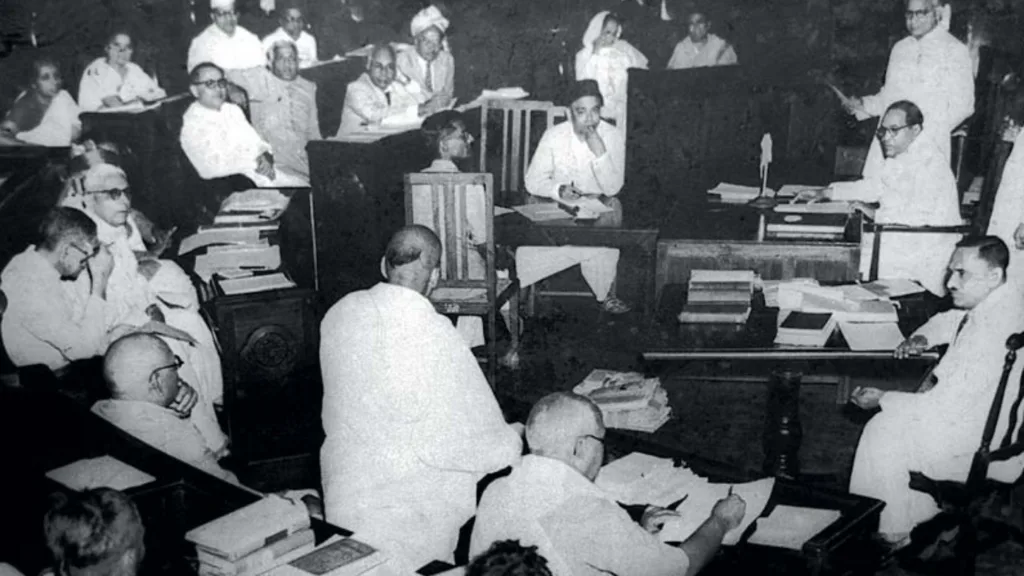
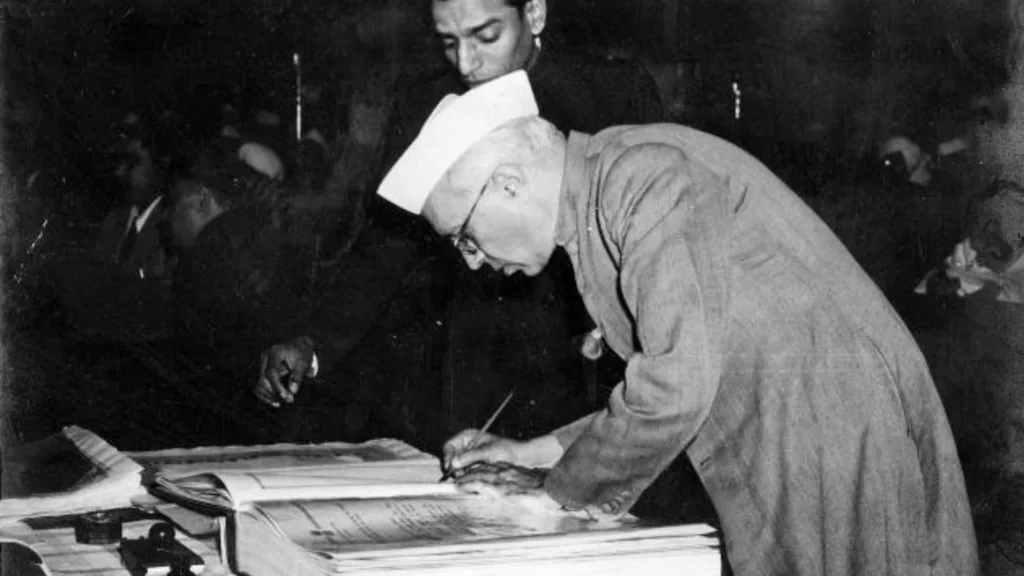
Written by hand in both English and Hindi, the Constitution also features illustrations by Nandalal Bose of Santiniketan. Members of the Constituent Assembly signed the document on January 24, 1950. On the same day, Dr Rajendra Prasad was elected unopposed as India’s first President.
What is the significance of the Preamble?
The Preamble sets out the fundamental principles and objectives of the Indian Constitution. Drawing from the Objectives Resolution of December 1946 and the Expert’s Committee Declaration of July 1946, Dr Ambedkar’s draft placed particular emphasis on fraternity and human dignity.
It established the vision of India as a sovereign democratic republic committed to securing Justice, Liberty, Equality and Fraternity.
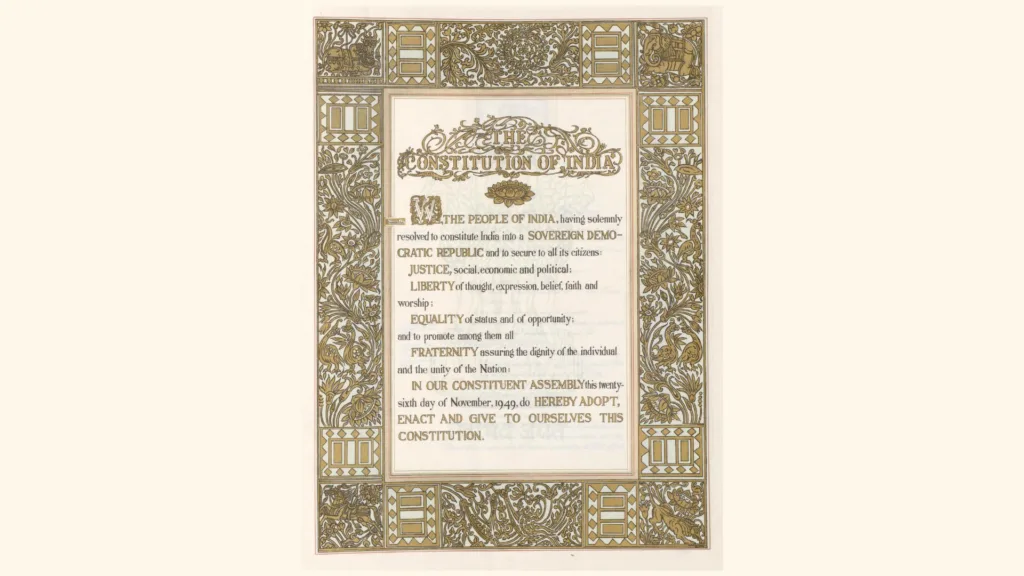
The original Preamble did not include the words ‘socialist’ and ‘secular’. These were added through the 42nd Constitutional Amendment in 1976. In November 2024, the Supreme Court upheld their inclusion, observing that ‘secular’ reflects equal respect for all religions, while ‘socialist’ represents a commitment to eliminating social, political and economic exploitation.
Also Read | India rules out shift in Indus Waters Treaty position during Pakistani minister’s Delhi visit
An article published by The Hindu on November 26, 2025, noted that Dr Ambedkar “envisioned and crafted the Constitution as a site of struggle where seminal issues could be settled through constitutional means”.
Fundamental rights and duties under the Constitution
As the supreme law of the country, the Constitution guarantees several fundamental rights, including freedom of speech and expression, freedom of conscience and religion, protection against arbitrary arrest and detention, and freedom of movement. It also safeguards cultural and educational rights.
Part IVA outlines the Fundamental Duties of citizens. The Constitution further upholds equality before the law, prohibits untouchability and, under Article 15, bars discrimination by the State on grounds of religion, race, caste, sex or place of birth.
Constitution Day serves as an annual reminder of the principles, rights and responsibilities that underpin India’s democratic framework.