











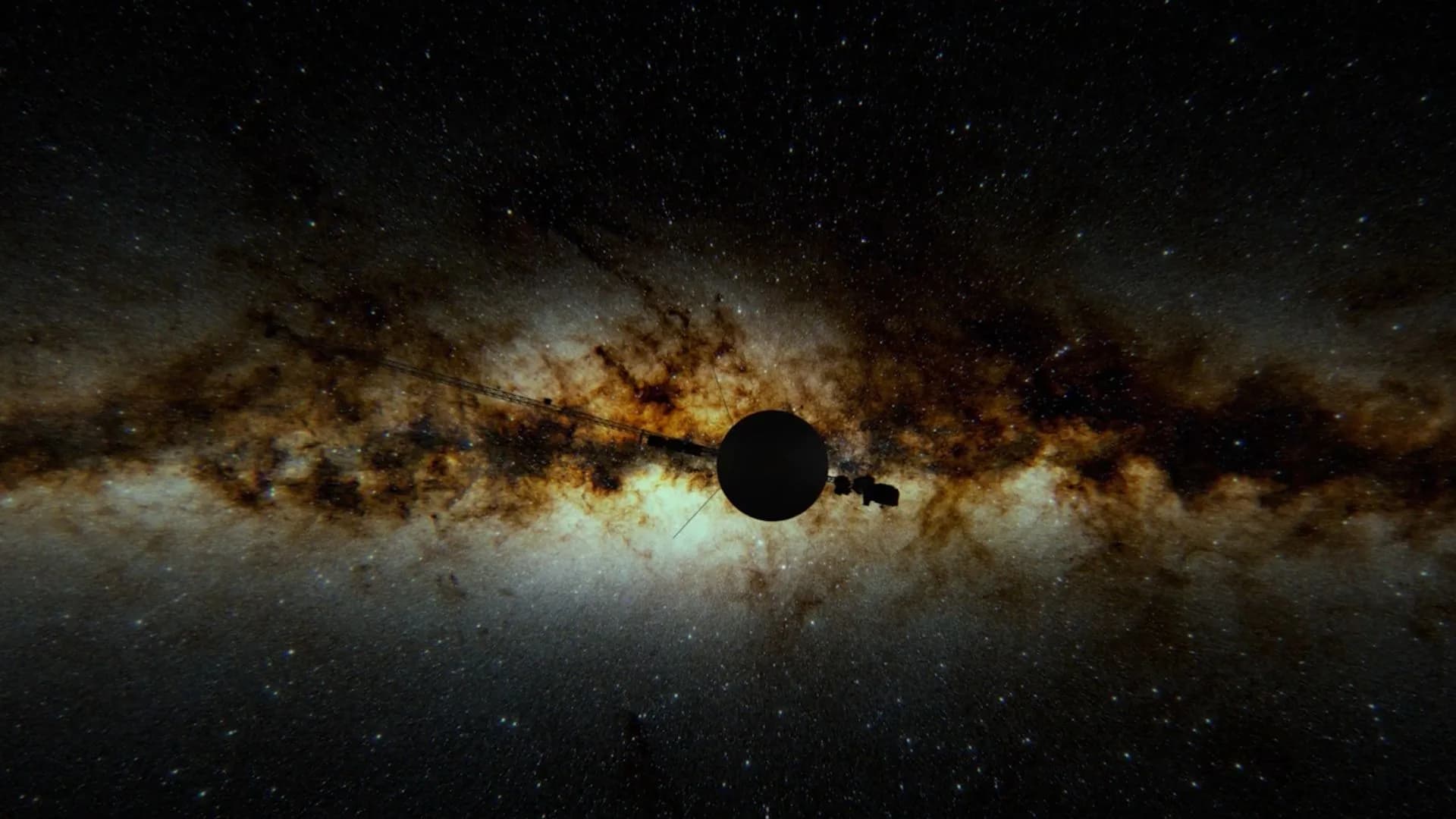
NASA’s Voyager 1 has achieved a historic milestone, becoming the first human-made spacecraft to travel more than one light-day away from Earth. The 49-year-old space probe crossed the distance on Wednesday, November 18, marking another major achievement in its journey through interstellar space. Despite dwindling power supplies and technical problems, NASA officials remain determined to keep the spacecraft operational for as long as possible.
NASA confirmed the milestone on Thursday, November 19, after receiving a radio signal transmitted by Voyager 1 at the Deep Space Network’s antenna facility in Madrid, Spain. The signal took approximately 24 hours to reach Earth, confirming that the spacecraft had travelled beyond the distance light covers in a day.
Voyager 1 travels beyond 16 billion miles from Earth
Voyager 1 crossed the one-light-day mark at 5:16 am EST (10:16 GMT) on Wednesday. The distance is approximately 16 billion miles (26 billion kilometres), making it the most distant human-made object ever launched into space.
Also Read | Elon Musk regrets $446 million Republican campaign bet after Democrats sweep US midterms
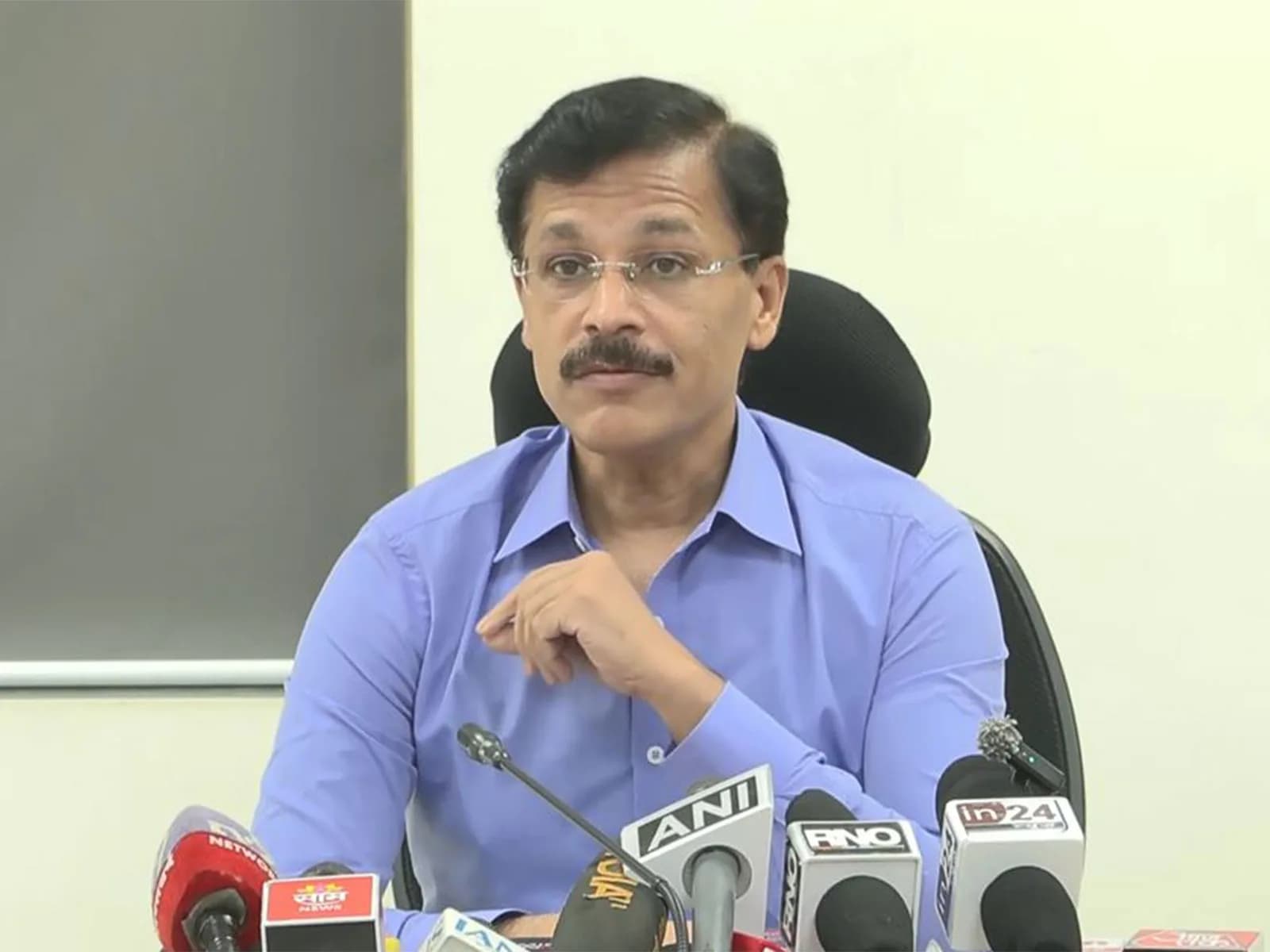
NASA engineer Nshan Kazaryan announced the confirmation at the Jet Propulsion Laboratory (JPL) in California, saying, “After 16 billion miles of exploration, Voyager 1 continues its journey into the unknown.”
Nov. 18, 2026, 5:16am EST The Voyager 1 spacecraft has reached a distance of one light-day from Earth.
— NASA Solar System (@NASASolarSystem) November 18, 2026
A light-day refers to the distance light travels in 24 hours. Meanwhile, a light-year, a more commonly used astronomical measurement, represents the distance light covers in one year, approximately 5.9 trillion miles (9.5 trillion kilometres).
NASA Voyager 1 mission faces power and technical challenges
While the achievement marks a significant moment for NASA, Voyager 1 is increasingly showing signs of ageing. The spacecraft stopped transmitting scientific and engineering data last week, although communication with Earth has continued. Mission officials are hopeful that data transmission will resume.
Voyager mission manager Kareem Badaruddin acknowledged the challenges, saying, “And, meanwhile, we’re running out of power.”
No other traveler has ever journeyed so far from home. Voyager 1 is about to become the first human-made object to reach a distance of one light-day from Earth, or about 16 billion miles. ½ https://t.co/uETo8DHUF1
— NASA Solar System (@NASASolarSystem) November 10, 2026
He added, “The anomalies have become normal for us.”
Recent power-saving measures could allow both Voyager spacecraft to remain in contact with Earth for another three to four years. NASA has also switched off several instruments to conserve electricity generated by their ageing plutonium power sources.
Voyager 1 currently operates with two scientific instruments, while Voyager 2 has three.
Voyager 1’s journey into interstellar space continues
Travelling at nearly 38,000 miles per hour (61,000 kilometres per hour), Voyager 1 entered interstellar space in 2012 after crossing the outer boundary of the heliosphere. It is currently heading towards the star Gliese 445 and could pass within approximately 1.7 light-years of it in around 40,000 years.
Also Read | Anthropic shares jump 34% on debut, taking AI giant’s valuation to $2 trillion
NASA’s Nicola Fox said, “When’s the mission going to end? It’s never going to end, even when we can no longer talk to Voyager.”
Oh, how you shined! To everyone who raised a light or lit up a landmark to celebrate Voyager’s Light-Day, thank you for shining bright with us. https://t.co/RkT2UohH8Z
— NASA Solar System (@NASASolarSystem) November 19, 2026
Voyager project manager Suzanne Dodd also expressed confidence in the mission, saying, “We’re one light-day, but we are definitely not done yet.”
Its twin, Voyager 2, launched in 1977, entered interstellar space in 2018 and is expected to reach the one-light-day distance in November 2035. Both spacecraft continue collecting valuable information about the environment beyond the Sun’s protective bubble.