



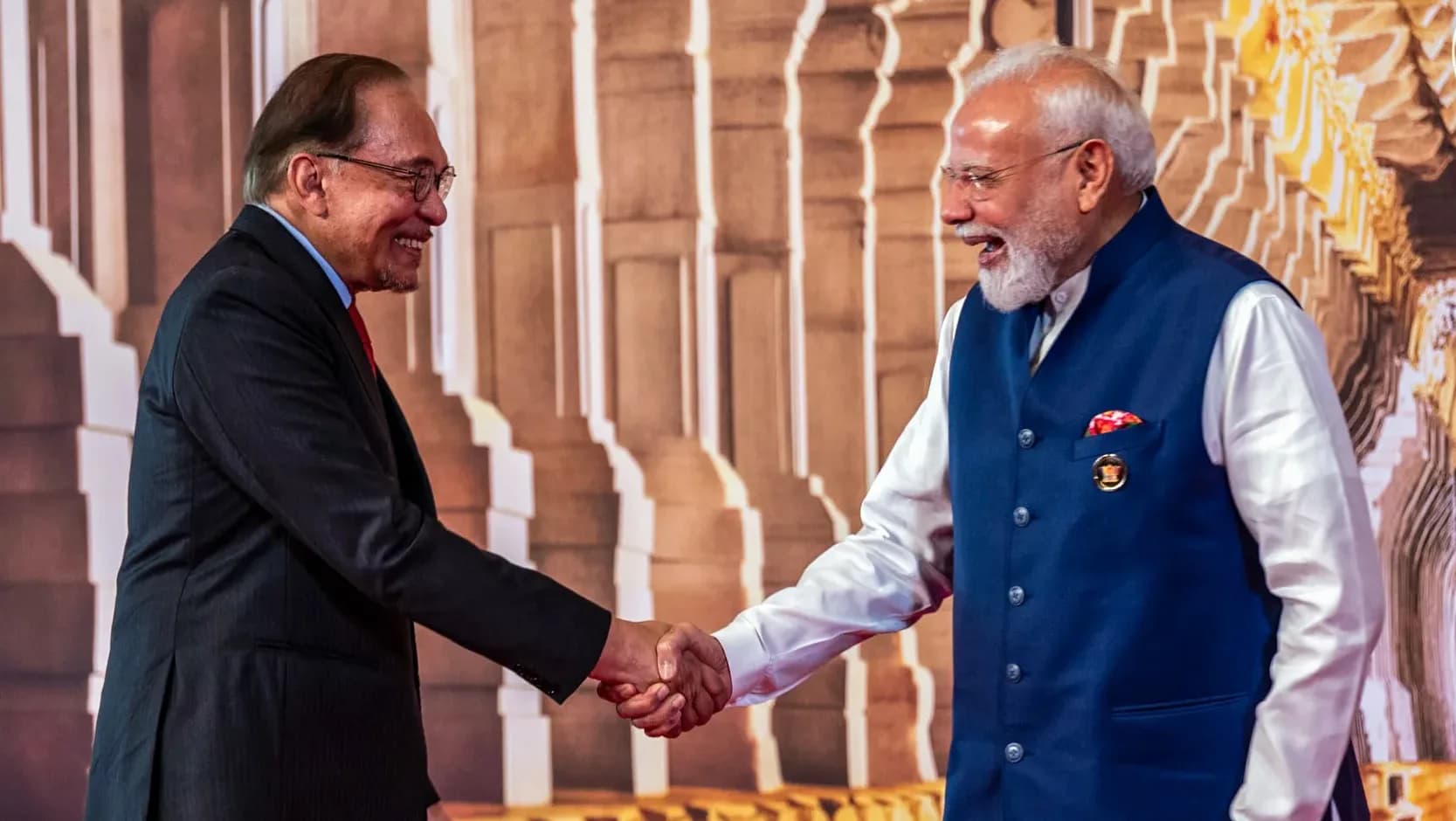










The debate over plurilateral agreements at the World Trade Organisation has gained fresh attention after the 2026 BRICS Summit in New Delhi.
The BRICS New Delhi Declaration said members recognise the importance of identifying “appropriate pathways” for plurilateral initiatives within the WTO legal framework, including on development-oriented issues.
The wording is significant in the context of India’s longstanding preference for an inclusive, member-driven and multilateral WTO system. But it does not amount to a formal announcement that India has accepted plurilateral agreements.
Instead, the declaration opens the door to discussions on how such initiatives could fit within the existing WTO framework.
What are plurilateral agreements?
A plurilateral agreement is a trade agreement in which only a group of WTO members participate. It differs from a multilateral agreement, which operates across the wider WTO membership under the applicable rules.
A simple distinction is:
Multilateral: The wider WTO membership participates.
Plurilateral: A group of participating members negotiates an agreement.
Bilateral: Two countries negotiate an agreement.
Plurilateral negotiations can allow interested WTO members to move forward on specific subjects when reaching consensus among the entire membership proves difficult.
However, negotiating an agreement among a group of members and formally incorporating it into the WTO’s legal framework are separate steps.
Why is India’s position important?
India has traditionally emphasised a member-driven and multilateral WTO system, particularly with regard to the interests of developing countries.
Its reservations have also extended to whether certain subjects should become part of the WTO negotiating mandate and whether a growing number of plurilateral initiatives could create multiple parallel rule-making processes for developing economies.
The Investment Facilitation for Development (IFD) Agreement provides a recent example.
The agreement focuses on making investment-related administrative procedures more transparent, predictable and efficient, particularly to facilitate foreign investment in developing economies.
At the WTO’s 14th Ministerial Conference (MC14) in Yaoundé, Cameroon, in March 2026, India maintained its reservations over incorporating the IFD Agreement into the WTO rulebook.
According to WTO records cited in the source material, 129 WTO members were participating in the IFD initiative, while 165 of the 166 members supported a proposed ministerial decision on incorporation. Consensus was nevertheless not reached because of India’s reservations.
How does plurilateralism work under WTO rules?
The WTO has both agreements covering its wider membership and certain plurilateral agreements involving participating members.
Annex 4 of the Marrakesh Agreement Establishing the WTO is particularly relevant. Under Article X:9 of the WTO Agreement, adding a new plurilateral agreement to Annex 4 requires a consensus decision by WTO members.
That distinction is central to the current debate. A group of countries can negotiate an agreement among themselves, but getting that agreement formally incorporated into Annex 4 requires consensus.
The IFD Agreement demonstrates the difference between participation in a plurilateral initiative and its formal incorporation into the WTO framework.
What does the BRICS declaration actually change?
The 2026 BRICS New Delhi Declaration places two ideas alongside each other.
It reaffirms support for a rules-based multilateral trading system with the WTO at its core, including principles such as Most-Favoured-Nation treatment and Special and Differential Treatment for developing countries.
At the same time, it recognises the importance of finding appropriate pathways for plurilateral initiatives within the WTO legal framework, including on development-oriented issues.
The declaration is a collective BRICS document, rather than a separate Indian policy statement. It also does not identify specific plurilateral agreements for incorporation or create a new legal mechanism for doing so.
Therefore, the BRICS language should not by itself be read as India abandoning its earlier reservations.
IFD and e-commerce agreements: Why do they matter?
Two developments illustrate the wider WTO debate.
The IFD Agreement, finalised in 2024 by participating members, seeks to streamline investment-related administrative procedures. Its participating members sought its incorporation into Annex 4, but consensus was not reached at MC14.
Digital trade provides another example through the WTO Agreement on Electronic Commerce. At MC14, 66 WTO members, representing approximately 70% of global trade, adopted a pathway for implementing the agreement through interim arrangements while work continued towards incorporation into the WTO legal framework.
The WTO subsequently reported that 67 members had adopted the pathway, with the agreement remaining open for acceptance by other WTO members.
India has also raised questions about the institutional and legal basis of the interim arrangements for the e-commerce agreement.
What does this mean for India?
For India, the debate goes beyond individual agreements. It concerns the future structure of WTO rule-making and how developing-country interests are protected within that system.
Plurilateral negotiations can provide a way for countries willing to move faster on emerging issues to develop common rules. At the same time, India has traditionally stressed that the WTO should remain the central institution for global trade governance and that its rule-making should remain inclusive.
Also Read | India’s 4am diplomatic push: How BRICS overcame Iran-Saudi-UAE differences
The BRICS declaration therefore presents a more nuanced picture than a simple shift from multilateralism to plurilateralism.
The stated multilateral foundation remains, while possible pathways for plurilateral initiatives are also being discussed.
For UPSC aspirants, the more precise takeaway is that India should not simply be described as being “against plurilateral agreements”. Its position has involved caution over their incorporation into the WTO framework and concerns about their wider institutional implications.