









Indian mythology texts like Ramayana, Mahabharata always have had powerful women at their centre of attraction. But the most interesting part lies here that most of their stories have traditionally been told from a male perspective. A new generation of women writers has been revisiting these familiar narratives, giving greater attention to the choices, struggles and agency of women who were often pushed to the margins.
The trend can be seen in retellings of Sita, Draupadi, Urmila, Surpanakha, Satyavati, Amba and several historical figures. These books do not simply repeat old stories or tradition. They ask what these women might have thought, felt and wanted.
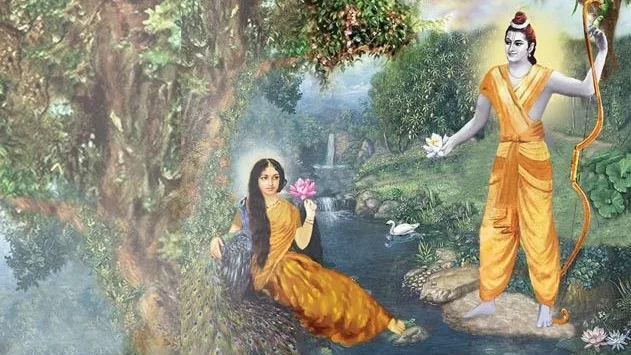
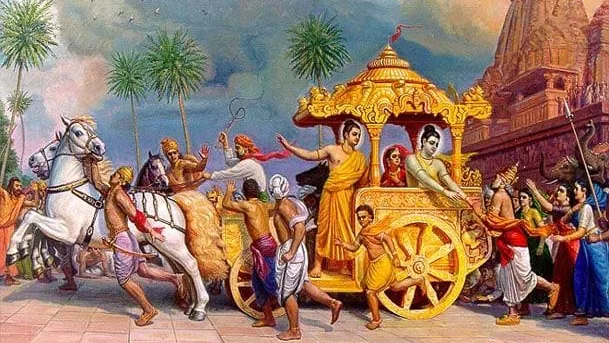
Sita beyond the idea of the ideal wife
Indian mythology texts like Ramayana, Mahabharata always have had powerful women at their centre of attraction. But the most interesting part lies here that most of their stories have traditionally been told from a male perspective. A new generation of women writers has been revisiting these familiar narratives, giving greater attention to the choices, struggles and agency of women who were often pushed to the margins.
The trend can be seen in retellings of Sita, Draupadi, Urmila, Surpanakha, Satyavati, Amba and several historical figures. These books do not simply repeat old stories or tradition. They ask what these women might have thought, felt and wanted.
Sita beyond the idea of the ideal wife
In the ancient ages where most of the mythical stories were filed up by men, from a very manly perspective, prioritising Ram over sita, showing the heroism led by him. Chandrabati Bhattacharya’s ‘Chandrabati Ramayana’ was as utter exception showcasing the whole Ramayana from Sita’s perspective. The text also brings women such as Kaikeyi, Ahalya, Surpanakha, Mandodari and Urmila into the narrative.
Sita’s story, in this interpretation, is not limited to her identity as Ram’s wife. Here in her text Sita has been described as a strong woman who was courageous enough to give the ‘agniparikhsha’ to prove her loyalty towards Ram. Though it has been always a point of controversy.
The shift is significant because women in mythology have often been presented as ideals rather than complete human beings.
Ira Mukhoty a scholar from the modern age, who has written about women in Indian history and mythology, has argued that these figures are frequently either turned into goddesses or forgotten altogether.
Draupadi finds her voice
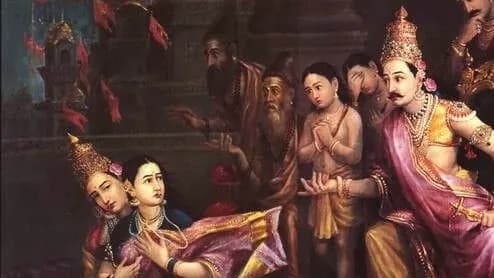
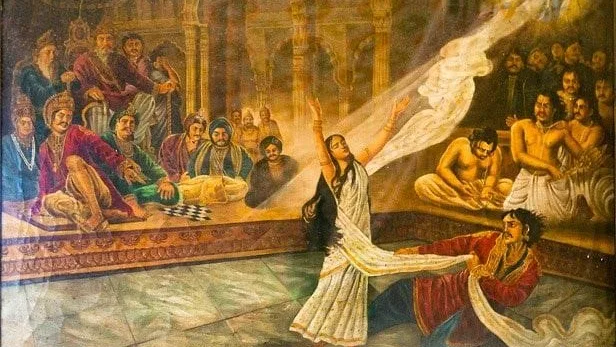
Draupadi has also become one of the most frequently reinterpreted women of the Mahabharata.
Divakaruni’s The Palace of Illusions, published in 2008, was an important example of the Mahabharata being retold through Draupadi’s eyes. In these retellings, Draupadi’s humiliation in the Kuru court is not treated merely as another episode leading to war. Her refusal to remain silent becomes central to her character.
Also Read | Was Ravana evil? The Ramayana’s complicated story of power and consent
The forgotten women of the epics
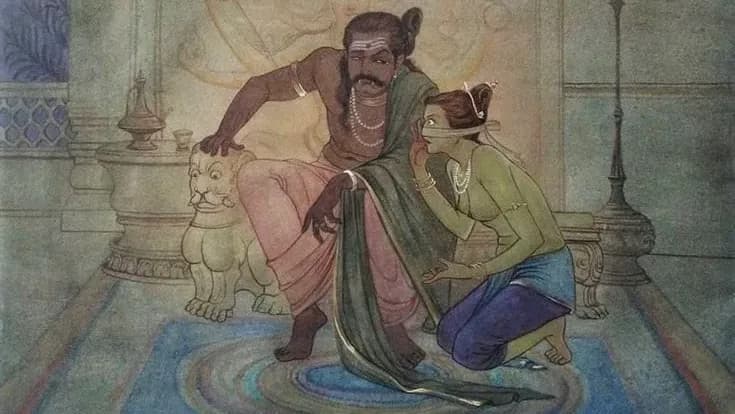
Kavita Kane has similarly focused on women whose stories received less attention. Her books include Sita’s Sister, which explores Urmila, and Lanka’s Princess, which looks at Surpanakha beyond the conventional image of a villain.
Her work on Satyavati in The Fisher Queen’s Dynasty also presents her as a politically powerful woman whose decisions shaped the events that followed in the Mahabharata.
Meenakshi Reddy Madhavan’s Girls from the Mahabharata series takes another route, examining women whose lives remain underwritten in the epic. Her work on Amba and Shikhandi explores questions around identity, rebirth and the circumstances that turned Amba into a warrior figure.
Why these retellings matter
These texts show how an old story can change when the narrator changes. Sita can be viewed through motherhood and exile, Draupadi through anger and resistance, while figures such as Urmila, Surpanakha, Satyavati and Amba receive space beyond the roles assigned to them in traditional accounts.
Also Read | 3 Hindu mythology stories that go beyond good vs evil
The larger shift is about seeing these women as people rather than simply as symbols or as any spiritual power, these exercised stories show that how these female characters build themselves through resistance power and motherhood .
Their stories contain power, grief, ambition, conflict and difficult choices. Contemporary retellings are bringing those elements back into focus and, in doing so, changing how younger readers encounter women from India’s mythology and history.